

By Alba Ajdarevikj
One of the first things anyone thinks about when the land of Kosovo is mentioned is the brutal war that happened in the 90s. The fear, the anger, the tears, the courage, the sorrow, the resistance, and everything that led to its partial freedom. This chaotic period, haunting for many, traumatizing for all, even the generations that were brought to life after, was impeccably displayed on June 14, 2022, at the National Theater of Kosova, by the Artistic Resident Troupe of Artpolis. It was the opening night of the 10th edition of FemArt – the largest Feminist Festival of Women Artists and Activists in the region.
Before the play even started, a large number of people were standing outside the theater or in the lobby, excited about the play, some going in blindly, unaware of what they were about to witness. The theater was filled to the brim with people, curious to see this masterpiece and experience all the emotions the artists exhibited. As the play begins, the actors of the troupe accompanied by the melodic voice of Donika Rushiti, bring the scene to life. The singing resembles the lullabies we have all once heard being sung by our mother or grandmother; as a mother surrenders her daughter to marriage. The following scene, supported by the familiar sounds of the Albanian defa and drums, shows the marriage of this newlywed couple dancing. And then suddenly the sounds intensify, bringing back the memories of guns being picked up by the people resisting its ethnic cleansing.
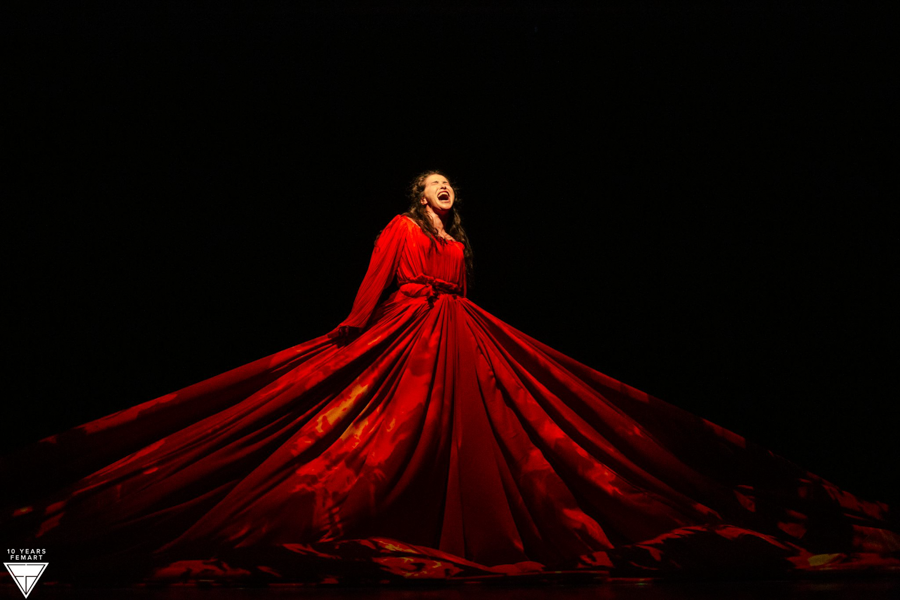
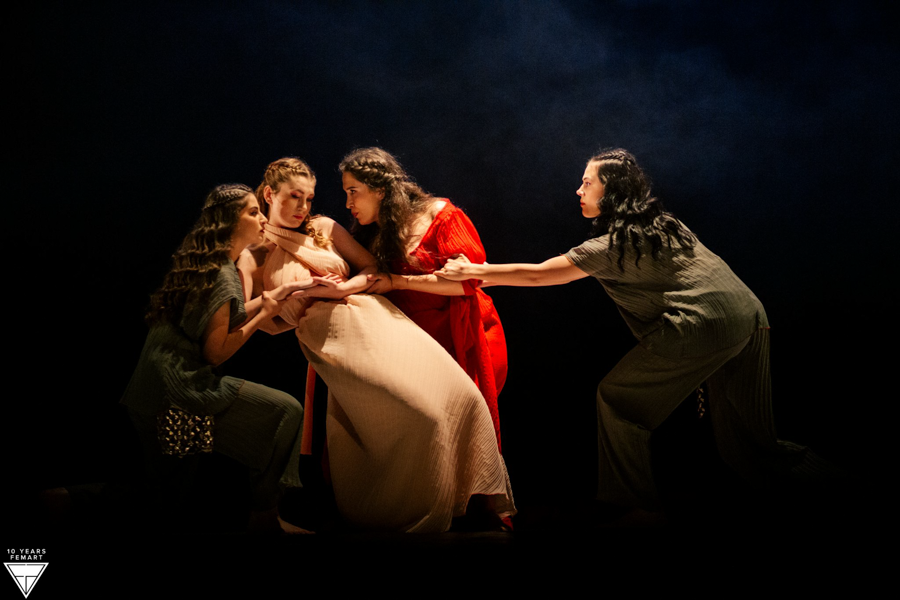
Further, a lady in a ravishingly gorgeous bloody-red gown appeared in the scene. A dress so red, it made me think of a mesmerizing land covered in blood. A land that more than 20 years later, still carries the dried red blood of the fallen soldiers, the fallen heroines, and the innocent children. A land haunted by their spirits, a land haunted by its blood.
The people standing behind ‘Lady Blood’, facing an imaginary wall, with their hands behind their heads, fall on and get off the ground, as she voices the feeling of being trapped and isolated in a land of blood. Resisting the regime, resisting the feeling of being isolated, falling, and rising again, like a phoenix in a never ending, exhausting loop.
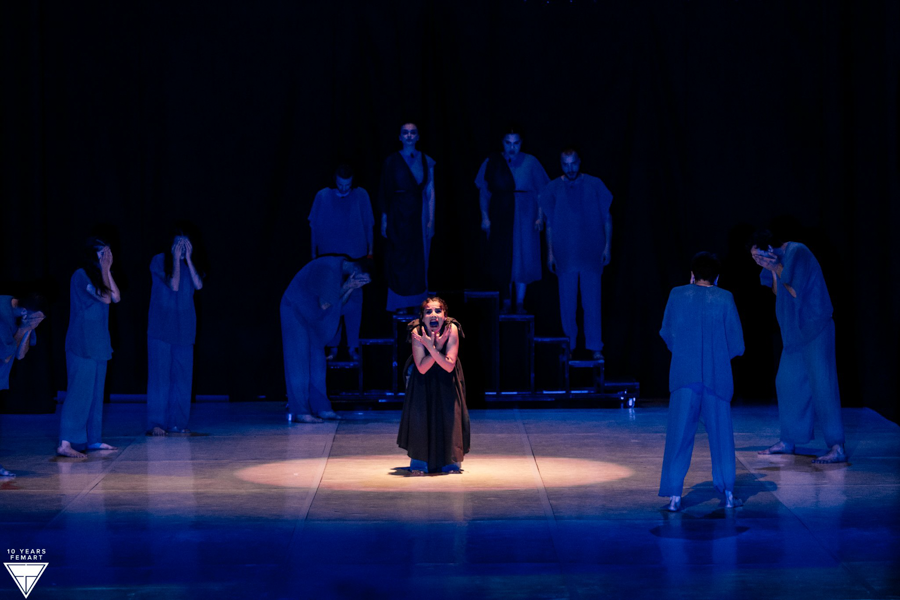
And then, the issue that is least discussed in this society unfolds. Women during this war. The experiences of women, their feelings, their memories, and their trauma. The feeling of weakness, shame, guilt, fear, being trapped, of feeling as if they are the one at fault. That horrific moment of finding yourself naked, exposed to the elements, with legs up high, being tormented by an army of men, an army of pigs, an army of dirtbags. That memory that will never die, that exact minute when your whole life turns around, and it is not under your control. The moment you know everything is falling apart, and yet, there is nothing you can do but fight – even if that means not winning. The moment your body feels endangered and your brain receives that signal. The moment your body feels violated and you get raped. Raped by disgusting inhumane “beings”. And no one believes you. “It is not true / I am a woman / Trying to escape / The nightmare of a lost battle / That was never mine.”
Trapped by a barricade of men, pushing her back, silencing her, and yet, she continues raising her voice, speaking up. Nevertheless, no one wants to hear that, no one wants to believe that, and no one admits that. The sad reality of the many violated women.
A mother, a concerned mother, of a child who sees dead people and still hears gunshots and talks to herself. A mother seeking help for her own child. No one in the playground wants to play with her child, and no one can help her. Because as she said, “there are no doctors to help with her anxiety.” You can see people scorning her, ignorant to her pleas for help, as she is knocked down and raises up talking to them, crying for help.
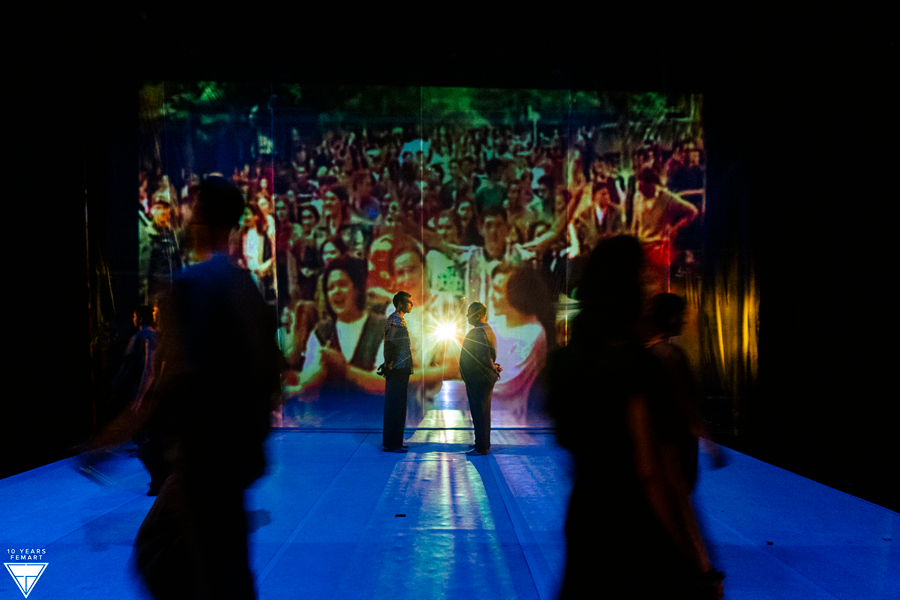
And finally, the piece that affected each and every member of the audience. In the background, footage of soldiers, and other footage of the ‘99 Kosovo war is screened, projecting through the Motherland – the ‘Lady Red’, the clear curtain standing between her and the rest of the cast, in the role of the people of Kosovo. The latter were celebrating their liberation, Kosovo’s liberation. Dancing, laughing, singing, and ignoring their blooded Motherland who was speaking to them. She was pointing out that the earth they live in has been scarred – the land they know as their home is tainted with blood and it will remain as such forever. However, the citizens, as if trying to avoid the reality at that moment, paid no attention to her, divided by the curtain that was almost masked.
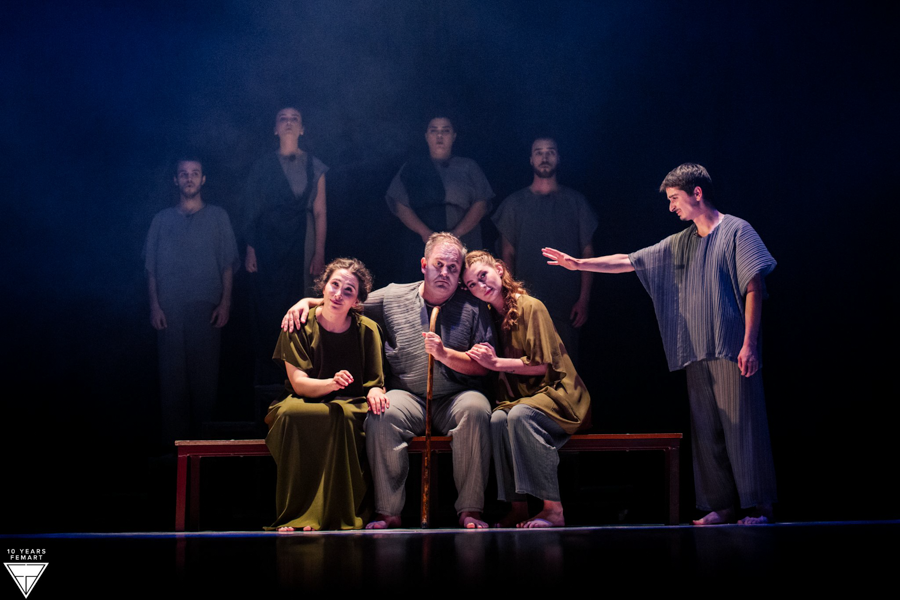
The war ended indeed; but, the armed conflict that followed, the atrocities that followed, did not end immediately. And still, people tried to identify a silver lining to the situation and just find what they received sufficient. Nevertheless, the next scene perfectly described what so many of the Kosovar families were confronted with – the reality of loss. A young man talking to his grandparents, his mother, and so forth, whom he could not see, but still appeared on the scene. The lack of conversation among them and the lack of physical attention towards one another made it obvious to the audience that they were gone. They were gone and were never coming back. Their bodies were there, but they, as he knew them, were not. The family members sat, eloquently and quietly, on a bench that was set on the stage. Following them, the son asks for his father, shouting on the stage. And just like the rest, he answers; however, they cannot conversate. Both remembering moments of the son’s childhood, the father slowly drifts to the back of the stage, lining up with other people. The fact that he does not join the rest of his family on the bench, suggests that he is among more than a thousand people, whose bodies are still missing. Whose bodies their families have still not found, and souls that have no resting place, which the family can go visit and express their anger and sadness. Whose luck is still unknown to many, and people who are believed to still be alive somewhere.
This play was definitely something I have personally not encountered before. It affected each person in the audience. As uncommon as it is remarkable. The direction, the scenic play, the poems, the coreography, the music and the videoprojection are in an extraordinary interaction. Through them, an extremery crucial piece of a nation’s history is conveyed. Many people, including myself, teared up during it. The swollen eyes were emphasized by the bright lights in the lobby of the National Theater of Kosova after the play. The souls battered by a bloody history loom on the horizon, never to be forgotten.
Alba Ajdarevikj is a recent graduate from Rochester Institute of Technology, with concentrations in Peace & Conflict Studies and Public Policy & Governance. She was an intern at Artpolis and is currently a project reporter at Artpolis.

By Ivana Bilic
Premiere performance “Haunted Land” opened the 10th edition of FemArt Festival. What a synergy and multitude of disciplines – from poetry, theatrical choreography, dancing to traditional singing and video projections! The audience said it all with a three-minute applause and standing ovations after crying and applauding between the scenes. But let’s start from the beginning!
What is the Language of Compassion?
“Haunted Land” was performed in both English and Albanian. The poems were originally written in English and then translated by the author herself and edited by Berat Bajrami. The author explained how the poems got entirely different meanings once translated in Albanian, they got strength and power. For sure, those who didn’t understand Albanian, witnessed the strength of these words, power of emotions and weighty presence of the actors. The polyphony of voices – both the author’s and the director’s – that was combined in the voices of actors and of the choir resonated in the entire theater hall.
The very opening comes as a messenger, a ghost from past times, to announce what we will be hearing for the next hour and a half. Interestingly enough, the poem in Albanian that opens the performance is the same poem in English that closes it: a vivid image of a house with a red rooftop, lingering in our mind. “The house was old / With golden webs hanging / From silver eaves, / An old, oaken door / And red rooftop.” These very lines introduced the colors we would see, the imagery and the tone of the performance.
Actors in light, earthy-coloured costumes get on the stage, minutes before putting golden shirts as shields and beating the drums. As if we witnessed the presence of soldiers, of boots, of their heavy uniforms and rifles. “THE DRUMS ARE BEATING. / The people are waiting / For another day, / An endless tomorrow…” All the actors, or dancers as they were, were in perfect harmony. The jumps and moves and drum strokes and tambourine rolls became almost deafening. The tension and anxiety were palpable as the actors expressed anger and power of the army. Just like a perfect symphony – every element made a matching piece of a puzzle of a masterpiece.
I am a woman!
A woman, moving our hearts with energetic movements of her endless scarlet dress, saying: “I am a woman / With a gift / Of freedom (…) Touch me / And set me free.” This scene in a way opened and highlighted the main idea of the FemArt Festival that celebrates women, their power and strength and creativity and honors their courage and resilience. We were almost able to see the movement and tormenting of her soul in the movements of her dress. The lights were changing, emphasizing the color and the tones of her voice. In one moment, her voice goes up, she is at the verge of yelling, expressing her power and the power of her presence as if she was on a throne. There was the strength and power of a woman, of all women fighting for their rights. In the words of the author of the poem, she conquered the stage. At the end, she takes that heavy bright red dress, brighter than all the other costumes on the stage, as a centerpiece in a dream and she disappears in darkness as a ghost of past times.
Look at me! Hear me! See me!
She enters and runs and raises her voice as she tries to pass, but they, men, do not let her. They form barriers with their bodies, to keep her away, to keep her silenced, to hush her down. She then cries and yells and she wants to be heard, but no one wants to hear her story! What a deeply moving scene of women’s bodies as battlefields! But despite all the pain, both physical and psychological, she fights for her voice! She fights for the truth! She is now, today, being hushed, stigmatized, ashamed for what had happened to her and what was by no means her fault. Are we ready to hear these stories? Are we ready to accept, to understand, to hear, and see?
The author Shqipe Malushi finally saw a corporeal expression of the pain she has carried inside for more than 40 years. She found her home, her house that was impossible to find after the war. Zana Hoxha, the director, finally found closure with this performance. “I do not have war in my heart. I am a peace fighter! But theater serves for catharsis. We offered that to our audience tonight.” This is the value and sake of engaged theater, to leave you with a reflection and to offer you peace and closure.
Collective memory
“Why do I do this to my public? I have to keep them awake; they cannot fall asleep,” said the author. And, for sure, she did keep us all awake. She kept us awake for the sake of collective memory, so that we do not forget. We witnessed tonight an enormous strength of all of those included in this performance to preserve their memories from oblivion, as caring keepers of our common past.
Ivana Bilić (Sarajevo, BiH) is an intern in Artpolis where she will conduct her research on the role of performing arts for social change. She is a translator and interpreter in English, French and Bosnian and a human rights student with special interest in women’s rights, minorities and LGBT+.
14.06.2022
“The Haunted Land”, is a performance based on Shqipe Malushi’s poetry, evoking our collective memory about the absence of peace and confrontation with the war, that has been constant for Kosovar society throughout the centuries, and in particular its impact on our inter-generational traumas.
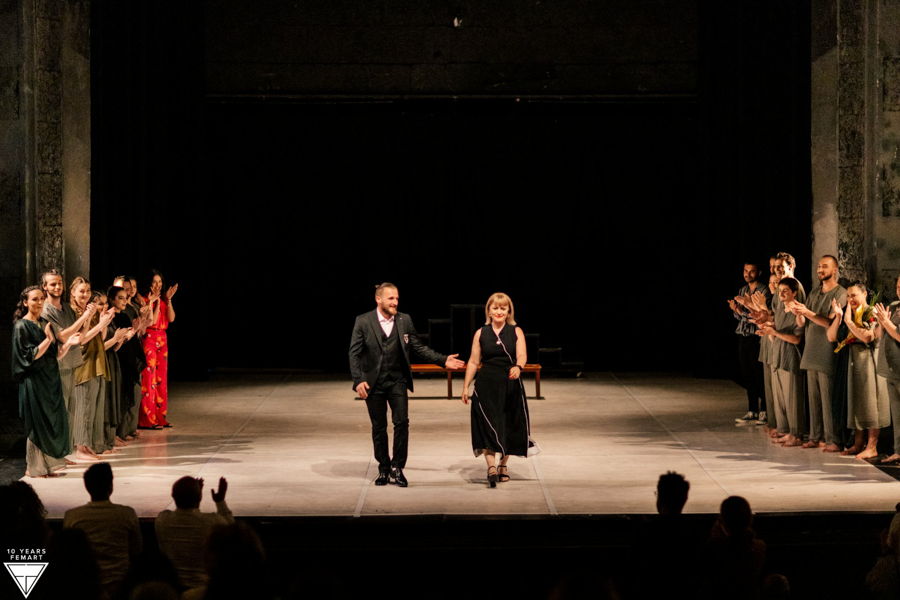
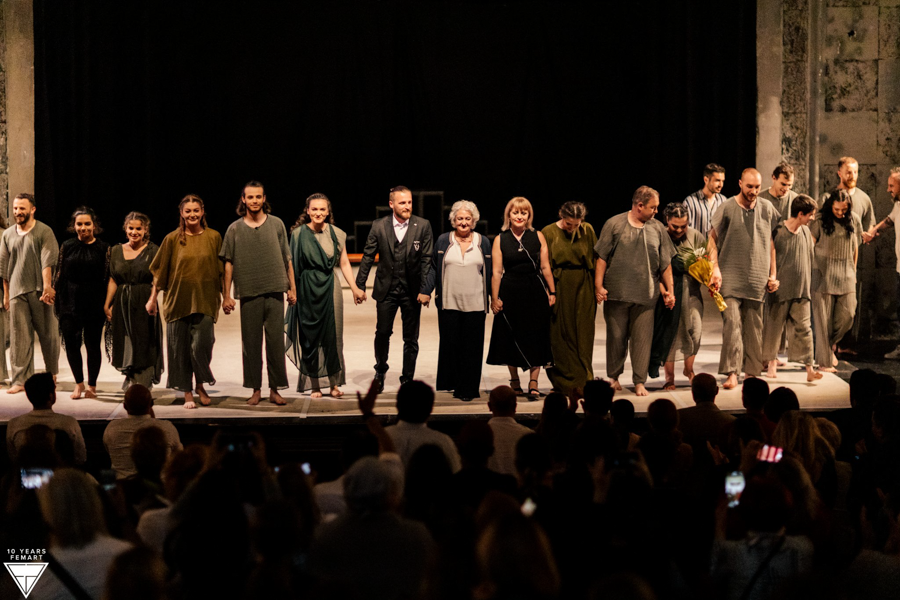
Presented in a unique experimental format, the performance by the director Zana Hoxha creates a multidisciplinary synergy through Malushi’s imaginative poems, Robert Nuha’s contemporary theatrical choreography, and dramaturgy by Shpëtim Selmani, including experimental music with authentic singing elements, and video projections that create a new narrative based on our collective memory.
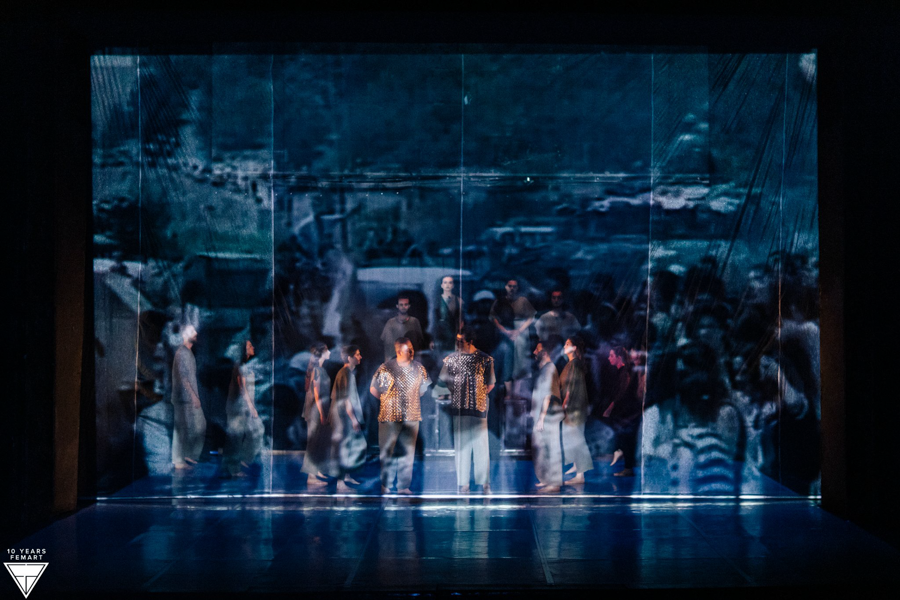
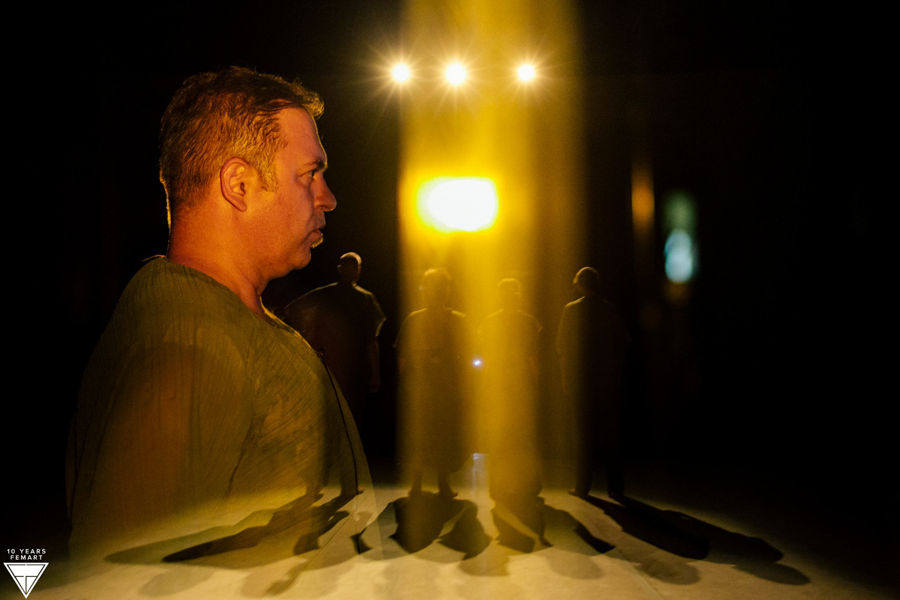

Various poetic fragments and texts filled with pain, struggle, hope, and strength, appear as an image of our collective resilience, and are interpreted by Artpolis Artistic Resident Troupe, joined by music and dance artists in this project.
Through chronological acts “The Haunted Land” describes one of the most important stages of Kosovars towards what they had dreamed for centuries, freedom.
But is it enough to be free? Or is there anything beyond it?
“The Haunted Land” is a photo album that should never be covered by dust or forgotten in a drawer.

Author: Shqipe Malushi
Director: Zana Hoxha
Dramaturgy: Shpëtim Selmani
Choreographer: Robert Nuha
Actors/Actresses: Donikë Ahmeti, Kushtrim Qerimi, Kaltrinë Zeneli, Edlir Gashi, Qendresa Kajtazi, Mikel Markaj, Zhaneta Xhemajli
Soloists: Donika Rushiti, Etrit Nura, Urta Haziraj, Shaban Behramaj
Dancers: Altina Binaku, Qendrim Makolli, Erza Grajqevci, Patriot Osmani
Costumes: Arbnor Brahimi
Scene video projections: Florian Canga
Assistant and organizer : Elira Lluka
Scenography: Arben Shala
Tonist: Arben Aliu
Lighting Technicians: Sherif Sahiti and Mursel Bekteshi
Stage masters: Aziz Maloku, Rrahman Mehmeti
Make-up artists: Myrvete Tahiri, Flora Hasani
📸 Rilind Beqa
#zanahoxha #artist #hauntedland #kosovo #theatre

Media: KTV
Story Title: “Çimka” në dy botë paralele: pasqyrim i së kaluarës, thirrje për reflektim
Date: May 08, 2022
Link: https://www.koha.net/shtojca-kulture/cimka-ne-dy-bote-paralele-pasqyrim-i-se-kaluares-thirrje-per-reflektim
By: Berat Bajrami
Left from “The Bug”, The House of Leaves is a space of two parallel worlds: the Yugoslav regime in Kosovo and that in Albania, which the audience experiences simultaneously. The stories of wiretaps, suffering, and the persecution of thousands of Albanians, victims of these totalitarian regimes, are revived and re-experienced through the performance The Bug, written by Shpëtim Selmani and directed by Zana Hoxha.
Where once the interned, dissidents, and rebels were forced to walk toward the tortures of the totalitarian regime, on the evening of May 1st, the audience in Tirana walked with curiosity through the rooms and spaces staged for The Bug. The experiences of a divided people converge in one place—the National Museum ‘The House of Leaves.’
The audience experiences the unique atmosphere of the performance as soon as the museum doors open. Divided into two groups—either as “leaves” or “bugs”—they begin walking in opposite directions, a slow and hesitant pace, awaiting the scenes that will unfold.
Adapted from “The Bug,” the House with Leaves is a space of two parallel worlds: the Yugoslav regime in Kosovo and the one in Albania, which the audience experiences simultaneously.
The stories of surveillance, suffering, and persecution of thousands of Albanians, victims of these totalitarian regimes, are revived and reinterpreted through the play The Bug, written by Shpëtim Selmani and directed by Zana Hoxha. The play has had three reruns (May 4, 5, 6, 2022). These stories serve as a mirror of the past, to reflect, and to learn from them.
The surveillance, tortures, terror, and oppression of a people, divided into two states, are masterfully brought to life through the two protagonists: Dervish Shaqa and Musine Kokalari, portrayed by Mikel Markaj and Xhulia Musagalliu, respectively.
In these two personalities, the director Zana Hoxha has seen the rebellion against the respective regimes, as figures who first and foremost – loved freedom.
“I consider that both of them are rebels, and that they did not compromise their art. Dervishi did not compromise his art and used music to convey messages both in Kosovo and Albania. On the other hand, Musine, the emblem of her time, a dissident, did not undermine her dignity despite all the difficulties, punishments, deportations, and harsh living conditions,” says Hoxha.
As the scenes change, the audience, immersed in the space, hurries to witness the next scenes. They move from the narrow corridors of the museum to the outer spaces, also encountering the anxiety experienced by the Albanian people for a long period. This is highlighted through the tableau of Edison Gjergos, a painter who was a victim of the totalitarian regime in Albania. The anxiety intensifies as the characters fail to find a suitable space to hide his painting. He and his art, like hundreds of other artists, endured the iron fist of the totalitarian regime.
However, the dreams, the love for freedom and life, the song and the dance, culminate in the meeting of Dervishi and Musine, victims of regimes on both sides of the border. Characters who continue to inspire for life even today. Scenes like these evoke a feeling that is both strange and unusual. They provoke thoughts and reflections on the experiences of these personalities and many others.
“The truth is, here fear and terror prevail. But who has the courage to say no? Who? No one! Yet within my heart, dreams reign. I know that if not me, those who come after me will dance, will take steps as they wish. No oppressive regime will ever be able to trap the human need for free will,” says the character of Musine Kokalari, and this serves as the closing message of the performance.
This performance also stands as a unique collaboration between artists from Kosovo and Albania. The co-production of “Artpolis” and the Experimental Theatre “Kujtim Spahivogli” has brought together six actors from Albania and two from Kosovo: Lulzim Zeqja, Loredana Gjeçi, Myzafer Zifla, Xhulia Musagalliu, Mikel Markaj, Edlir Gashi, Urim Aliaj, and Altea Dulellari.
The public will have the chance to experience this performance, created specifically for “The House of Leaves”, for a few more days: Besides Saturday night, also on May 11, 12, 13, 14, and 15.
01.05.2022
“ÇIMKA” (The Bug) reflecting on the past of the Albanian people and a call to reflect.
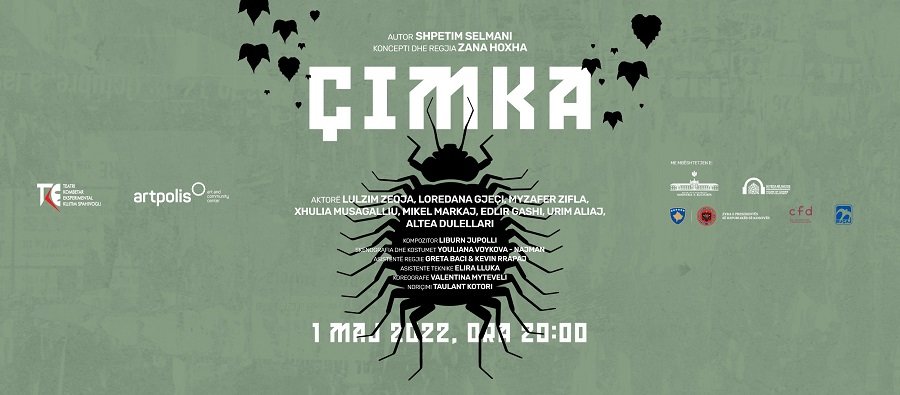
On May 1st, 2022, the public had an opportunity to experience special emotions, at the premiere of the performance “ÇIMKA” (The Bug), authored by Shpetim Selmani under direction of Zana Hoxha.
Resurected at the “ House of Leaves”, where not long ago many peronalities and ordinary citizens were bugged “ÇIMKA” (The Bug) comes as a reflection on the past of the Albanian people and a call to reflect and learn from it.
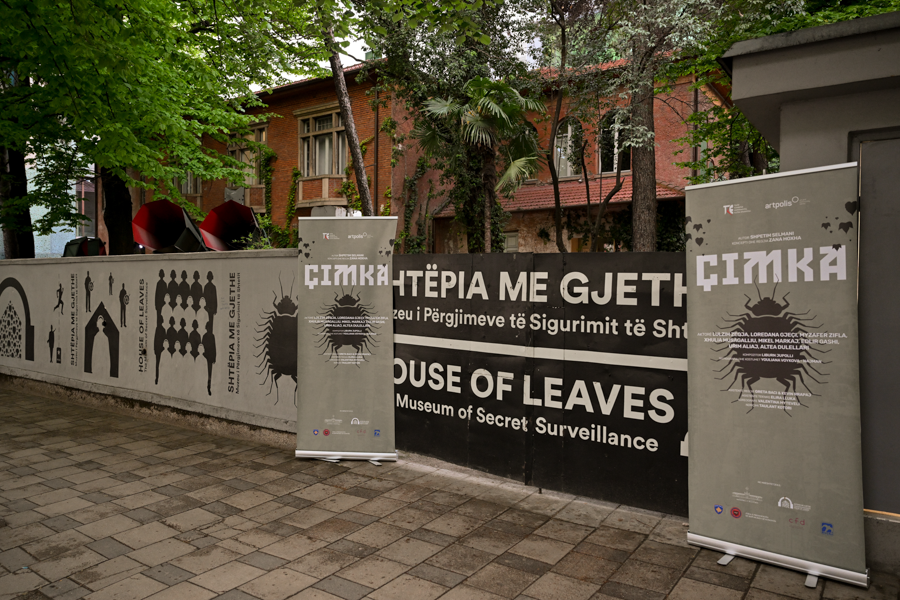
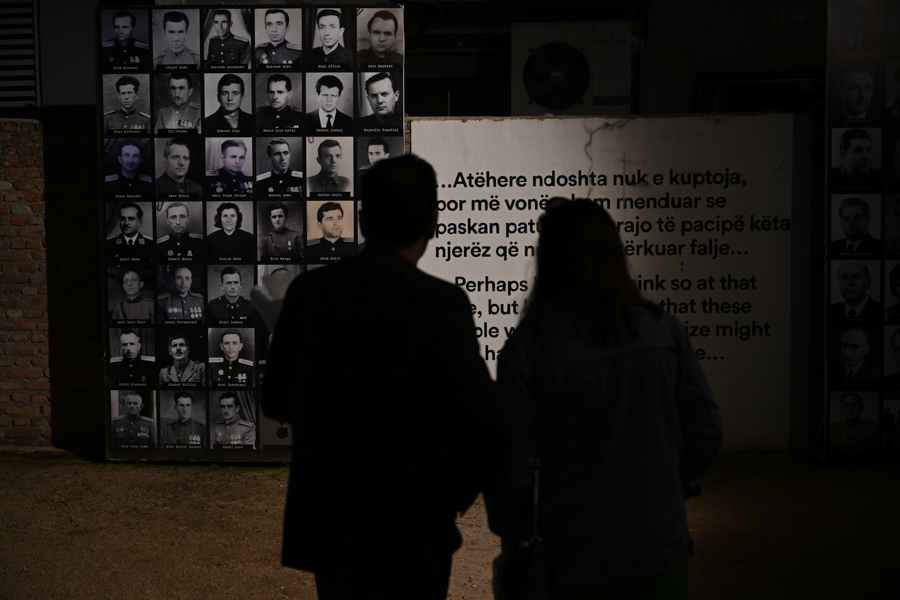
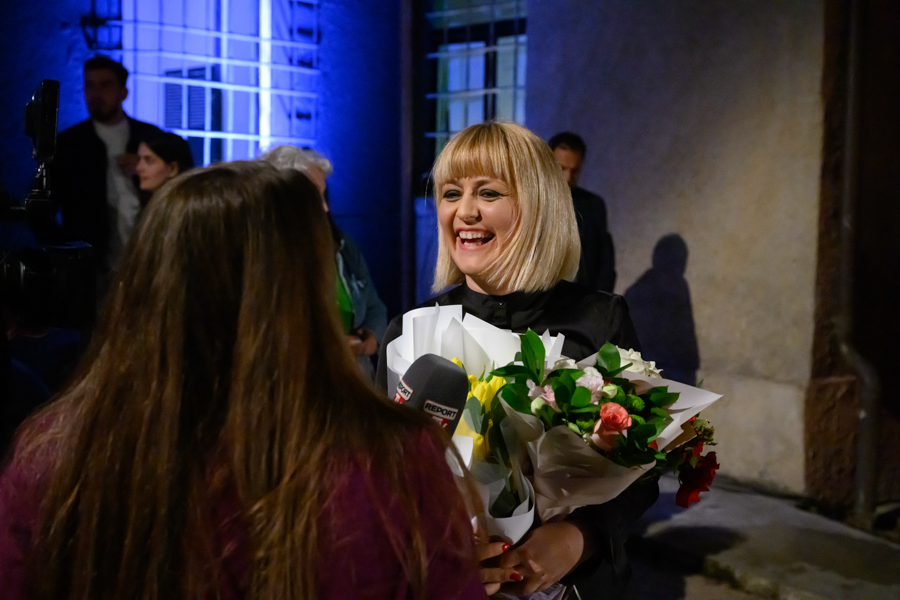
The public as a “leaf” or a “bug” experienced two worlds in parallel, the dictatorship in Albania and the Yugoslav regime in Kosova.
The taping stories, tortures, terror, the oppression of thousands of souls comes alive between two Protagonists, dervish Shaqa and Musine Kokalari.
The protagonists of the play “ÇIMKA” ( The Bug) for the Director Zana Hoxha represents the symbol of resistence in different ways: “ A troubadour, surviving through his songs, and the other a dissident artist who gave her life without losing her integrity”.
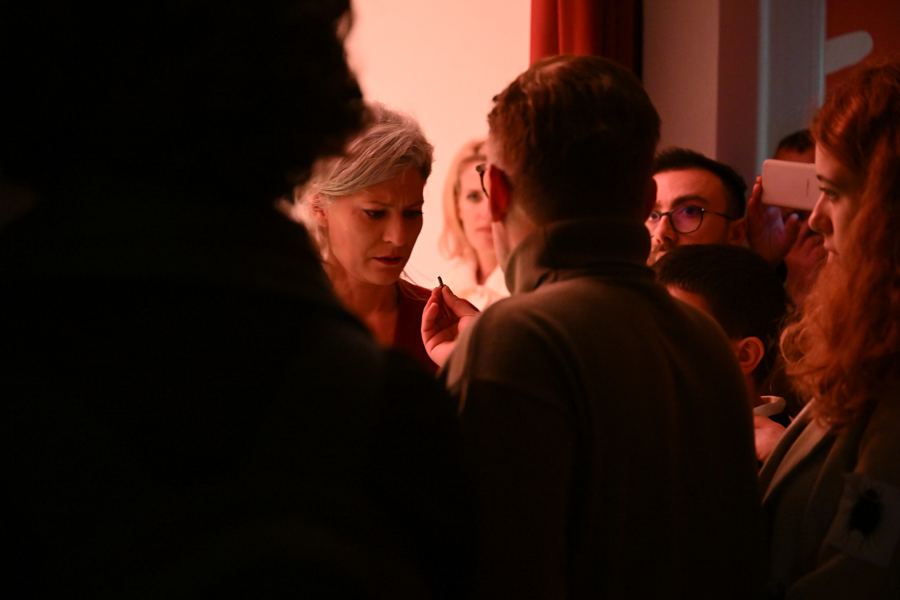
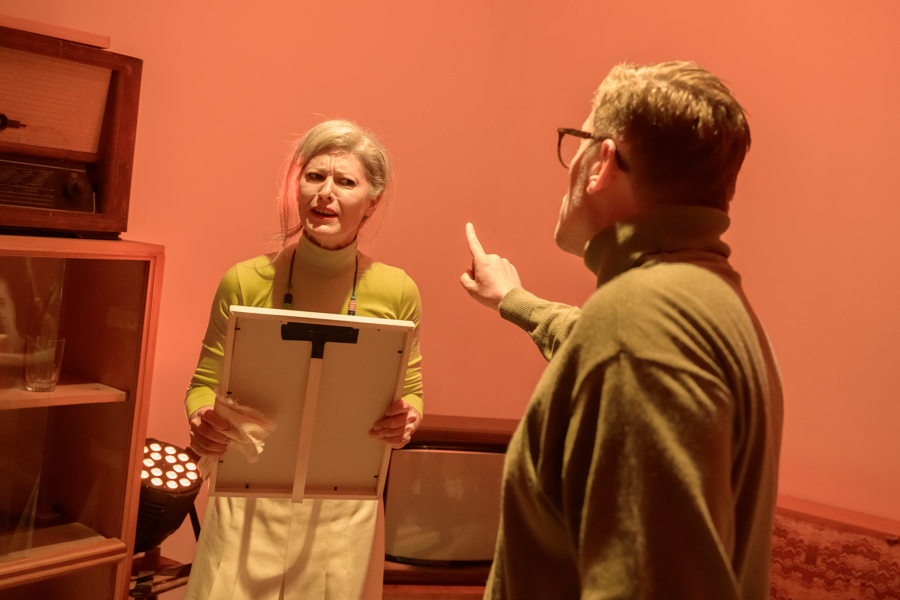
The scenes change. The public moves from the tight spaces of the museum into the open space outside, to be introduced with an anxiety that the Albanian people have experienced for a long time. This is also portayed through the painting of Edison Gjergo, an artist who was a victim of the totalitarian regime in Albania. The anxiety arises when the protagonists cannot find an appropriate space to hide the Gjergos’s painting, that was hit by the irron fist of the censorship.
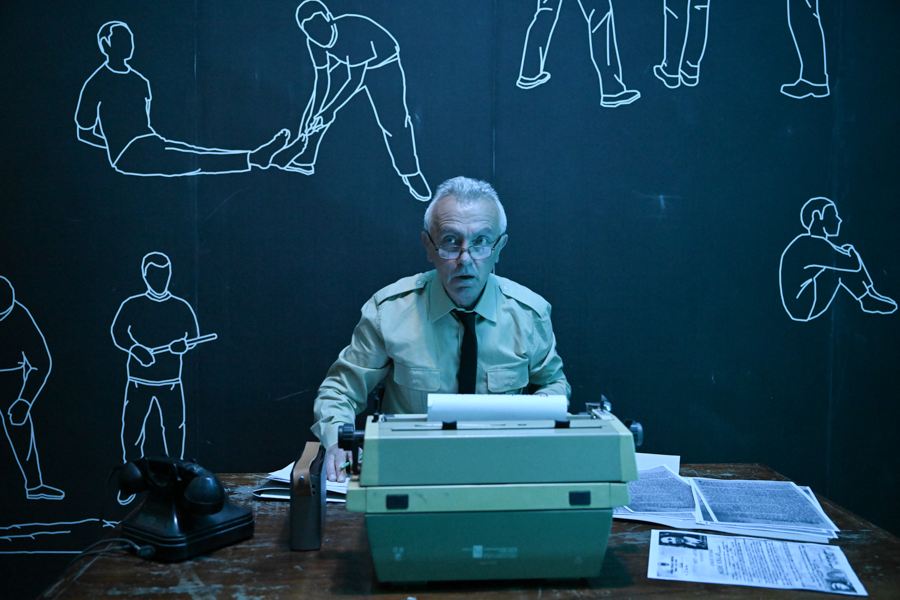
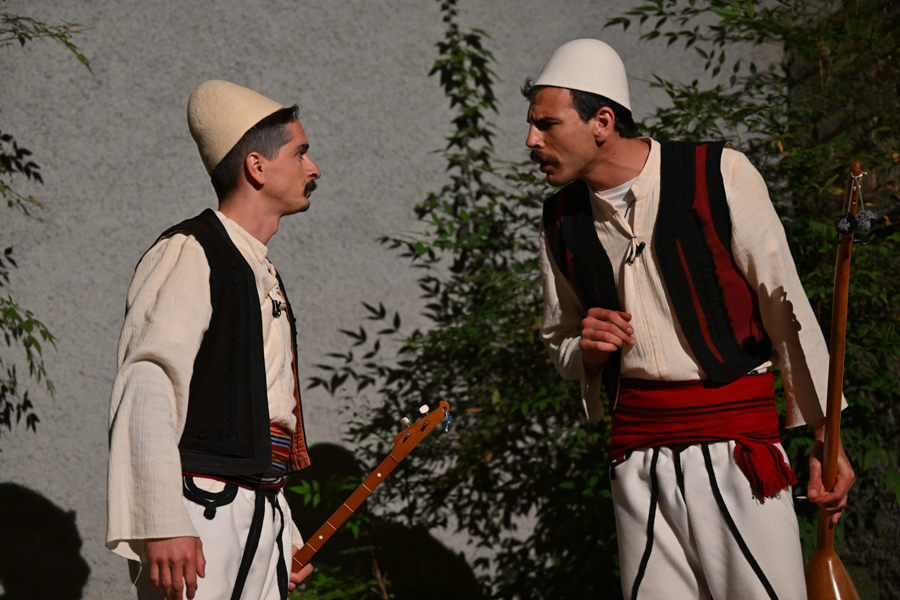

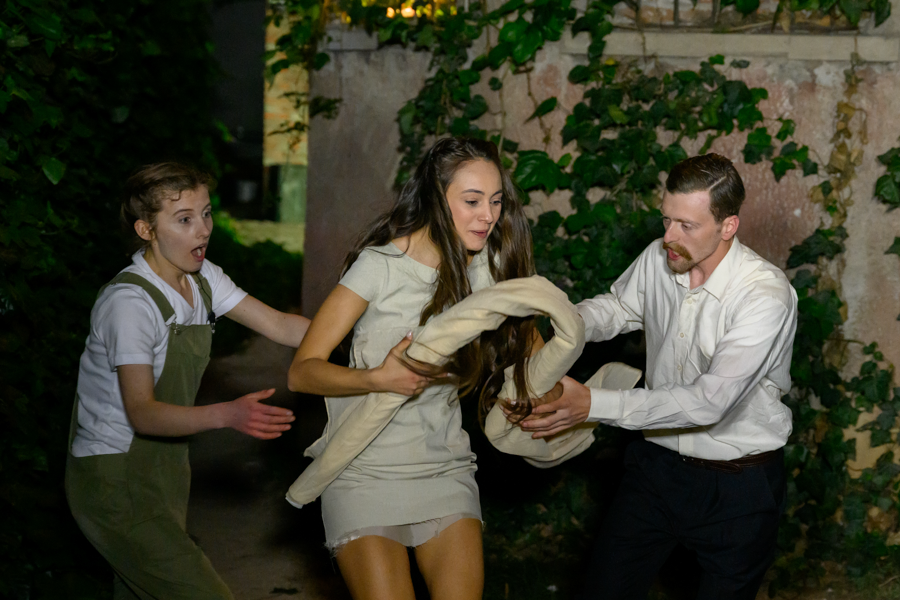
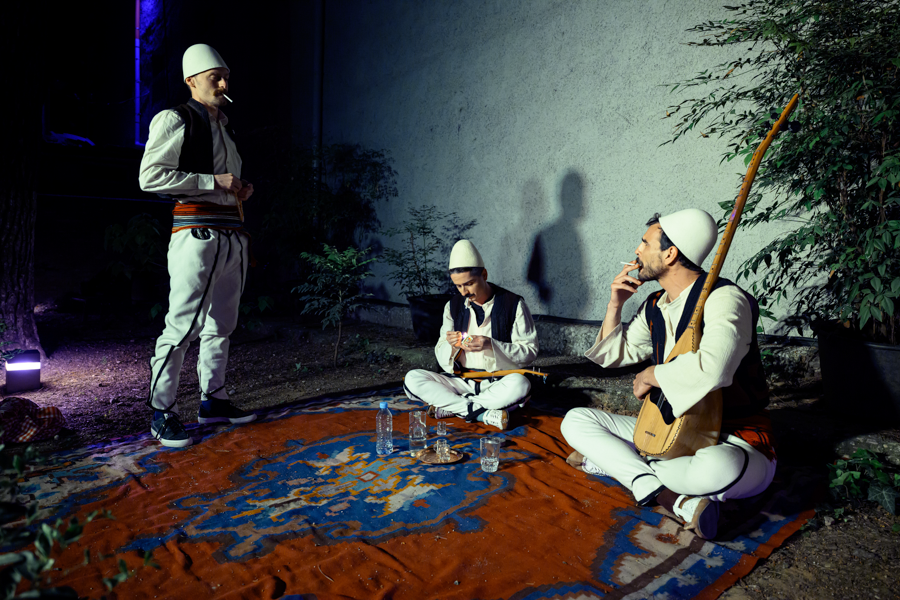
But, the dreams, and the love of life and freedom, the song and dance climaxes during the meeting between Dervish and Musine, both the victims of the regimes on both sides of the border. The protagonists that inspire us until this day.
The performance closes with a powerful mesage from Musine Kokalari: “ The truth is that here reigns fear, and terror. But who dares to say no, who? Nobody! But inside my heart the dreams reign. I know if it’s not me, those who will come after me will dance, they will take their steps as they please. Not a single oppressive system would be able to throw their net over the needs of a person to practice his free will”.

The Production: National Experimental Theater
“Kujtim Spahivogli” & Qendra Artpolis
Author: Shpetim Selmani
Director: Zana Hoxha
Actors: Lulzim Zeqja, Loredana Gjeçi , Myzafer Zifla, Xhulia Musagalliu, Mikel Markaj, Edlir Gashi, Urim Aliaj, Altea Dulellari
Composer: Liburn Jupolli
Scenography and Costumed: Youliana Voykova – Najman
Director Assistant: Greta Baci & Kevin Rrapaj
Technical Assistant: Elira A Lluka
Choreographer: Valentina Mytevelli
This performance was sponsored by the Ministry of Culture in Albania, “ The House of Leaves” The Office of the President, Kosovo, CFD, and Buçaj Corporation.
📸 Andis Rado
#ZanaHoxha #Artpolis #TeatriKombetarEksperimental #Çimka #theater #documentary #tirana #prishtina #albanianart #muzeugjetheve #albania #kosova #artandcommunity

The evening of October 31, 2021, marked a historic moment for culture in Kosovo, with the inaugural concert of the Kosovo Opera, “Opera Gala,” held at the Sports Hall of the Palace of Youth and Sports in Prishtina. Zana Hoxha was invited by the renowned director Burbuqe Berisha to co-direct this grand project. Unfortunately, just days before the concert, Berisha passed away, unable to witness the fruits of their collaborative efforts.
For Hoxha, the evening was an emotional experience – grief over the loss of her friend and collaborator, Burbuqe Berisha, and pride in their joint commitment, which resulted in an unforgettable spectacle.
“Super proud with the opportunity to become the Director of Opera Gala Concert last night and how this evening surpassed every expectation,” Hoxha shared on social media after the concert.
In an interview with KOHA Group, Hoxha described the process as a unique challenge, as it was her first time directing this kind of event.
“As we know, we don’t have directors specialized in opera. This is not opera, it’s an inaugural concert for the opera, but it involved a lot of organizational work. Over 200 people worked on this event, and I was one of the people managing all of them. It was a fantastic coordination with the working group established by the Ministry of Culture. As directors, we started the process with the working group to create a venue that, as you know, didn’t exist before, but was made specifically for this concert. We worked on the visual aspects, the video details you saw, the stage design. Everything was work that’s not directed in the usual sense, as in a play or film, but more in the sense of an event, a concert for television,” Hoxha explained to KOHA.
Despite technical challenges, the evening exceeded expectations and marked a major step for opera in Kosovo. “Opera Gala” remains a powerful memory for Zana Hoxha, intertwining the feelings of loss and pride for a shared achievement, proving the power of art to unite.


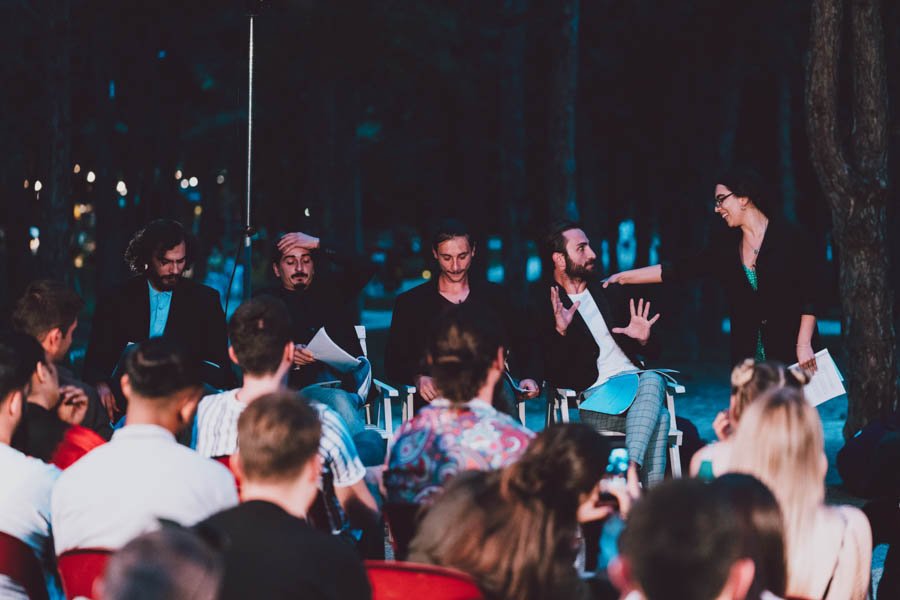
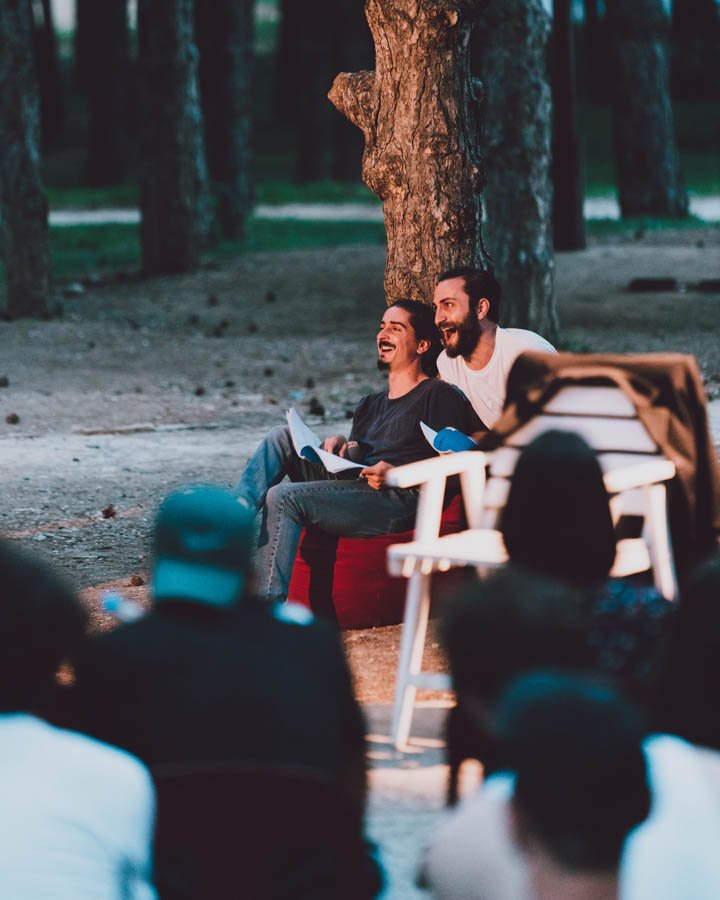
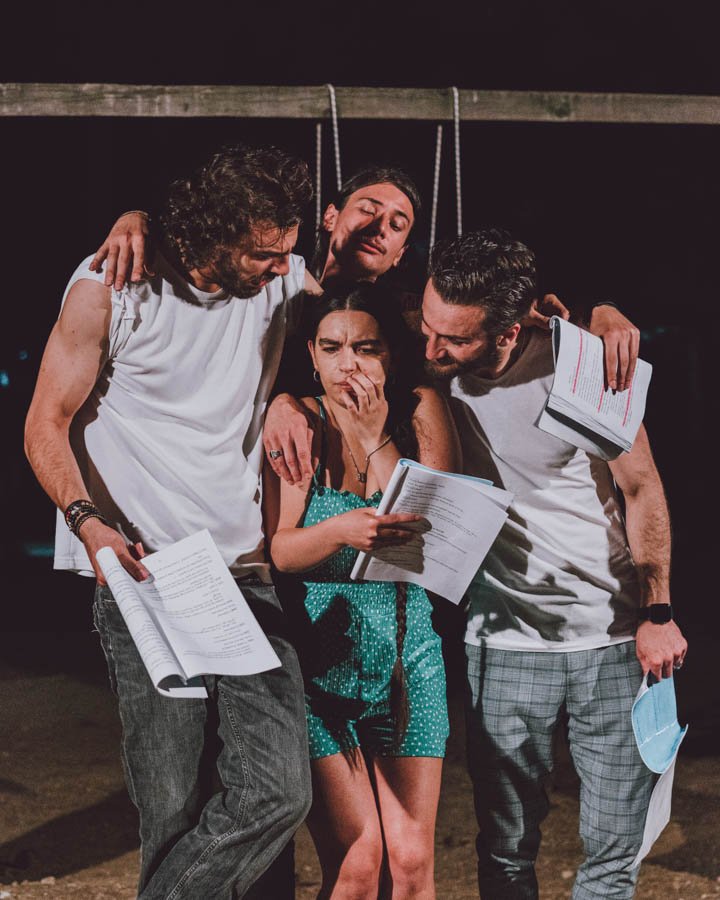
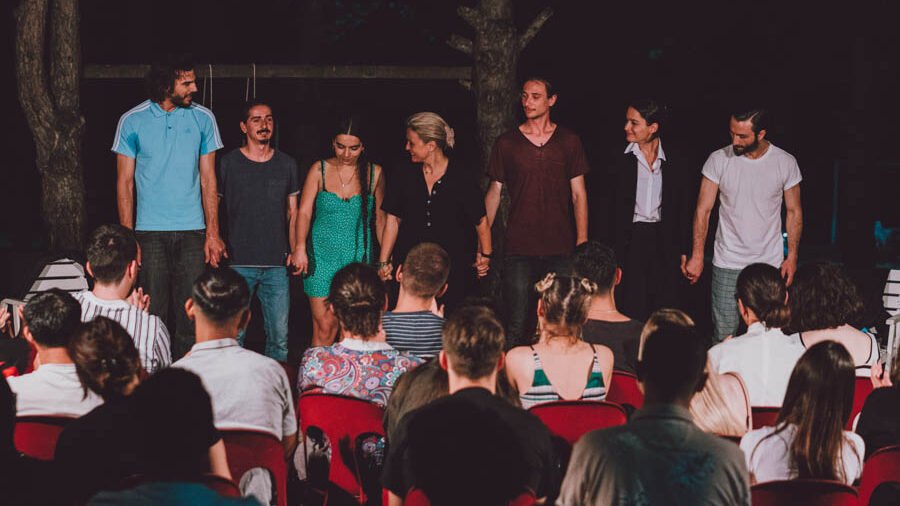
On June 25, 2021, the stage reading “Games in the Backyard”, directed by Zana Hoxha, was premiered in the City Park in Prishtina.
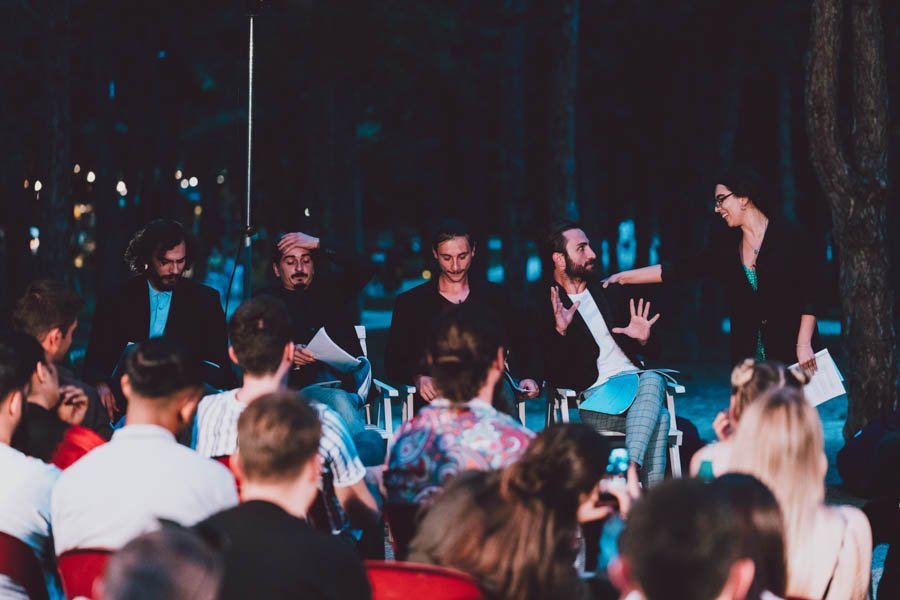
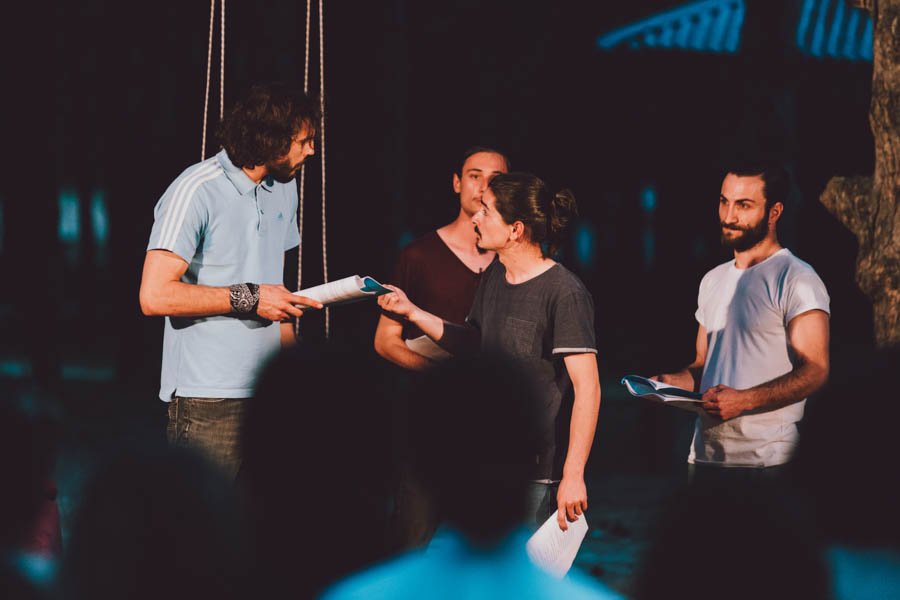
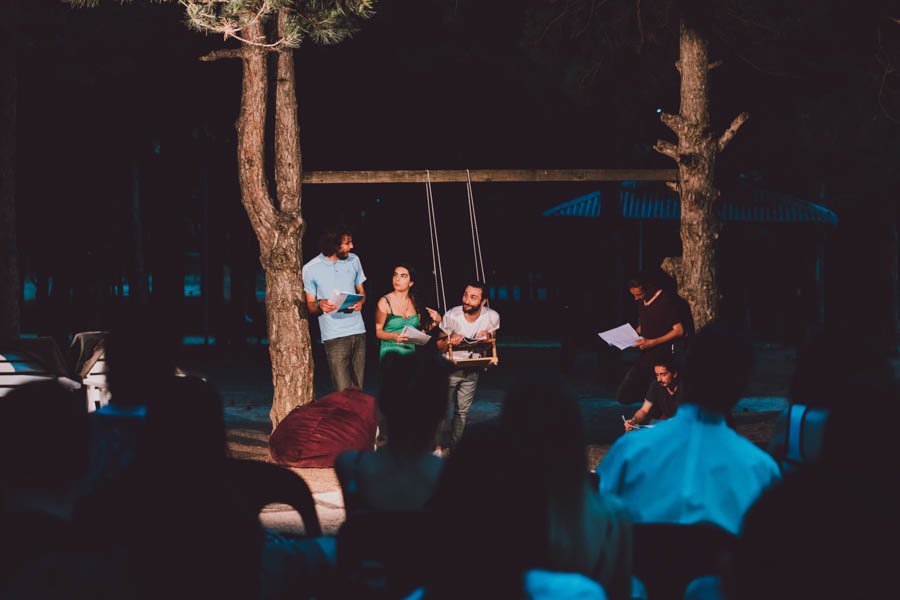
The resident troupe of the Artpolis Center performed this work by Edna Mazyas in front of an audience with gender, age, and ethnicity diversity, which welcomed the realization of this work and the topics addressed in it.
Edna Mazya through her work brings us the real story of the rape of a girl by four young people in Israel, in the years 1988-91. In addition, “Games in the Backyard” highlights the deep roots of the patriarchal system in state institutions, which only increases the burden of oppression on women.
The activist, Durim Elshani, regarding this topic said that “it is not natural for a boy to be unemotional, aggressive, violent, and harassing. It is a system of power created with clear norms, and with roles defined according to social constructs, where to be a ‘good, honest and loving’ boy one must be aggressive, provocative, and dominant. That is why the boys during the rape were not afraid of the violence they were causing, because that, within the masculine hegemony, makes you a strong man.”

Author: Edna Mazyac
Directed by: Zana Hoxha
Translator: Artur Lena
Actors: Zhaneta Xhemajli, Mikel Markaj, Edlir Gashi, Ismail Kasumi, Blerta Gubetini and Art Pasha


Recent Comments