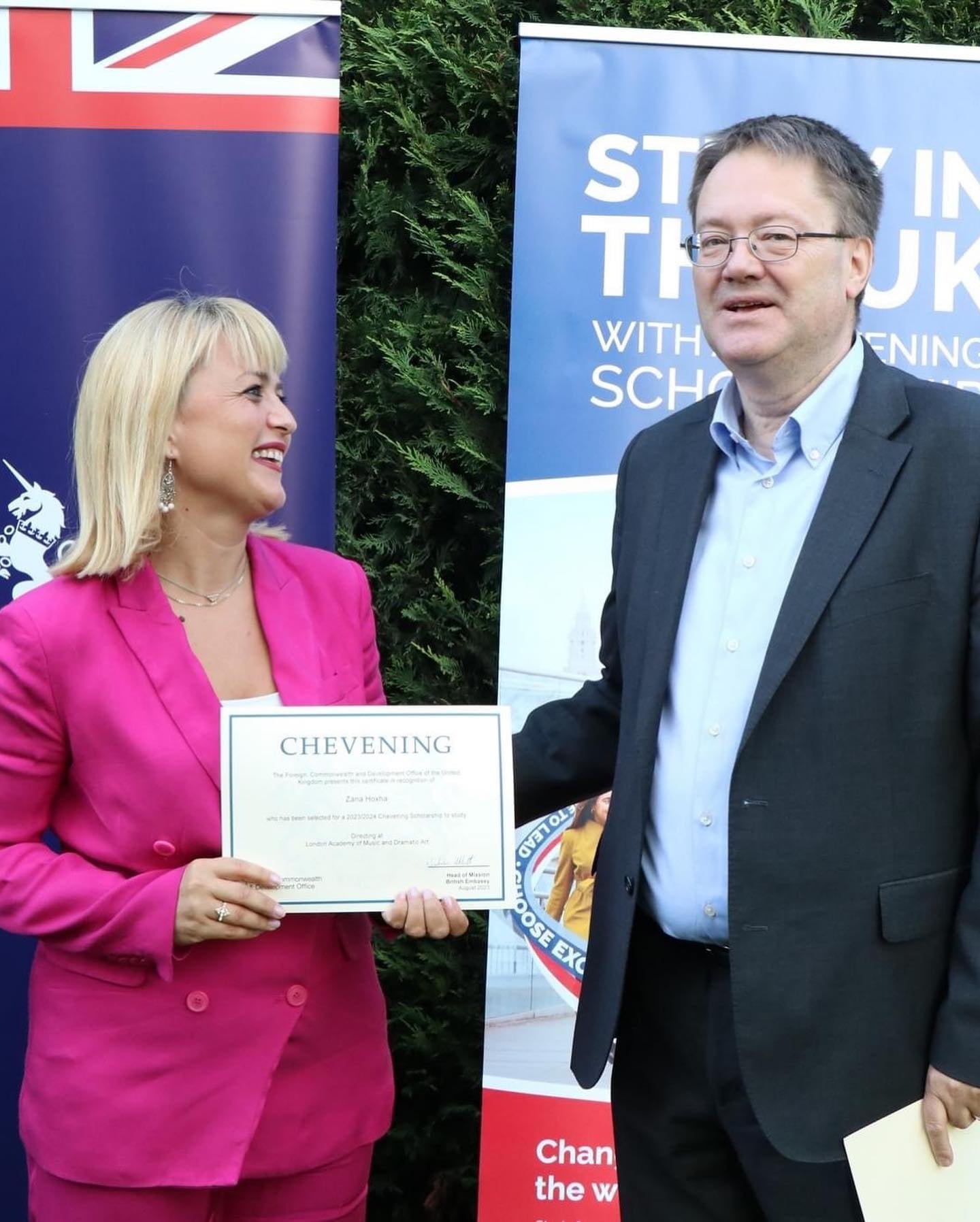
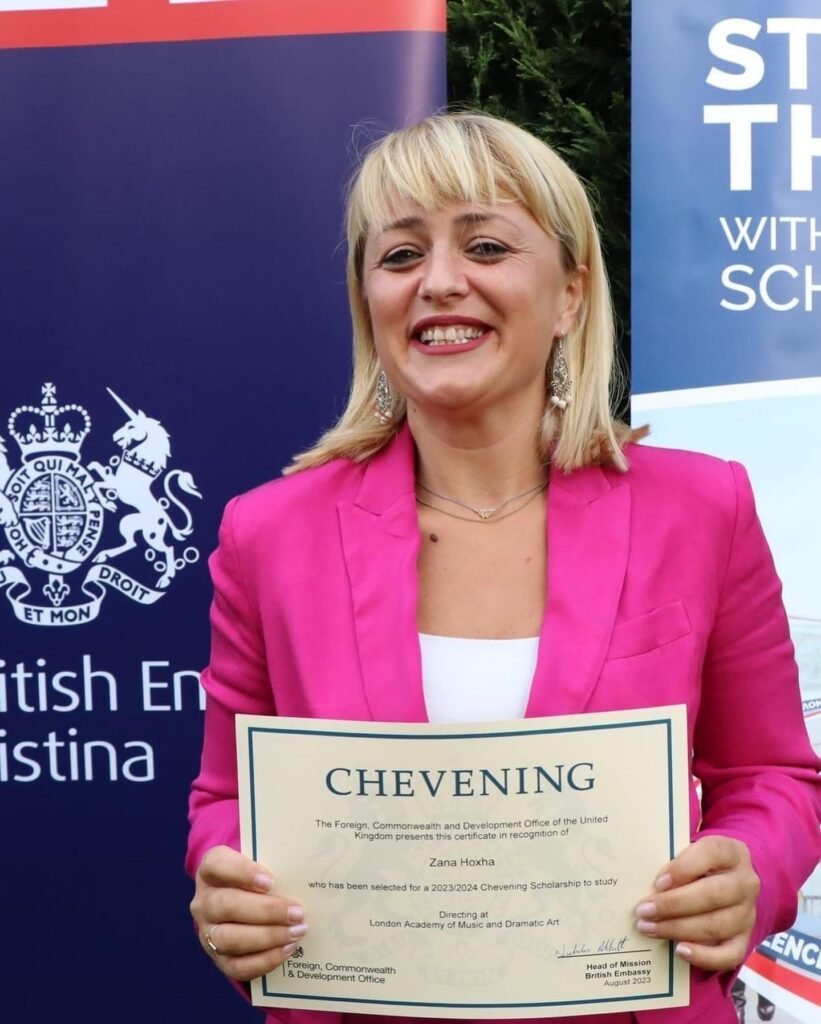
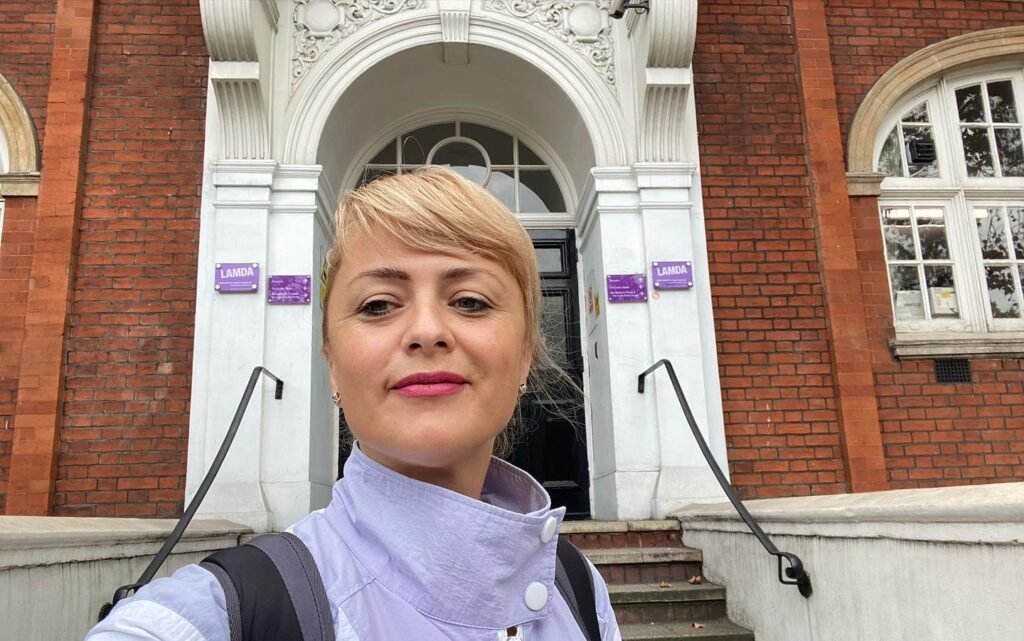
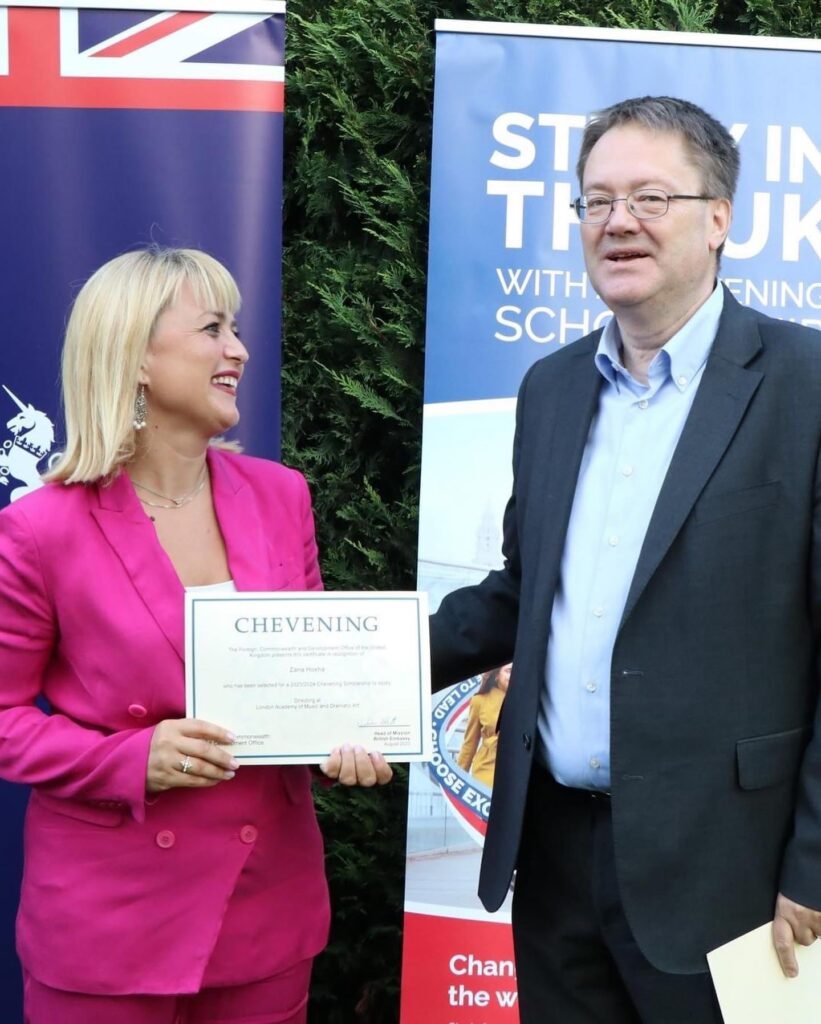
Zana Hoxha was awarded the prestigious Chevening Fellowship for a Master’s Degree in Theatre Directing at the London Academy of Music and Dramatic Art (LAMDA). She was also the first recipient of the Vjosa Berisha Memorial Scholarship, dedicated to supporting creativity and culture in honor of Vjosa Berisha’s legacy. This recognition marked a pivotal moment in Zana’s artistic and professional journey, reflecting her dedication, creativity, and vision for theatre in Kosovo.
At the start of her studies, Zana expressed her profound gratitude and enthusiasm for this transformative opportunity:
“I am profoundly grateful and enthusiastic to become a Chevening Fellow for the Master’s Degree in Theatre Directing at LAMDA London, a journey I embark upon with immense pride and determination.”
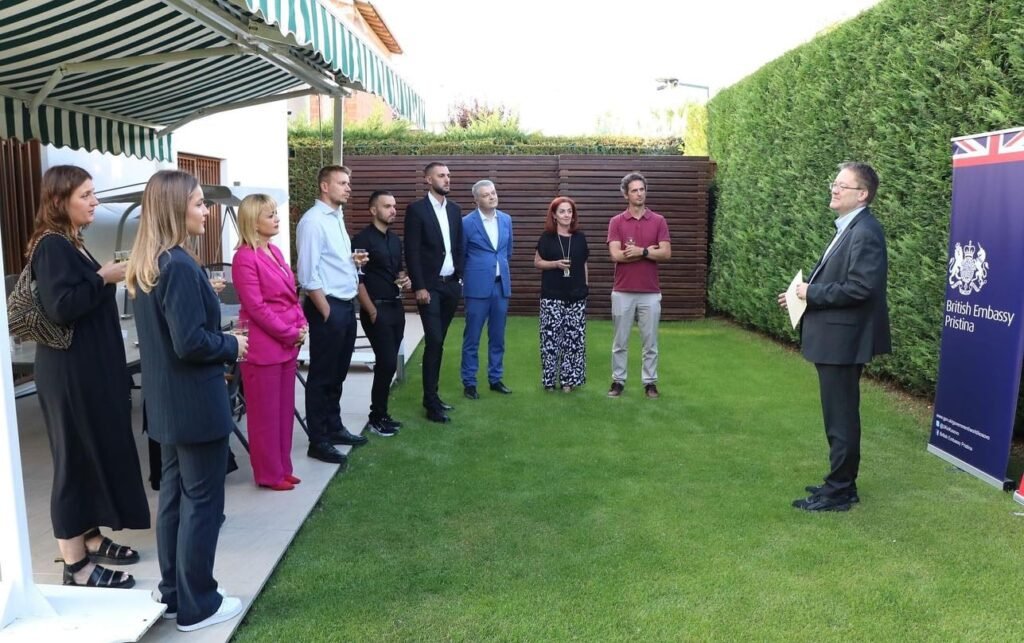
She thanked the British Embassy for their invaluable support and highlighted her commitment to cultural exchange:
“I am committed to absorbing the wealth of knowledge and experience that LAMDA has to offer and to utilizing this newfound expertise to enrich the artistic landscape in Kosovo. I am also eager to foster cultural exchange by sharing the essence of Kosovo’s vibrant theatre scene with British and international students.”
After completing her studies, Zana reflected on her graduation in 2024:
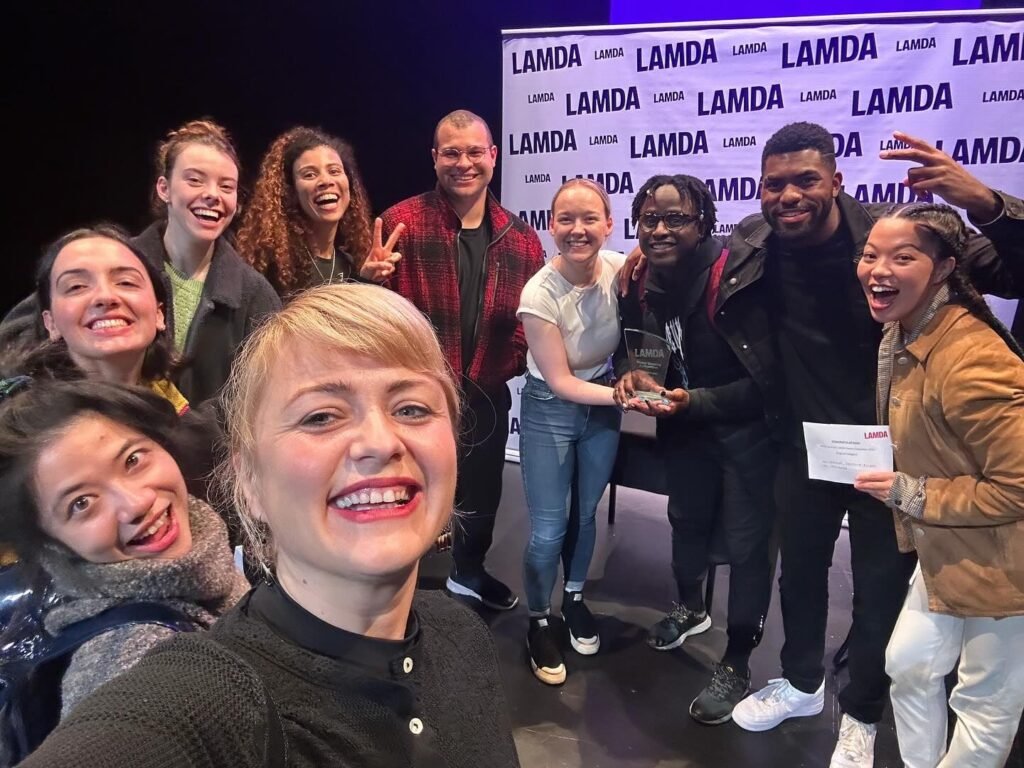
“I delayed this post for so long because I wasn’t ready to let it go and believe that my journey with Chevening was over. But after years of passion, perseverance, and creativity as a director, I wanted to challenge myself and everything I knew by starting from the beginning. I am thrilled to share that I graduated with a Master’s degree in Theatre Directing from LAMDA (class 2023–2024).”
Her time at LAMDA not only sharpened her craft but also deepened her belief in the transformative power of theatre and storytelling. She expressed gratitude to all who supported her journey:
“A huge thank you to everyone who supported and inspired me along the way—especially my family, my mentors, and my colleagues from Artpolis. I couldn’t have done this without you. LAMDA reinforced my belief in the power of storytelling and the transformative potential of theatre and art. Let go and let flow…”
Zana Hoxha’s Chevening Fellowship and graduation from LAMDA represent a culmination of passion, perseverance, and artistic growth. Her achievement stands as a testament to her commitment to enriching Kosovo’s theatre scene and fostering cultural dialogue on an international stage.
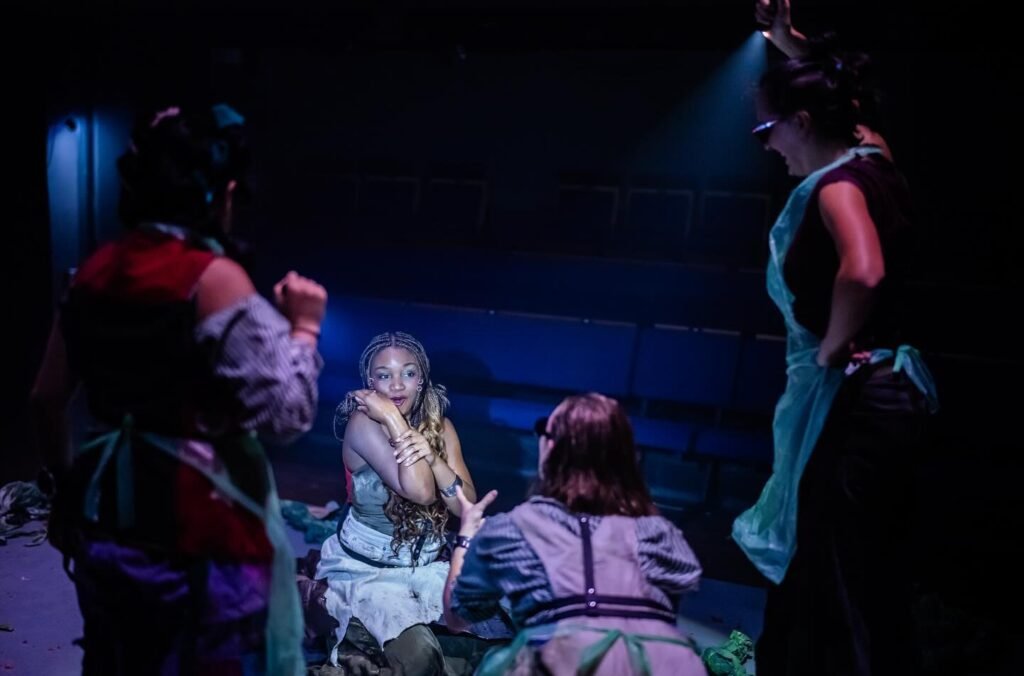
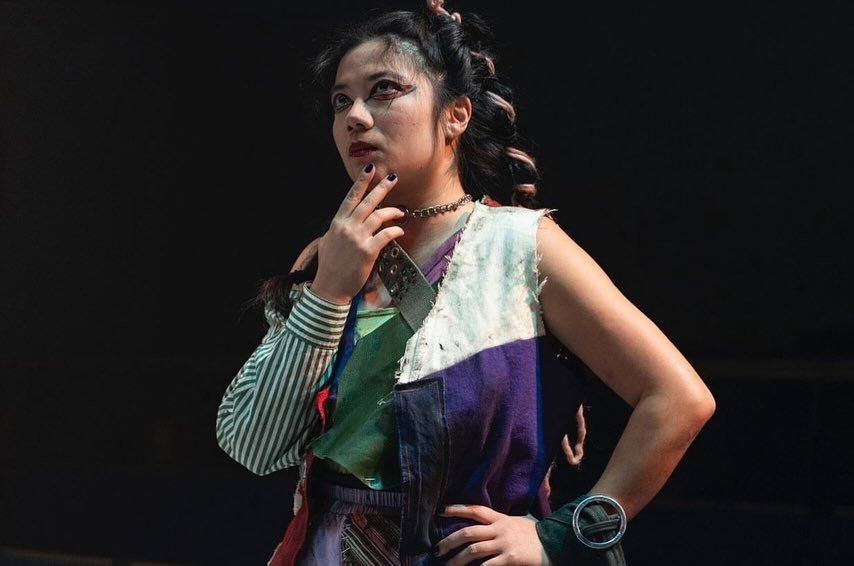
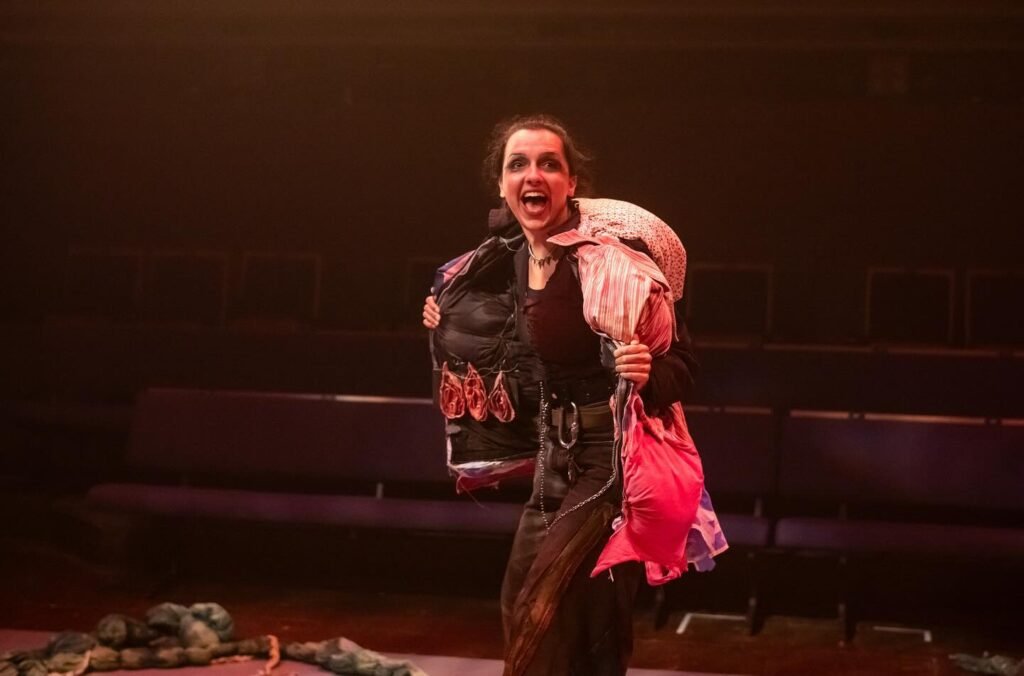
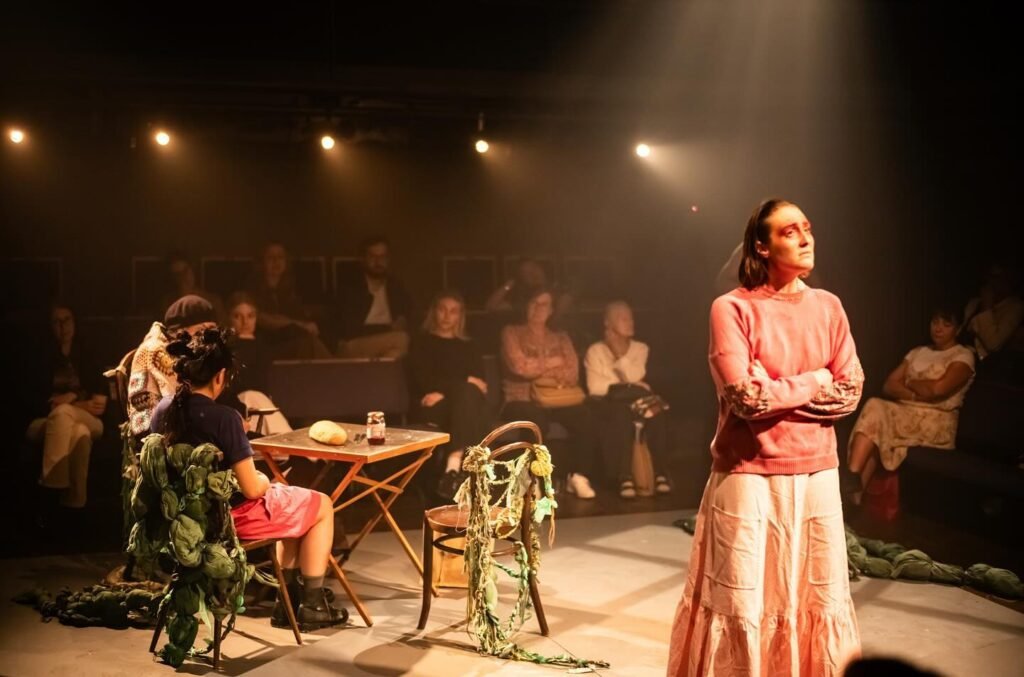
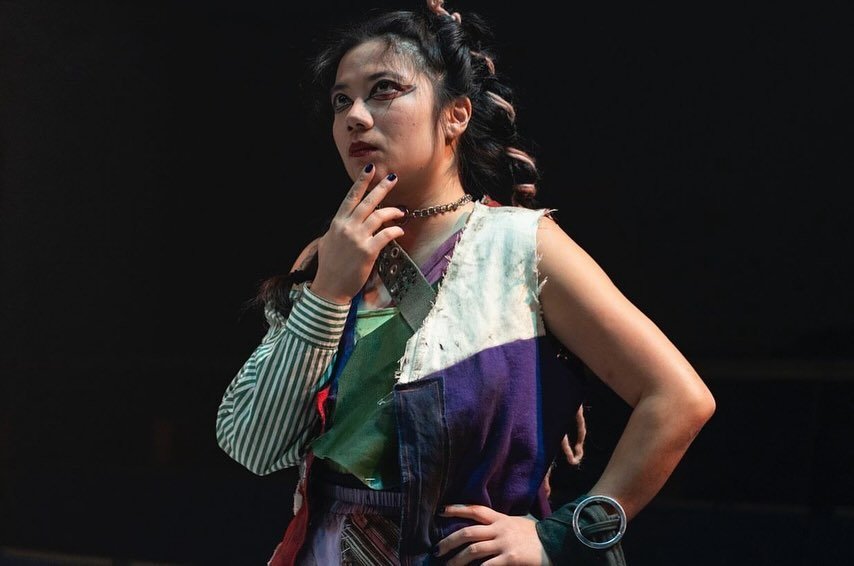
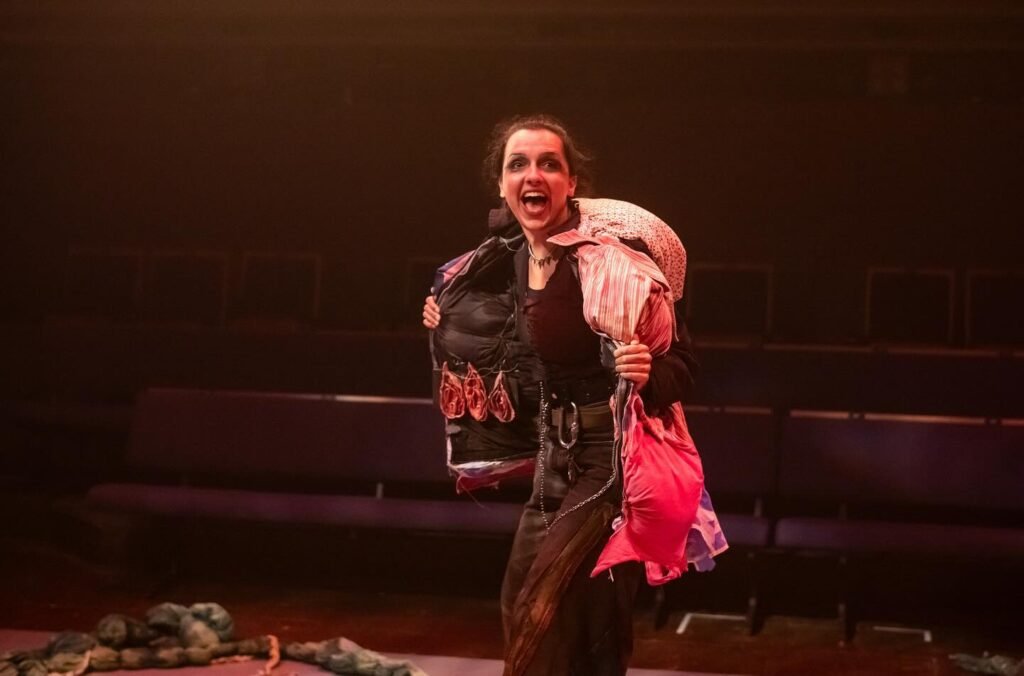
“Revolt. SheSaid. RevoltAgain”, written by Alice Birch and directed by Zana Hoxha, is a sharp, witty, and profound examination of what it means to be a woman, performed by an all-female cast including Natalia May, Xixi Xiao, Tanaka Mpofu, and Olive McHugh.
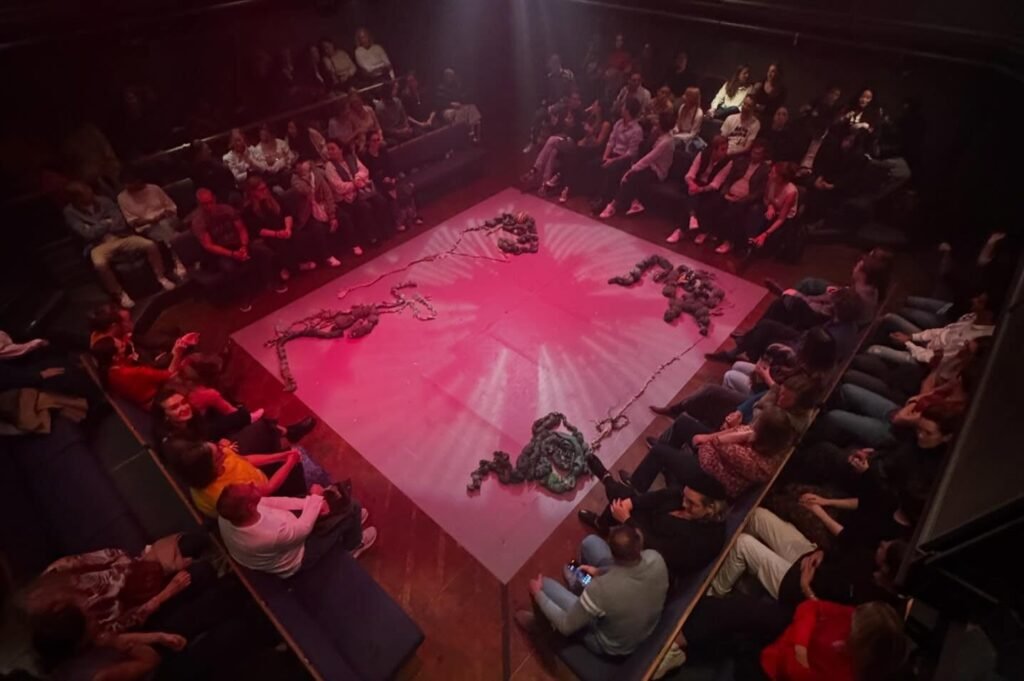
Our post-apocalyptic world designed by Grace Rumsey, will reimagine the previous rules and conventions that brought our society to an end. Asking what’s stopping us from doing something truly radical to save our future? Revolutionize the language. Revolutionize the world. Revolutionize the work. Revolutionize the body. Galvanise.
“Revolt. She Said. Revolt Again”, had its premiere at the Greenhouse Festival, London on 5th of September. Already it had four presentations, including on 28th of September, 2024 on FemArt Festival 12th edition.
Writer: Alice Birch
Director: Zana Hoxha
Cast: Olive McHugh, Tanaka Mpofu, Xixi Xiao, Natalia May
Set and Costume Designer: Grace Rumsey
Lighting Designer: Ghoti Fisher
Sound Designer: Aidan Gibson
Movement Director: Kristin Fredrickson
Instrument Consultant: Julia Deng Hanzu
Stage Manager: Ace Turner
Set and Costume Assistant: Xiaomin Fan
Production: LAMDA and Orange Tree Theatre
Here you can find theatre reviews of “Revolt. She Said. Revolt Again.”:
Day 4, FemArt 12 Festival September 28, 2024 | 21:00-22:10 | Oda Theater, Prishtina
Written by: Alice Birch | Directed by: Zana Hoxha | Cast: Olive McHugh, Tanaka Mpofu, Xixi Xiao, Natalia May Produced by: London Academy of Music & Dramatic Arts (LAMDA)
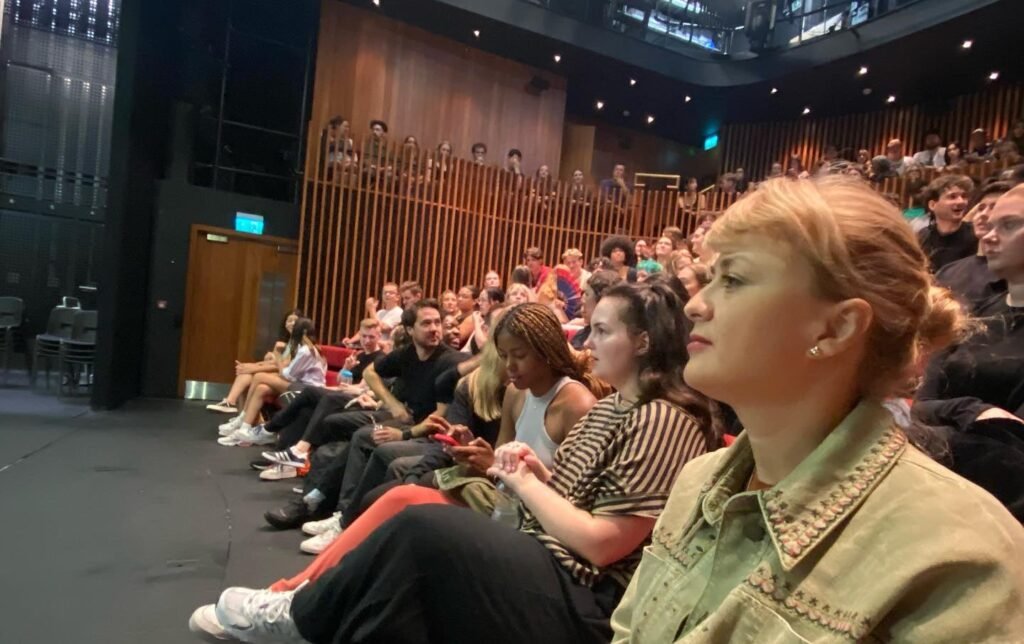
On September 28th, 2024, Zana Hoxha brought Alice Birch’s “Revolt. She Said. Revolt Again” to Kosovo’s Oda Theater during the FemArt 12 Festival. The play, recently premiered at London’s Orange Tree Theater, was produced by LAMDA and captivated the Prishtina audience, with some attendees sitting on the floor due to the overflow. Among the crowd was the British Ambassador, who personally congratulated the director and cast.
“Revolt. She Said. Revolt Again” challenges traditional ideas of how women should behave, using a series of short, provocative scenes to question language, relationships, work, and everyday norms. Alice Birch’s writing deconstructs these societal expectations, reimagining them in bold ways. Hoxha’s direction takes this further by turning familiar actions and words on their heads, from the symbolism of marriage proposals to rethinking motherhood, aging, and love.
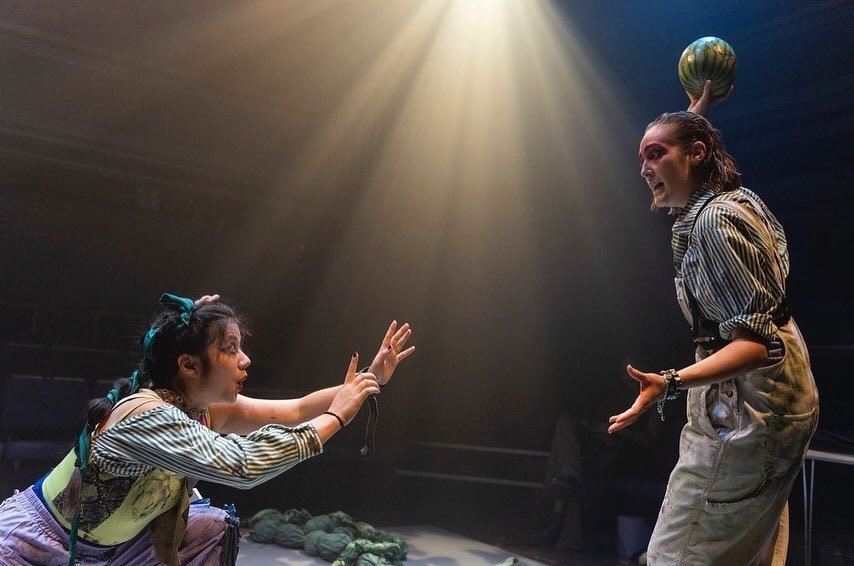
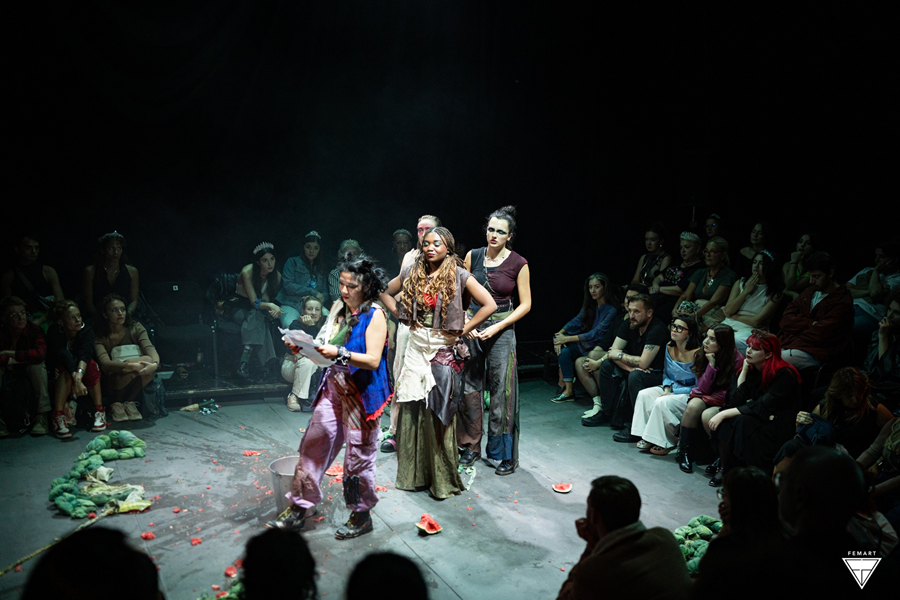
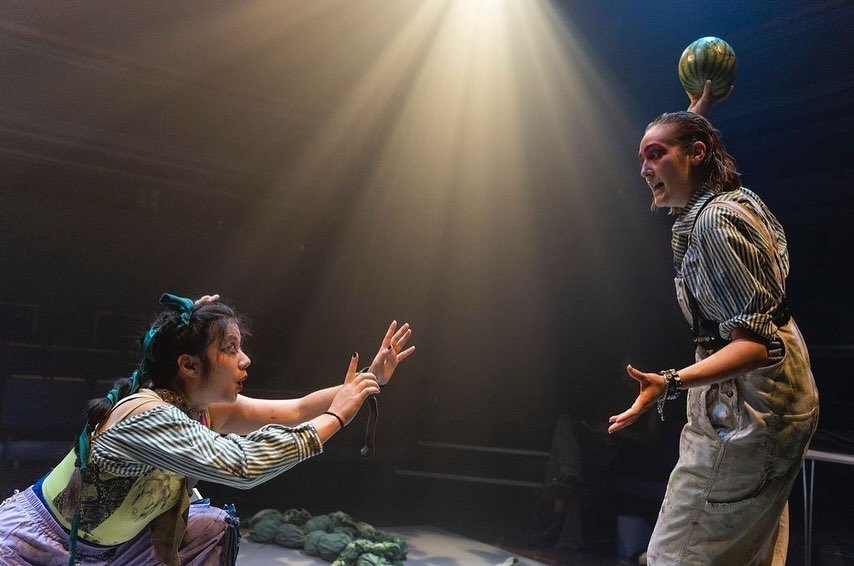
The play reflects the notion that “well-behaved women seldom make history” and highlights the restrictive language that has controlled women for centuries. Zana Hoxha emphasizes this, allowing her actresses to explore words and actions in ways that disrupt conventional theater. The women, played by McHugh, Mpofu, Xiao, and May, present a range of emotions, often raw and uncomfortable, leading the audience to reflect on deeply embedded societal limitations. One striking scene involving a woman and a broken watermelon pushes boundaries of intimacy and self-exploration, provoking the audience to confront their own reservations about freedom.
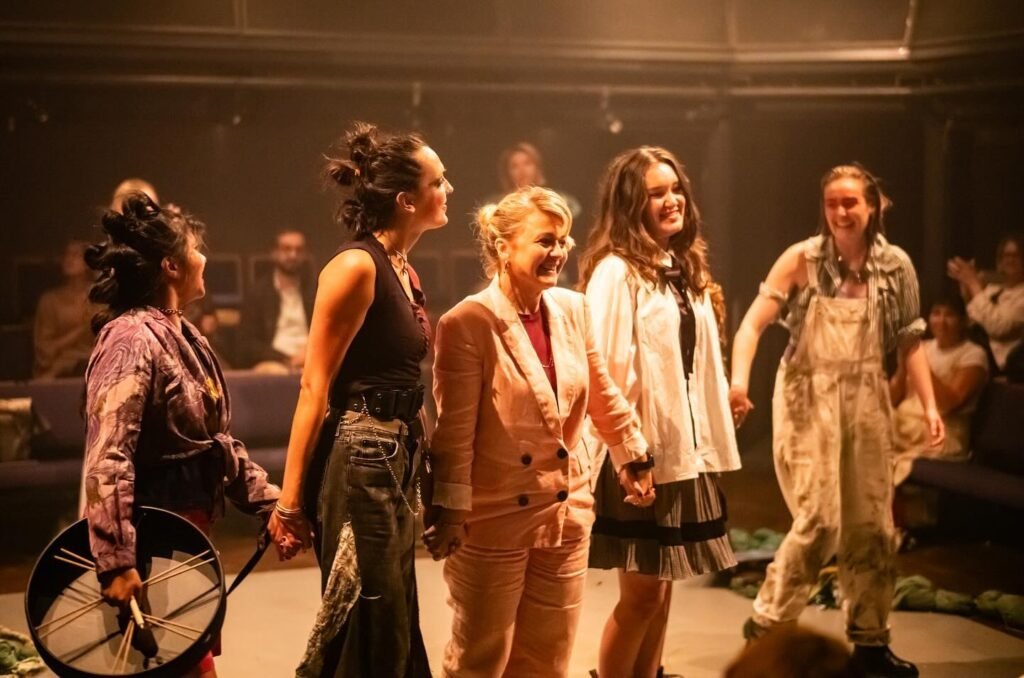
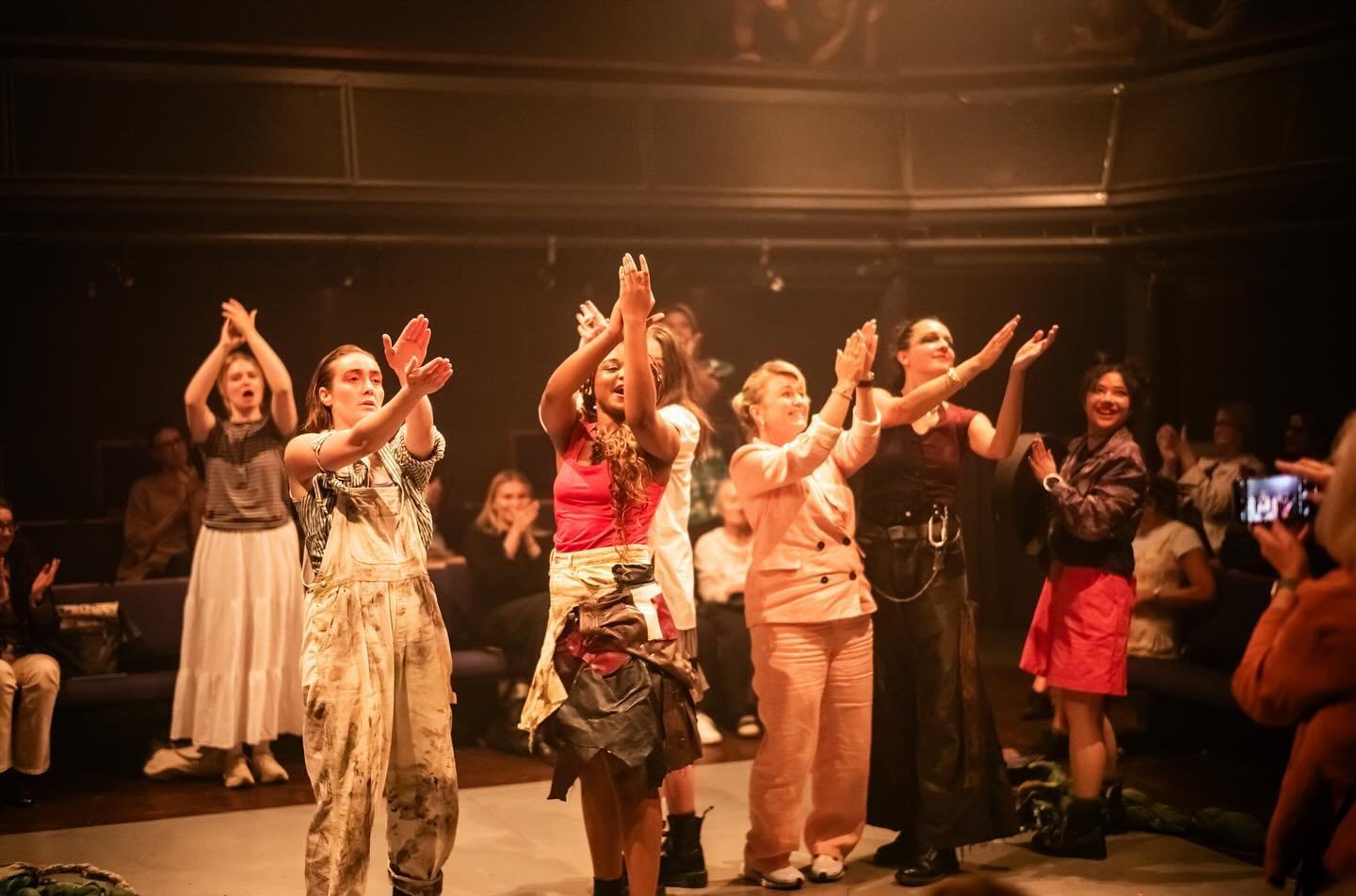
The play is structured in three parts, each experimenting with different storytelling techniques. In one particularly memorable scene, four women from different generations silently face the audience, representing the struggles women endure across time. This moment, like much of the play, blurs the line between performer and character, making the audience feel engaged in the unfolding experience.
Zana Hoxha’s innovative direction encouraged the actresses to break traditional theater norms, making a strong statement that patriarchy is not an unchangeable structure but a societal construct that can be dismantled. Beyond gender, the play explores deeper themes of choice, freedom, power, and control.
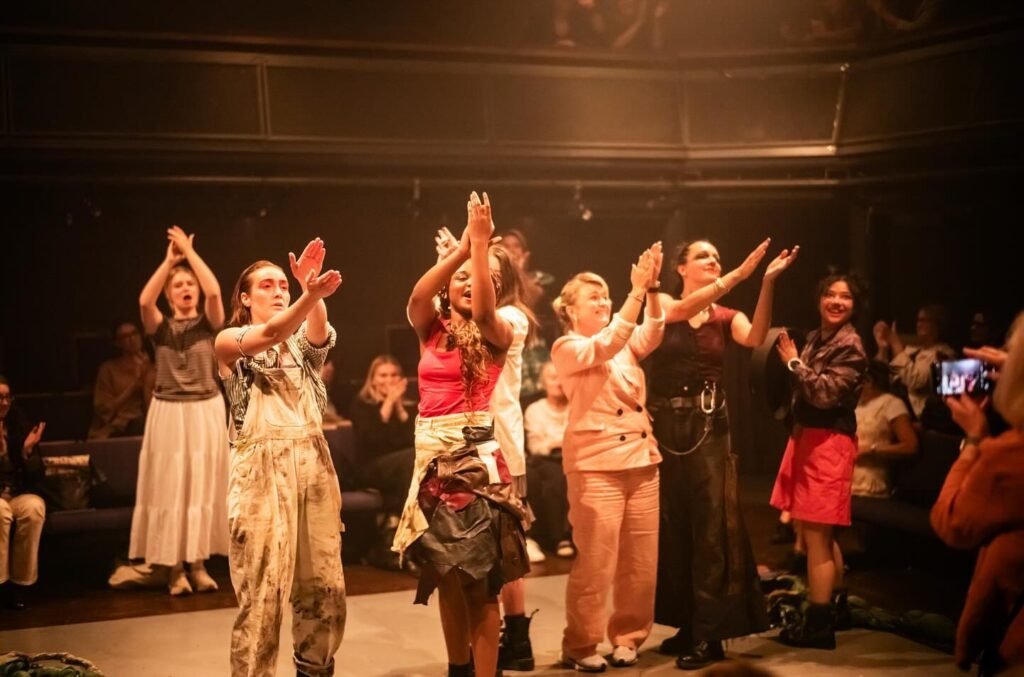
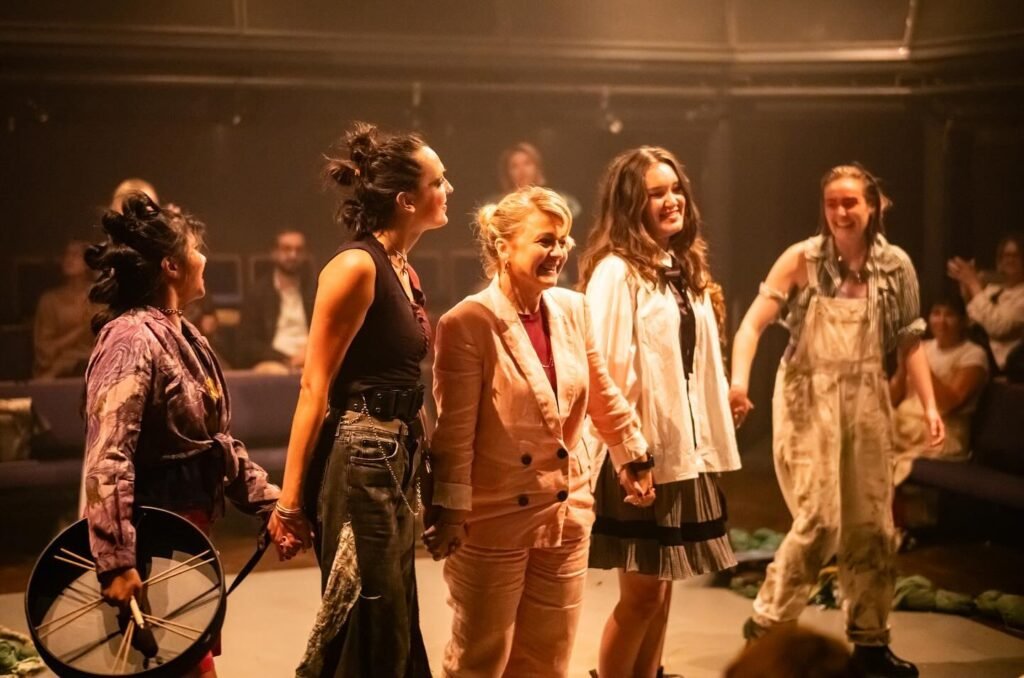
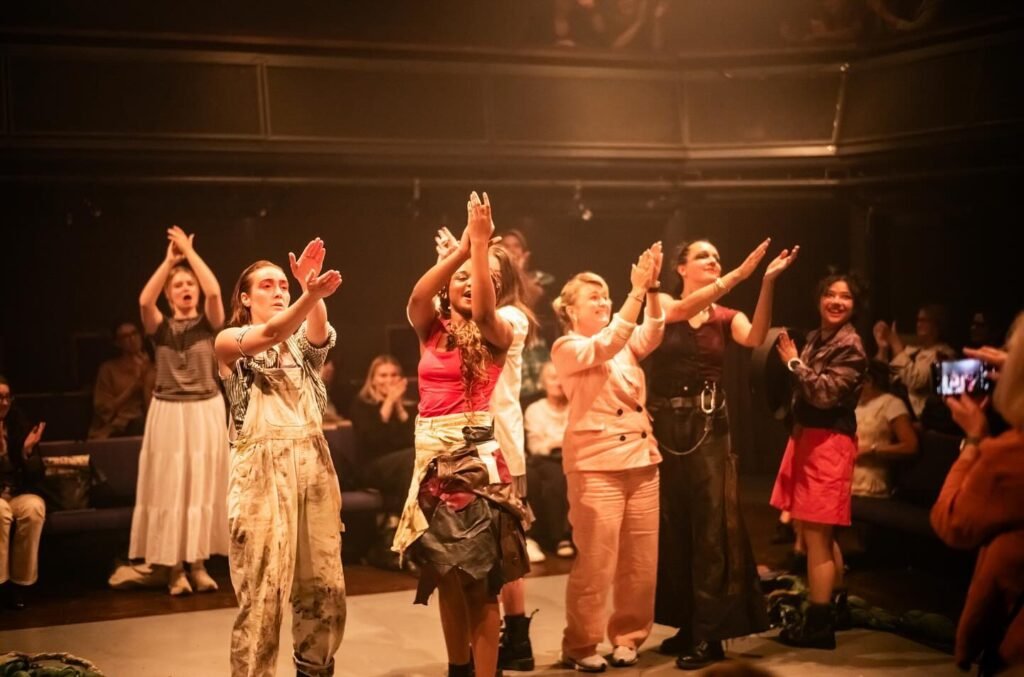
The performance concluded with a standing ovation, as the actors raised banners above their heads, inviting the audience to join in shouting “WE HAVE A CHOICE.” Through Zana Hoxha’s bold approach, the audience witnessed the power of women pushing boundaries, urging everyone to reflect and take part in challenging societal norms. The performance leaves lingering questions for those accustomed to traditional theater: Have we ever allowed ourselves such complete freedom, to cast off societal constraints?
In rebellion, mere thought isn’t enough—at least not for the women of the 21st century. That’s why the show titled “Revolt. She Said. Revolt Again.” gives voice to this need. With a script by Alice Birch and directed by Zana Hoxha, the production from England featured a cast of actresses who showcased the uniqueness of their performances. It captivated and engaged the audience right in the heart of Pristina, at the “ODA” theater, as part of the 12th edition of FemArt. The director incorporated a crown for those entering to see the show, reflecting the spirit of the place from which it originated. Zana Hoxha returned to Kosovo with a production unlike anything she had created in her long career as an activist and director. She taught us to rebel and to engage with our rebellion in a modern way.
Actress Tanaka Mpofu began by addressing one of the girls in the audience with a compliment about her earrings and asking where she found them, establishing an immediate intimacy on stage. This created interaction with many in the audience, and she playfully asked, “Will you vote for me?” She received a few “yeses.” As an actress, her performance garnered many more “yeses” for the energy she brought to the stage and her disregard for the situations around her. She skillfully played with these dynamics, placing other characters into the mix and guiding them through dilemmas to spark debate. A scene exploring love and sexuality between two characters followed, illustrating various ways to express and desire one another. Tanaka Mpofu mentioned that all her power in the performance was inspired by the director’s passion. “I like works that have a purpose behind them. I am encouraged by Zana’s passion for feminism and for fighting for women’s empowerment. Her invitation to us in Kosovo was very emotional. The people here are very open and welcoming, and everything felt easy,” she said immediately after the show.
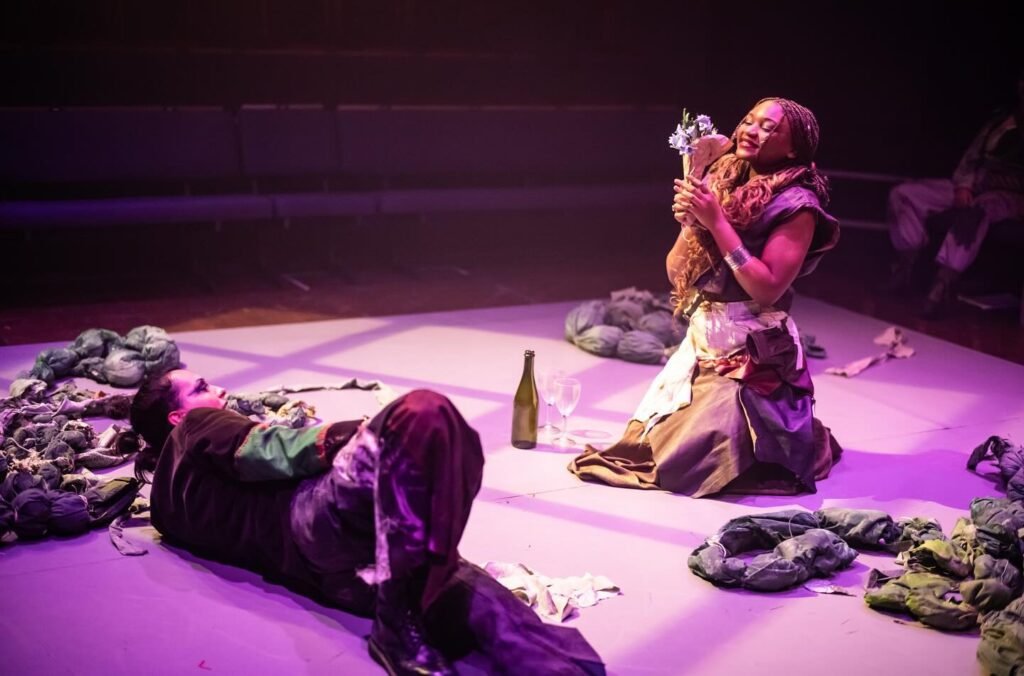
The actresses delivered their messages with a calm tone. The smell of watermelon scattered across the floor will always be linked to this performance. It served as a method of protest—pieces of watermelon that were shared and then savored. The actresses, while changing roles, embodied sensuality and expressed the need for better economic lives and freedom at work, for inclusion and power in politics, and for acceptance while being assured they are made for something greater. Through dialogues about love, they showed there are many ways to appreciate and tell someone you love them. Marriage was discussed in various contexts—as a means of acceptance and often rejection. The show conveyed concerns of the past century while speaking about women of this century, who find themselves navigating home life, public life, family, and romantic relationships, all seeking a little more time for themselves.
Olive McHugh, Tanaka Mpofu, Xixi Xiao, and Natalia May each brought unique qualities that complemented each other, drawing out the best in one another. The production is a collaboration between LAMDA and Orange Tree Theatre, created by the director during her master’s studies in England and previously presented at the GreenHouse festival. As an innovative and intensely engaging performance, it also made its way to FemArt. Comedic situations were abundant, teaching us that rebellion can occur without raising one’s voice, but by constantly discussing what belongs to us. It opens up space for new feminist debates. It transforms themes and prompts questions in an environment where women speak for themselves. Alice Birch’s language was placed by director Zana Hoxha in a context that speaks to everyone, particularly relevant to the present time—with courage. When she first held the text in her hands, director Hoxha expressed her shock.
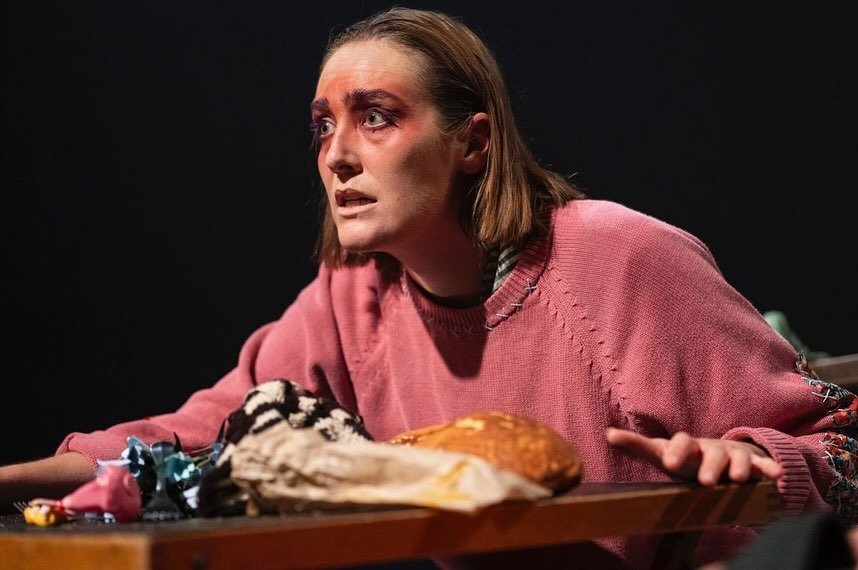
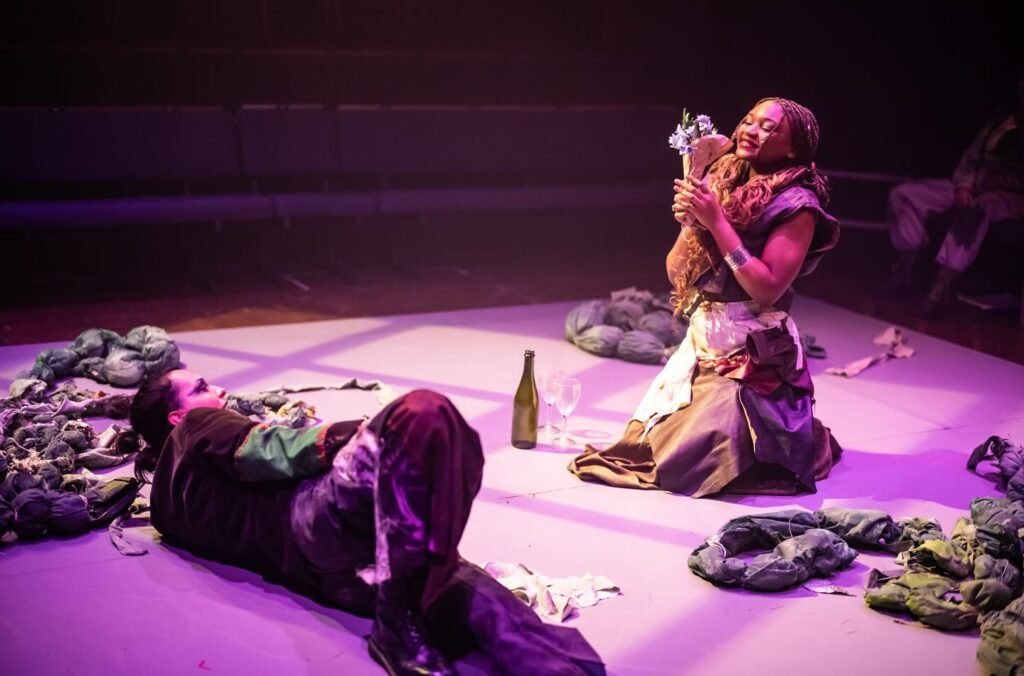
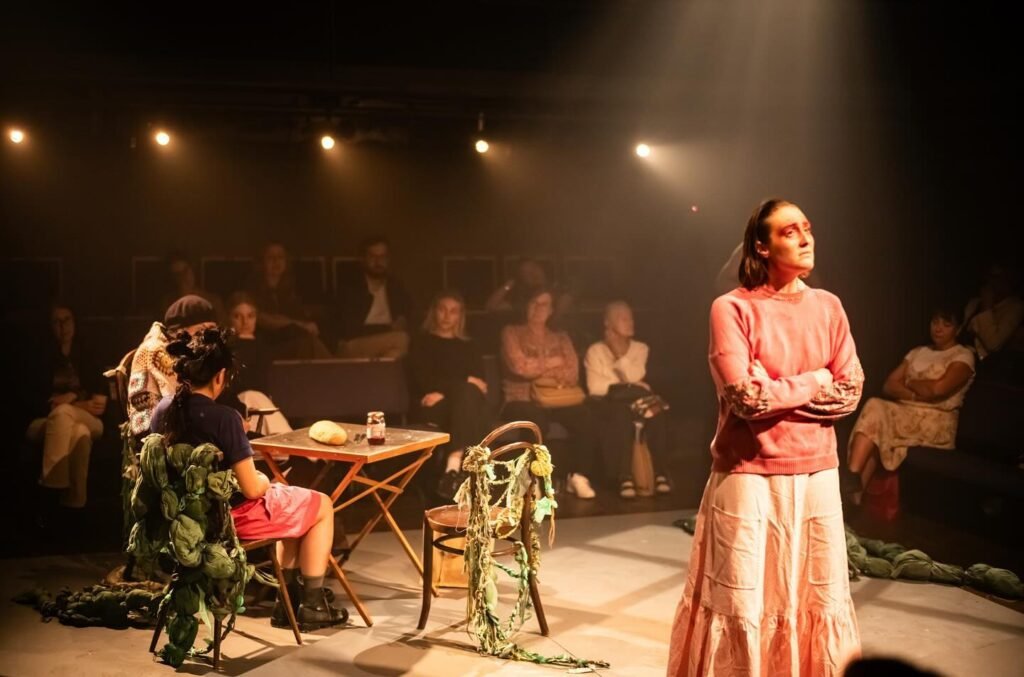
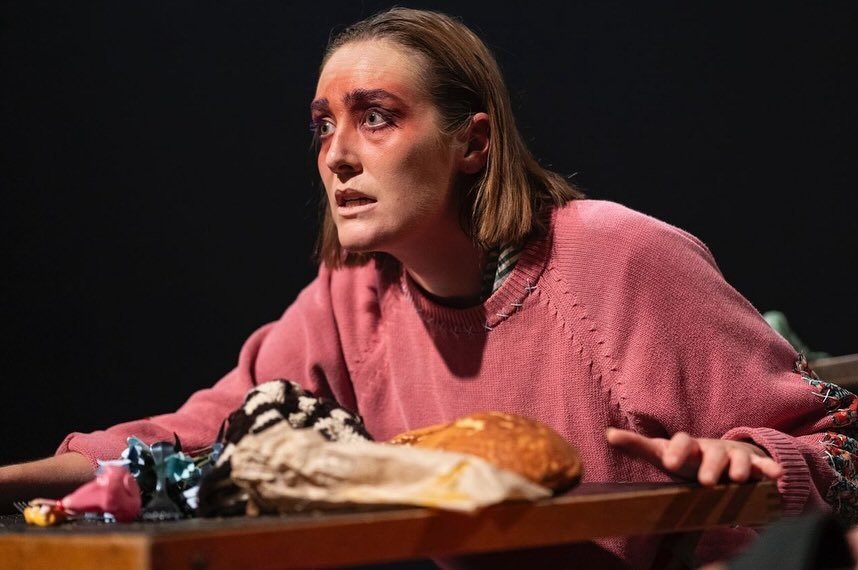
“I was impressed by how it deconstructed language, behaviors, and other socio-cultural factors in constructing femininity,” she remarked. “The performance resonated with my artistic and activist methods. Birch challenged patriarchal oppression and posed the fundamental question: ‘What prevents us from doing something truly radical to change that?’ (Birch, 2016). This reflected my commitment to fostering critical thought and opening pathways for action through theater,” Zana Hoxha emphasized. She thoroughly explored the text and narrative, enriching them further with her extensive experience in feminist art. Even if you didn’t hear a single word from actress Olive McHugh, her eyes conveyed the anguish of longing to hear something kind from her mother. She possessed a strong maternal instinct but had an absent childhood. As she spoke with her eyes, she yearned for the moment in a typical dining scene with a vase of flowers and bread on a table. It was a deep dive into familial baggage and a tangled family drama whose consequences are inherited. McHugh shared that since reading the script, she felt a special energy in the room and felt very secure exploring the characters. “Oh, I love Zana since my first day in London. I had a wonderful connection with her, and when she told me I needed to come to Kosovo, I couldn’t believe I would be here to perform this show. The energy of FemArt is amazing; the people who come here, even those who aren’t actors, have a very special energy. I will always remember my time here,” said actress Olive McHugh. The audience’s intensive, energetic, and provocative responses shaped the flow of the performance. When actress Xixi Xiao addressed someone in the audience, asking which rights the team needed more rest and other requests related to work life, she awaited a response and eventually received one. In another instance, a delay led her to give up on getting an answer. “Very slowly, I don’t have time for this,” she stated as she returned to the performance with conviction. She conveyed a message that everyone should respect their own time, the time of the performance, and that of the audience.
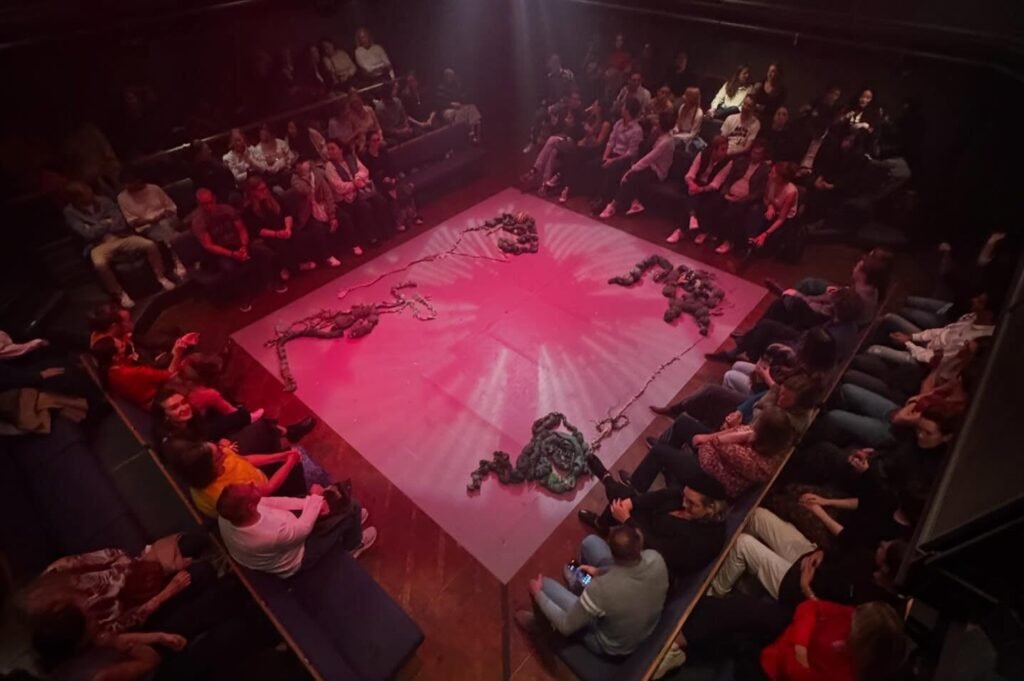
“I made small revisions to the text to make it more significant for a post-apocalyptic theme and a feminist approach. I brought in my previous knowledge of feminist theory and prior work, focusing on combating cultural narratives that undermine women (Butler, 1990). The text was a living skeleton from which the actors could create complex performances and allowed for deep exploration,” Zana further highlighted. For her, the great protest was the initial idea of this performance—a protest against the systems and values that lead to the collapse of societies and ecologies. The stage was a destroyed world, remnants of patriarchal structures; it was based on eco-feminist theories linking the exploitation of nature with the oppression of women. Director and playwright Shqipe Malushi stated that this was a daring and experimental theatrical show that challenges traditional ideas about how women should behave. “Zana Hoxha embraced this sense of disruption, encouraging the actresses to break the conventional rules of theater,” she remarked after the performance. In collaboration with set and costume designer Grace Rumsey, Hoxha worked intensively, promoting a sustainable practice that shows environmental awareness in theater by using recycled costumes. Even within the context of the stage and costumes, an important aspect was touched upon. On a stage made entirely of watermelon juice, the actresses gathered and cleaned the stage during the performance—preparing for their next act. Another form of awareness in theater came as the director joined the team in resetting the stage for the next act. Zana and her team penetrated the space with a creative vision—one that elevates the call for their choices. Choices made with great courage!
Simon Jenner wrote a review of Zana Hoxha’s play Revolt. She Said. Revolt Again, published on fringereview.co.uk.
You can read his review below:
Alice Birch – Revolt. She Said. Revolt Again
Alice Birch’s 2014 RSC play delivers its title. Director Zana Hoxha takes some directions literally and has them voiced. Above all Birch’s exhortation not to be well-behaved. It’s a revolutionary open text with dynamic exceptions and inflammatory potential. Hoxha seizes on this, alters details and confirms its freshness with a few tweaks.
With Hoxha ‘bad behaviour’ extends to Birch”s text as she cuts the last two pages: a brief Act Four where four women commune on the difficulty of the struggle. Instead Revolt concludes in the previous monologue delivered by Natalie May: a self-immolatory one ending abruptly in an act. Hoxha goes for theatricality all through, stripping out provisional hope. In her production, there’s even less of it than Birch allowed. We glimpse a dystopic future where just a few women cling on.
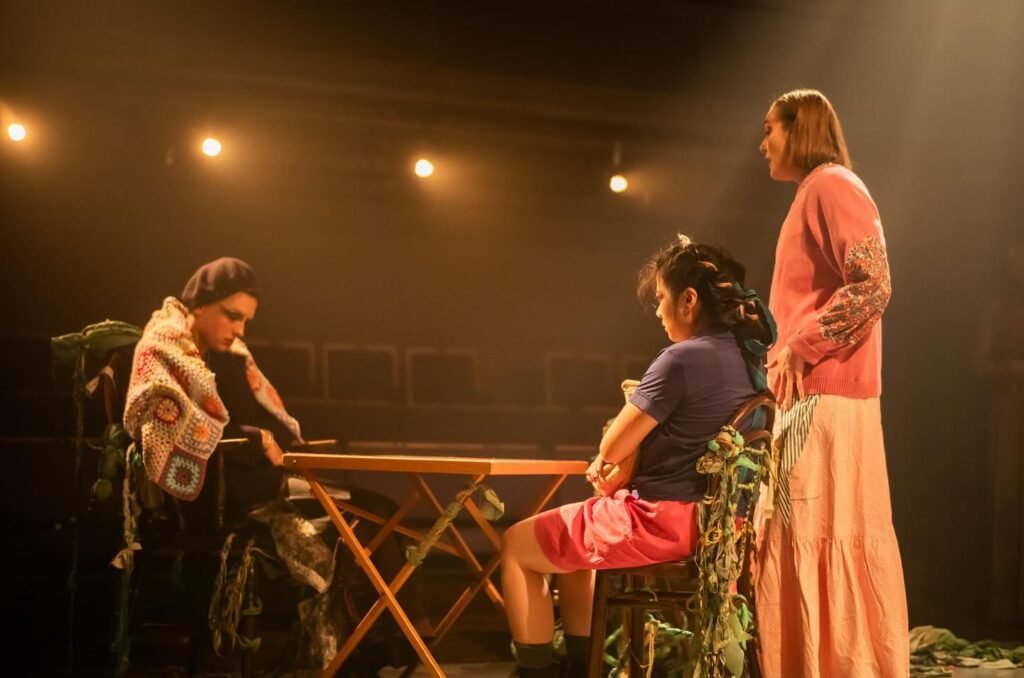
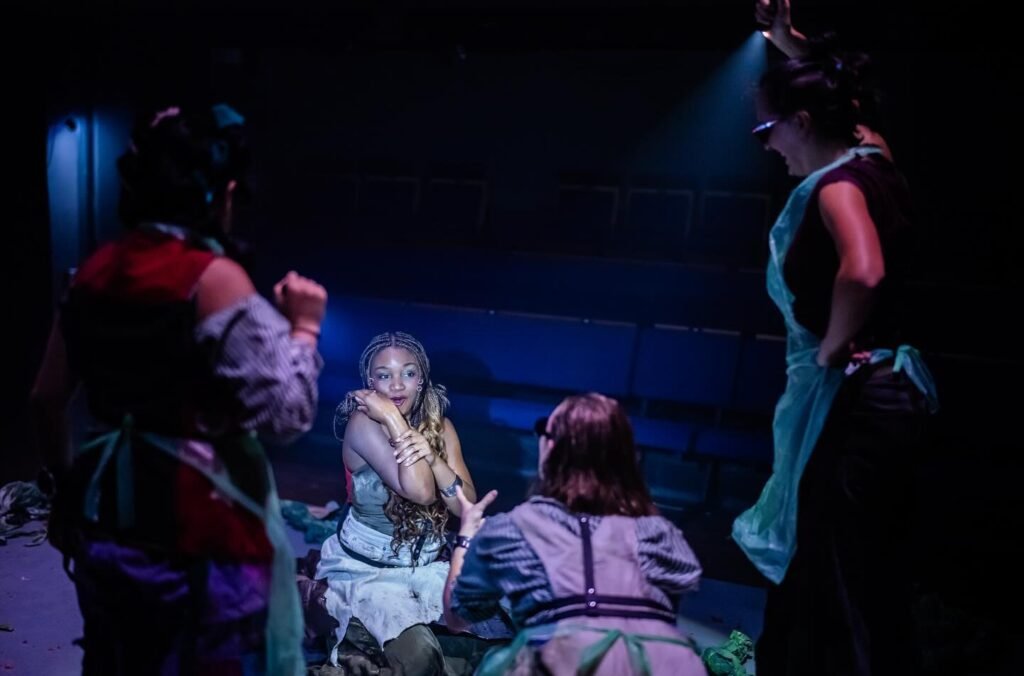
Tanaka Mpofu also sings; there’s an improv opening. And despite Birch’s direction of no set, Grace Rumsey’s one of blue-green sea-wrack portends world-ending drek scurfed round. Evocative costume changes add texture and signal scene-changes.
A water melon’s detritus liquifies a shopping aisle whilst (not literally) a punter strips off, questions shop-floor managers’ motives: their misogynistic language is transformed. There’s much floor mopping.
If Birch was writing this a few years later she might have opted for the gender fluidity and exclusion of male actors as here. It works memorably (with May and Mpofu for instance in the opening anti-seduction scene). When performative male roles are indicated through language, they’re reclaimed as different levels of oppression women experience: in structural relationships from sex to work.
Patriarchy extends everywhere but in the opening section language (even “penis”) is appropriated as possession, here subverted by Birch as the female or ‘possessed’ role takes power, through language. It’s done with delicious humour and (considering later scenes) optimism.
In work scenes that structure is challenged: three employees want Monday off where the employer (Xixi Xiao in whip-crack mode) asserts they own the faces, even smiles of their employees.
Hoxha’s sheer theatricality works even if some subtlety is jettisoned with (say) Act Four’s rapprochement excised. Revolt already plays with open form – and subverts traditional scenes with named roles. (Ghoti Fisher’s lighting tracks performances with versatility.)
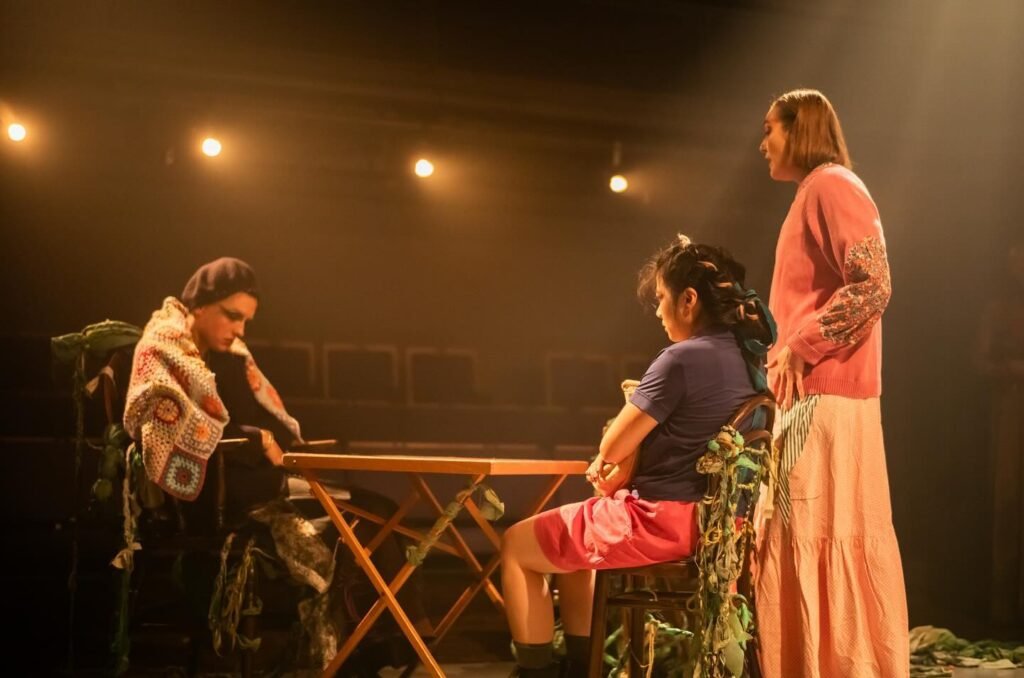
This works well in a formalised three hander. Olive McHugh often delivers speeches of affect and is central here. Where Xiao remains almost mute, May growls in a turban. In a Chekhovian-looking tea party a mother furiously confronts her own mother’s implacable coldness; the granddaughter utters “nightingale” and stray words. However these two unite against the more vociferous middle generation in an astonishing act (one Birch prescribed elsewhere in different guises too, faithfully followed).
Hoxha keeps pace limber, with an exuberantly gifted cast. There have been virtuosic deliveries of some monologues: Hoxha’s team refuse such easy aplomb and applause. A few words are substituted like “genocide”. It fits this even chillier climate.
Revolt has shifted here, oppression internalised. Whilst non-specific around gender, the performative element underscores how post #MeToo feminism has adopted self-interrogative critiques that blow apart even the binaries of Revolt.
A reaffirmation of Birch’s brilliance, not withstanding cuts. An essential update on the struggle, Hoxha’s Revolt hurls defiance in the face of despair.
Olive McHugh Tanaka Mpofu Xixi Xiao Natalia May
Voice Actors : Gloria Olajide, Alex Holliday, Diego Zozaya , James Walsh, Robert Furey, Samuel Ferrer
Writer Alice Birch Director Zana Hxoha Set and Costume Designer Grace Rumsey Lighting Designer Ghoti Fisher Sound Designer Aidan Gibson Movement Director Kristin Fredrickson Instrument Consultant Julia Deng Hanzu Stage Manager Ace Turner Set and Costume Assistant Xiaomin Fan
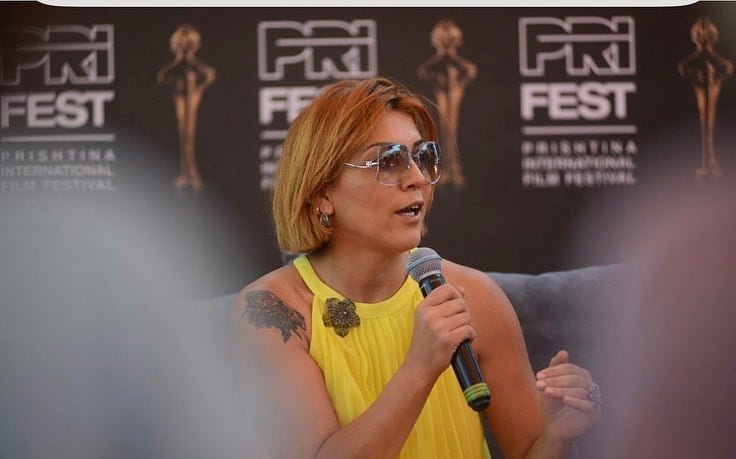
From March 14–17, 2024, Zana Hoxha, the Executive Director of Artpolis, participated in the IETM Caravan Ljubljana, a significant international platform for performing arts.
During this pivotal cultural event in the Balkans, over 60 professionals and IETM members from around the globe explored Slovenia’s independent performing arts scene through panels, discussions, and artistic showcases.
This experience offered an exceptional opportunity to foster collaboration between the artistic community in Kosovo and international artists. Hoxha’s visit to Slovenia resulted in the inclusion of international artists in the 12th edition of the FemArt Festival and initiated long-term partnerships for presenting Artpolis productions abroad.
Artpolis remains committed to developing intercultural dialogue and strengthening artistic networks to achieve a lasting impact on art and society.
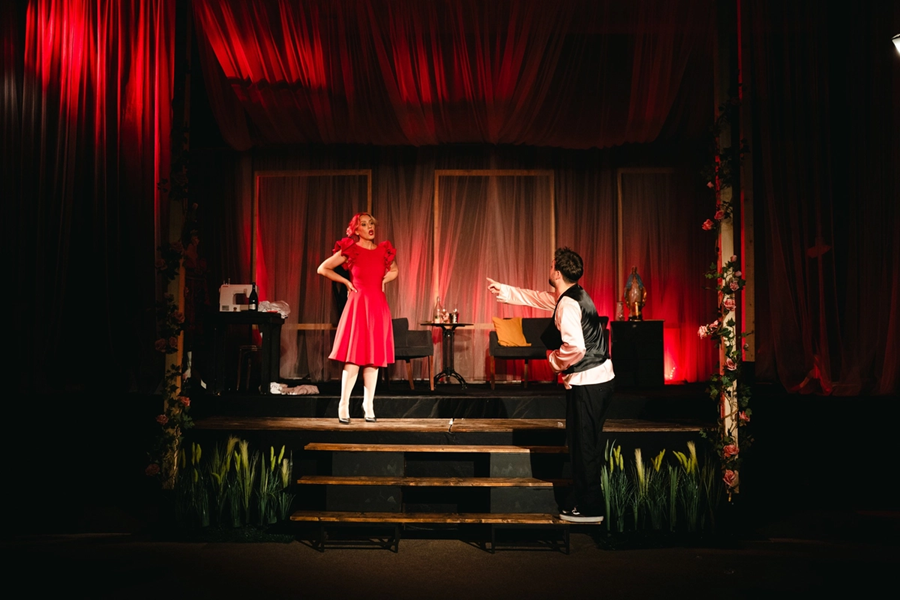
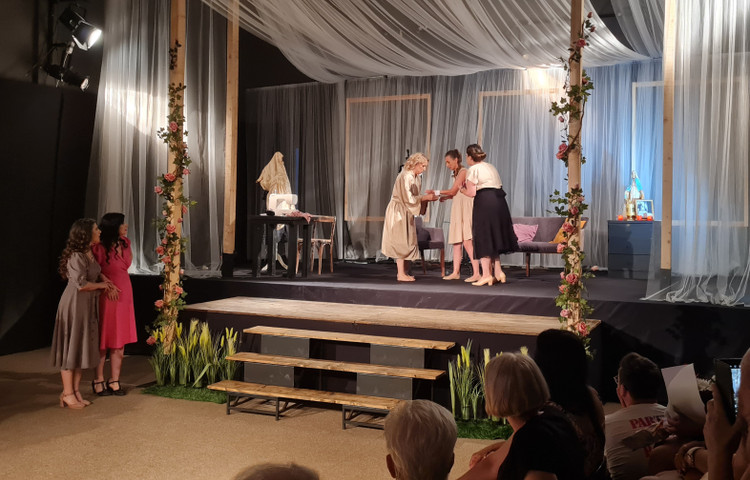
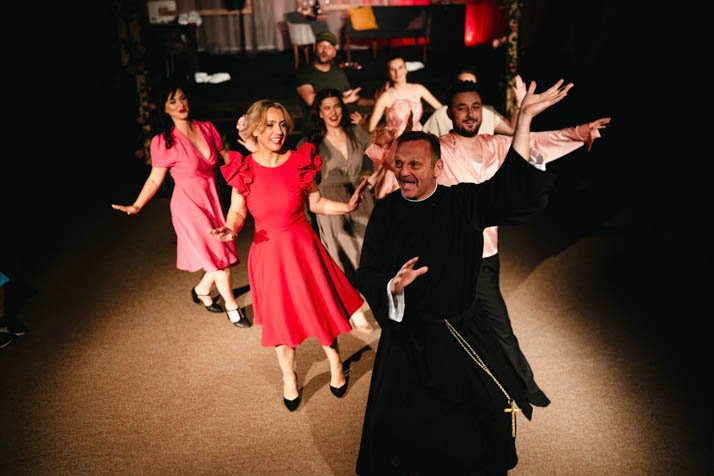
It has arrived as it was intended: a passionate tale of superstitions, promises and the possibility of love and passion after a broken heart. With an interactive approach with the public on the “black box” stage located in the Bosnian Cultural Center in Prizren, the well-known drama of Tennessee Williams, staged under the direction of Zana Hoxha, comes with the call to open the heart and find hope even where it is not expected.
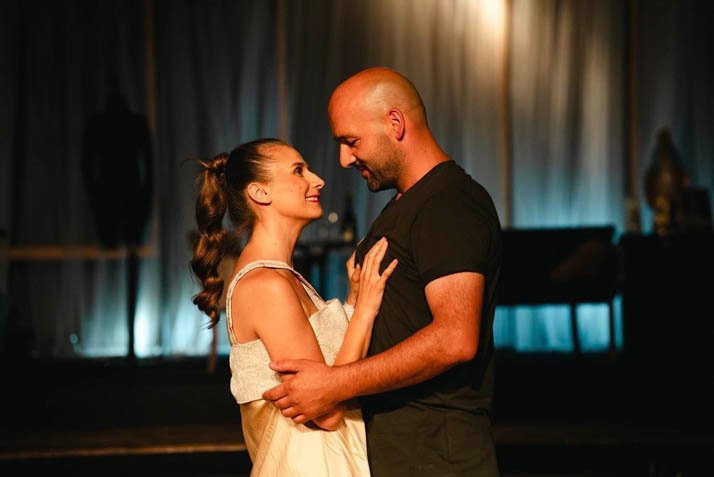
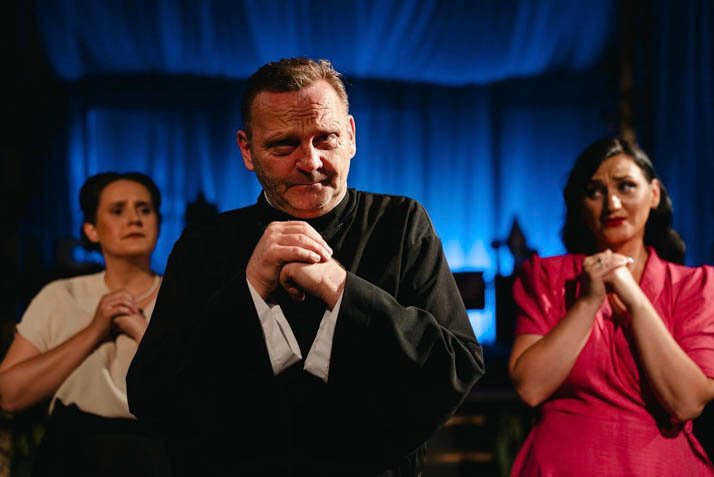
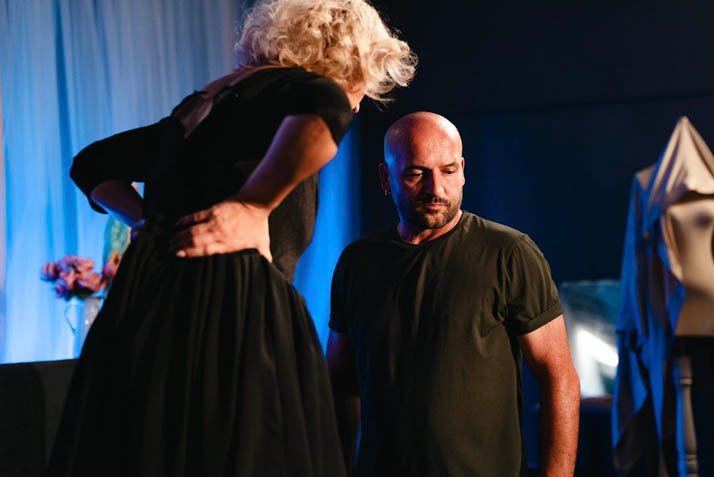
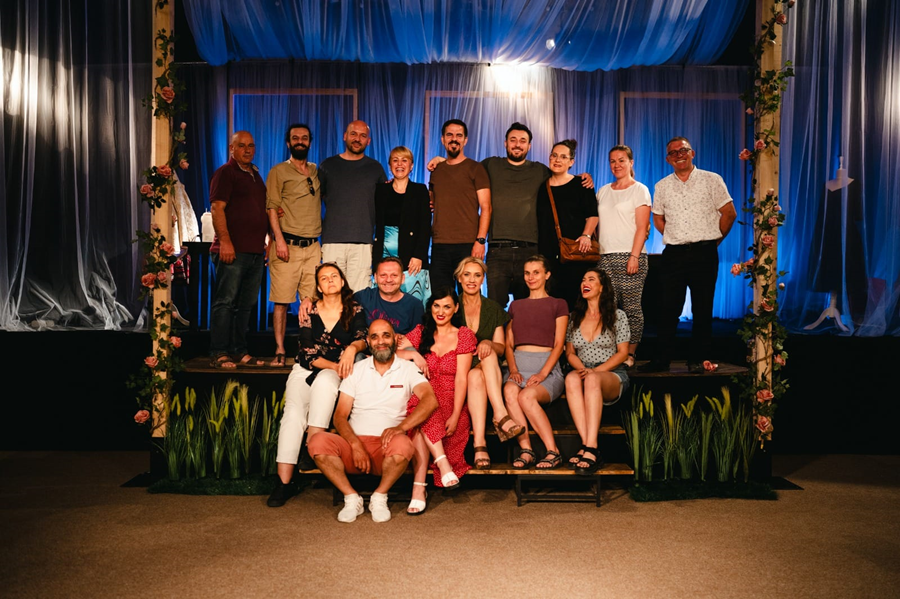
The romantic comedy “Rose Tattoo” by the author Tennessee Williams, which remains a symbol of love, sex, emotional vulnerability and reproduction, was staged by the city theater “Bekim Fehmiu” thanks to the commitment of the director Zana Hoxha. The drama was performed on the ‘black box’ stage located in the Bosnian Cultural Center, integrating the audience into the game, who at the end of the show expressed their gratitude for the almost two-hour performance of the actors Aurita Agushi, Rifat Smani, Liridona Shehu, Alban Krasniqi, Xhevdet Doda, Beslidje Bytyqi, Valmira Hoti and Zana Duraku.
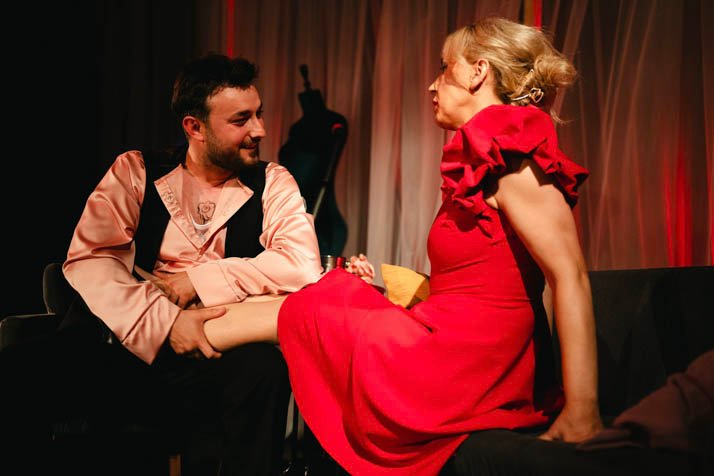
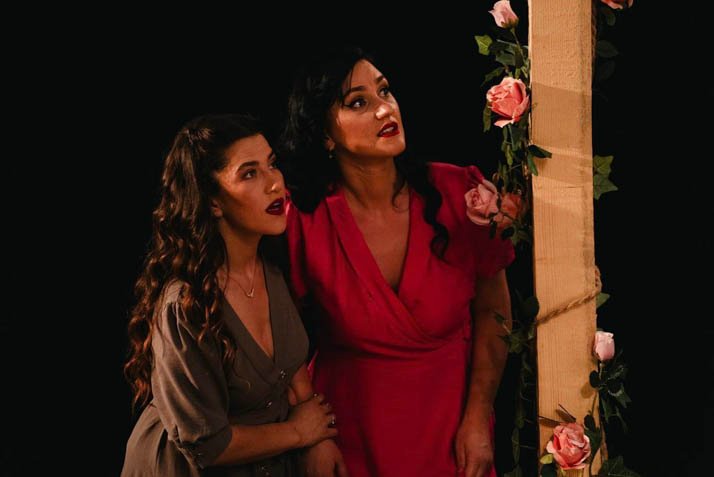
This drama is set in a small Sicilian-American community. There, Serafina delle Rose, played by the actress Aurita Agushi, is a fiery and passionate woman and mother, who, after the murder of the smuggler’s husband, shuts herself off from life and love. In the meantime, she often collides with her circle, while her daughter Rosa also faces the barrier set by her.
But the situation changes, when by chance a truck driver arrives at Serafina’s house.
The play, according to the description given by the city theater, is a passionate tale of superstitions, promises and the possibility of love and passion after a broken heart. In doing so, it offers a witty and interactive comedy with the audience, while reminding them to open their hearts and find hope where they least expect it. It also addresses the theme of sexual repression as a strong and ongoing theme, while turning her story into one of passion, romance and hope.
For the actress Aurita Agushi, this project marked the next collaboration with the theater “Bekim Fehmiu” in Prizren. She described the process of working with the resident actors as good, while also providing details about the challenges in interpreting her role.
“It was also very easy. I know the part very well, even Tennessee Williams is one of my favorite authors. This work on the Italian accent has been a bit challenging, I want to concentrate more on that. Even if I analyze the character of Serafina a little more closely, because she is a complex, multidimensional character, who varies throughout the performance, the tragedy that happened to her, then she recovers the love, prejudices and judgments that the circle makes of her, even here it is like I stopped and made a closer analysis and I believe that together with Zana, the director, with my colleagues, especially with Rifat (Smani), my partner on stage, we worked very closely and I believe that we did a very good job good”, said Agushi.
Xhevdet Doda, who played the role of Father De Leo, assessed that the environment created with the “black box” brought him closer to the public and at the same time expressed his satisfaction with the teamwork in this project.
“Satisfied with the performance of my role. It is a role that I have tried to give some artistic ‘sweetness’, of course with the suggestions of the director. I am very satisfied with the team, I am very happy for this premiere and I hope that this show will find its way to our audience”, said Doda.
The director Zana Hoxha has assessed that it is a project worked on with mutual love, where as a result the realization has progressed easily and with good energy.
“And almost like the show that gives a certain reality a little more rosy, a little different, more optimistic, and it was a kind of disappointment I would say, because we had to work in the original building of the Prizren theater and due to the renovation we decided here. But everything is good when it ends well, like tonight’s show that started with more dramatic moments then developed, the other colors of life came to the fore, because life has ups and downs, there are challenges but there is also a lot of love if we want to see “, said Hoxha.
University professor, director and playwright Fadil Hysaj was also present in the audience, who appreciated the acting of the actors, the work of the director and the reaction of the public.
“Let’s start with the actors, really an extremely beautiful play, a brilliant director, Zana Hoxha, a reading of a dramaturgical masterpiece by Tennesee Williams that in an almost authorial sense decomposed into one dimension, that a deep drama of a woman transforms, it gives life, it turns the comedy into a kind of liberation that conveys it, which we need. It is understood that the fight against evil, against suffering begins and is won within oneself, not outside oneself. It is also a very beautiful show, built with finesse, with a brilliant acting that I think is rare as such and I wish that it will have a long life on stage and that many, many people will see it”, said Hysaj.
This performance is the third premiere after the beginning of the renovation of the theater building. The first premiere was the show “Fausti”, a co-production between the “Bekim Fehmiu” Theater, the National Theater of Kosovo and the Gjilan Theater. While the second premiere was the play for children “Aphrodite again at school”. This year, the “Bekim Fehmiu” theater has performed the first cycle of staged readings of contemporary Kosovar drama.
In a small Sicilian-American community, Serafina delle Rose is a fiery wife and mother and passionate. When her husband Rosario is killed while smuggling, Serafina closes herself off from life and love.
She ignores the town’s gossip and lives in confusion until her daughter Rosa declares herself in love. Frustrated and heartbroken, Serafina angrily lashes out at anyone who reasons with her. That is until a truck driver arrives at her door.
The play that Tennessee Williams called “his play of love for the world”, is a fairy tale passionate superstitions, promises and the possibility of love and passion after a broken heart.
“The Rose Tattoo” offers a clever and interactive comedy with the audience while reminding them to open up their hearts and find hope where they least expect it.
Directed by Zana Hoxha, this show comes as a romantic comedy that engages the resident Ensemble of the Prizren City Theater “Bekim Fehmiu” and guest actress Aurita Agushi to address the topic of sexual repression as a strong and persistent theme, but turning its history into one passion, romance and hope.
“The Rose Tattoo” remains a symbol of love, sex, emotional vulnerability and reproduction.
CAST
Author: Tennessee Williams
Directed by: Zana Hoxha
Choreographer and plastic artist: Robert Nuha
Costume designers and scenographers: Youliana Voykova







Recent Comments