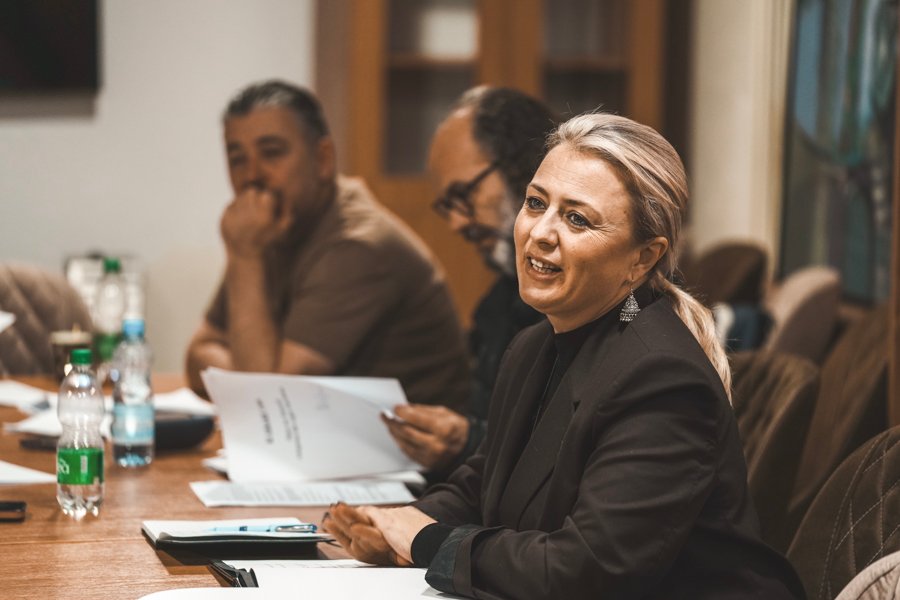
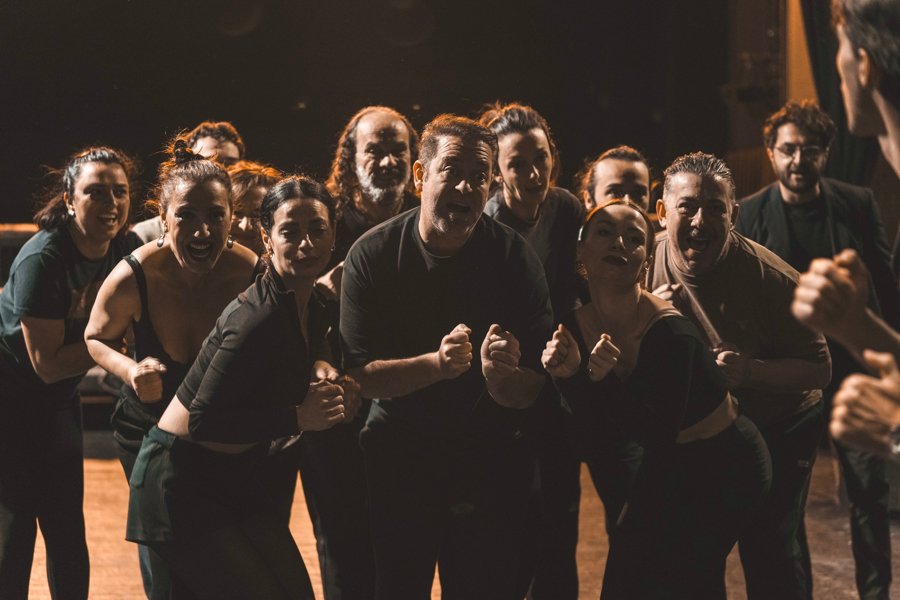
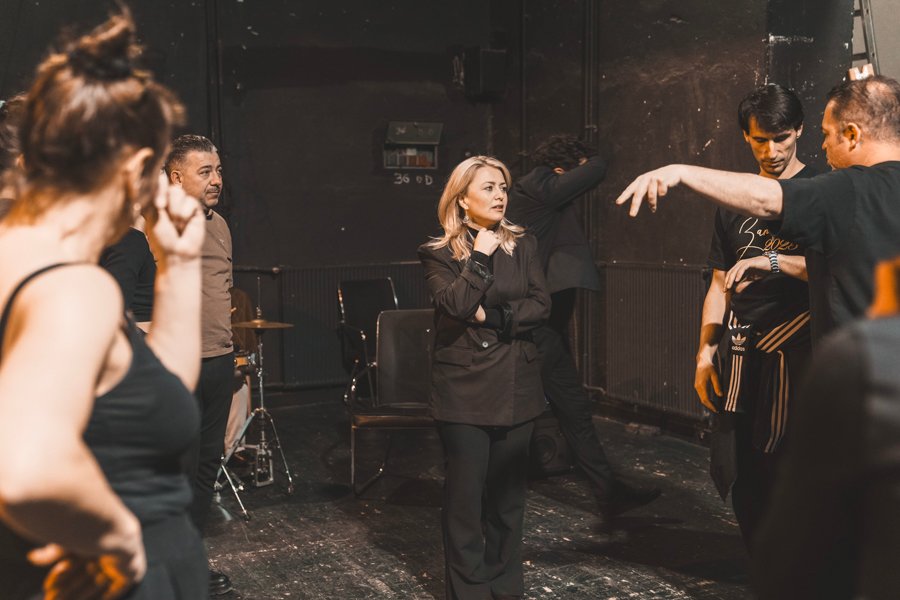
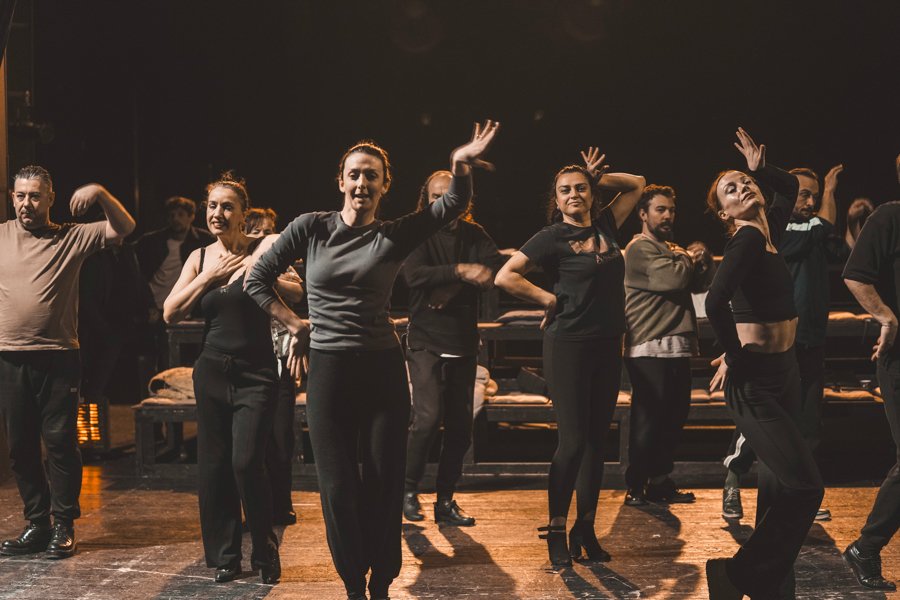
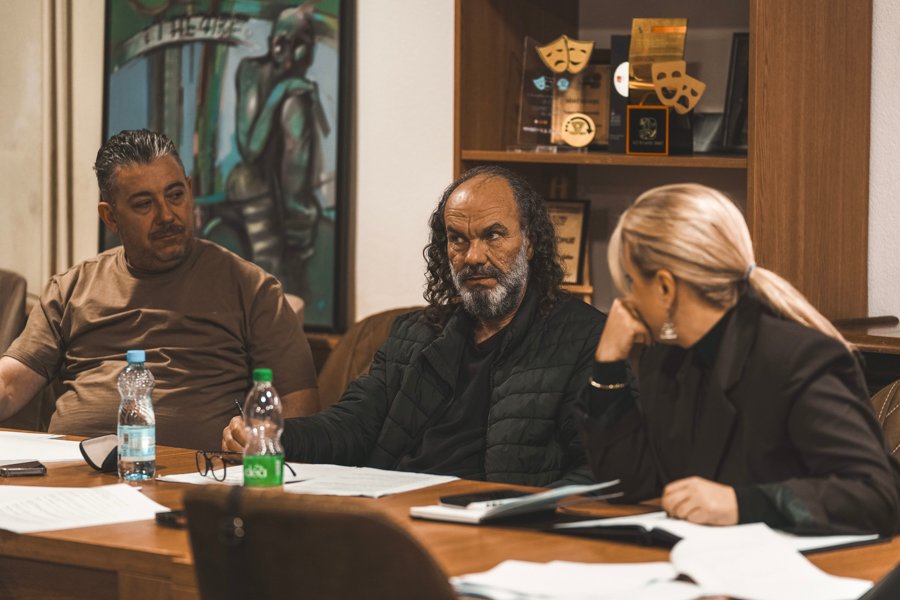
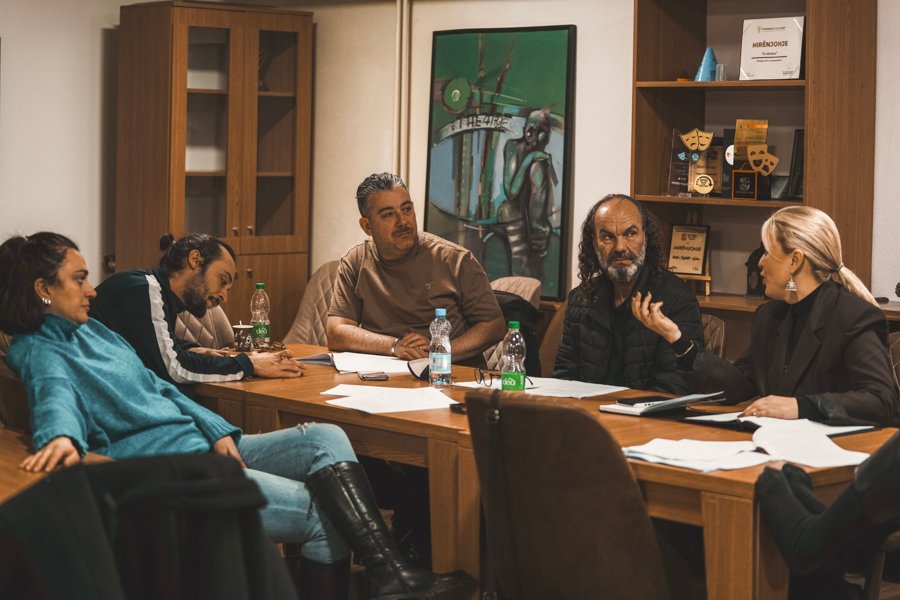
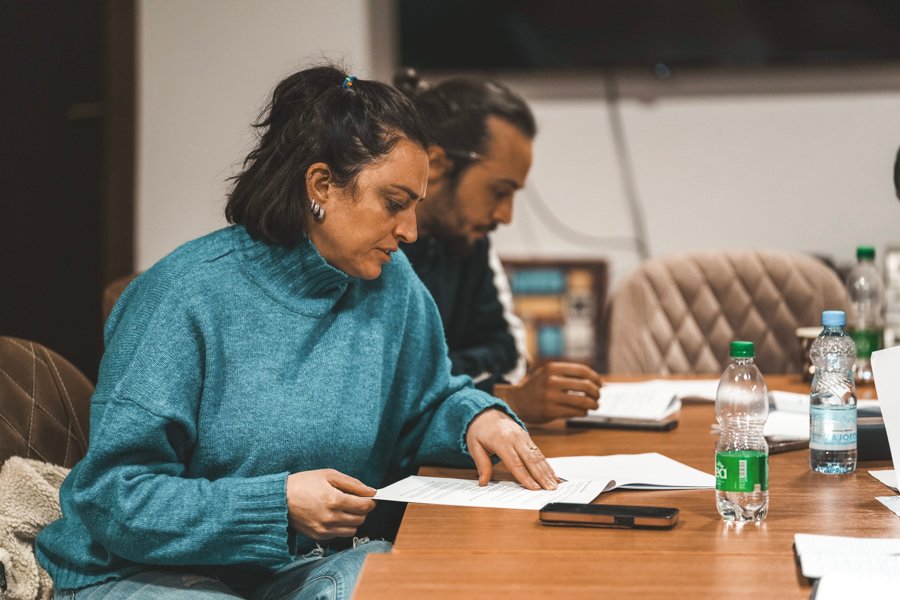
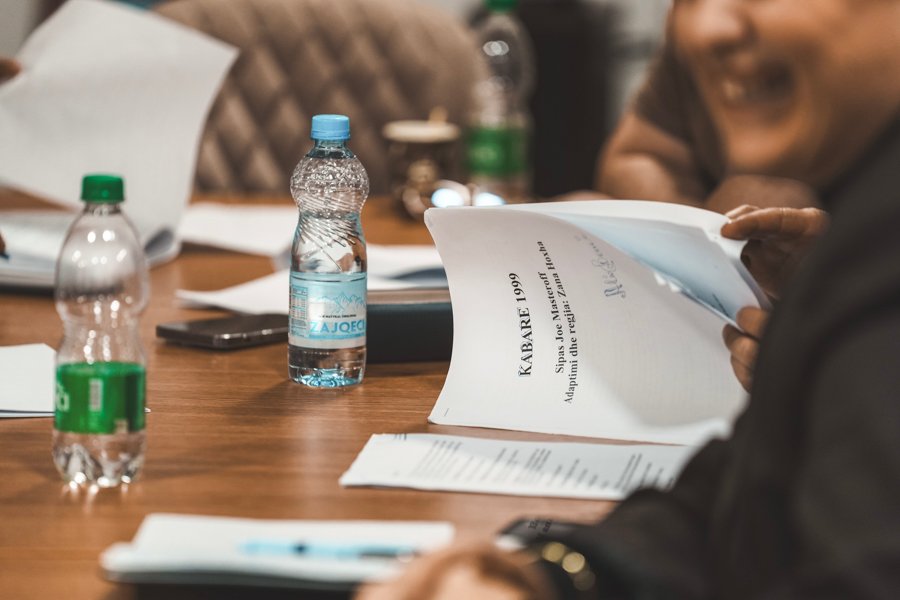
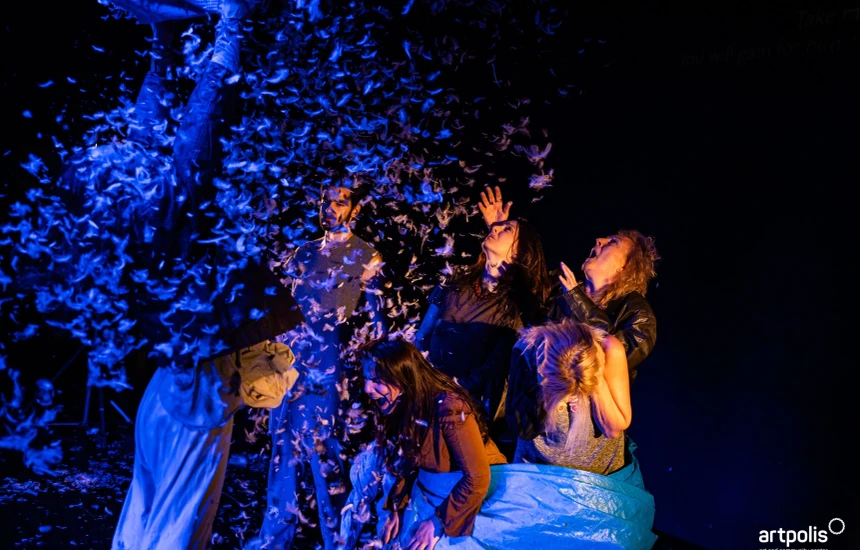
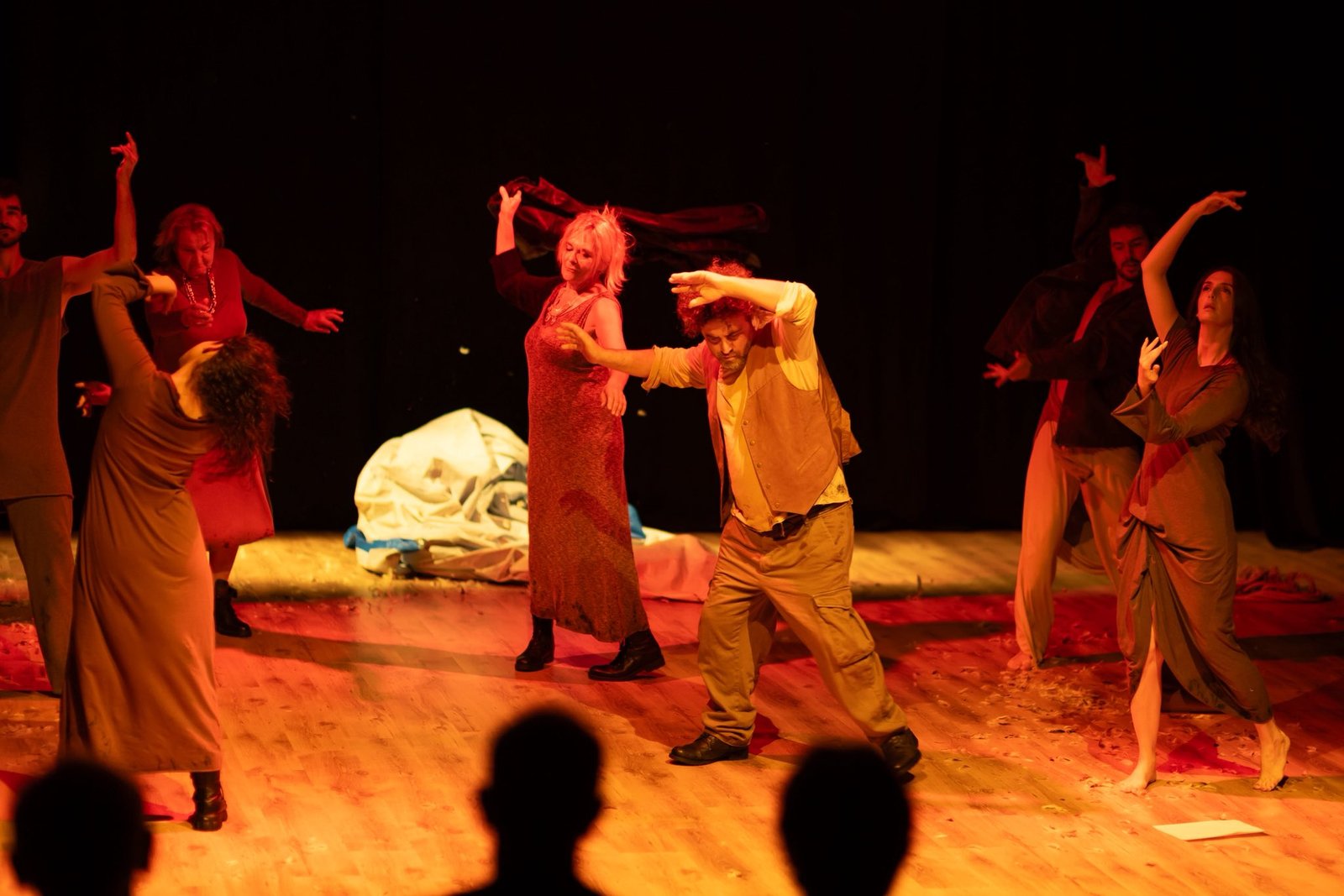
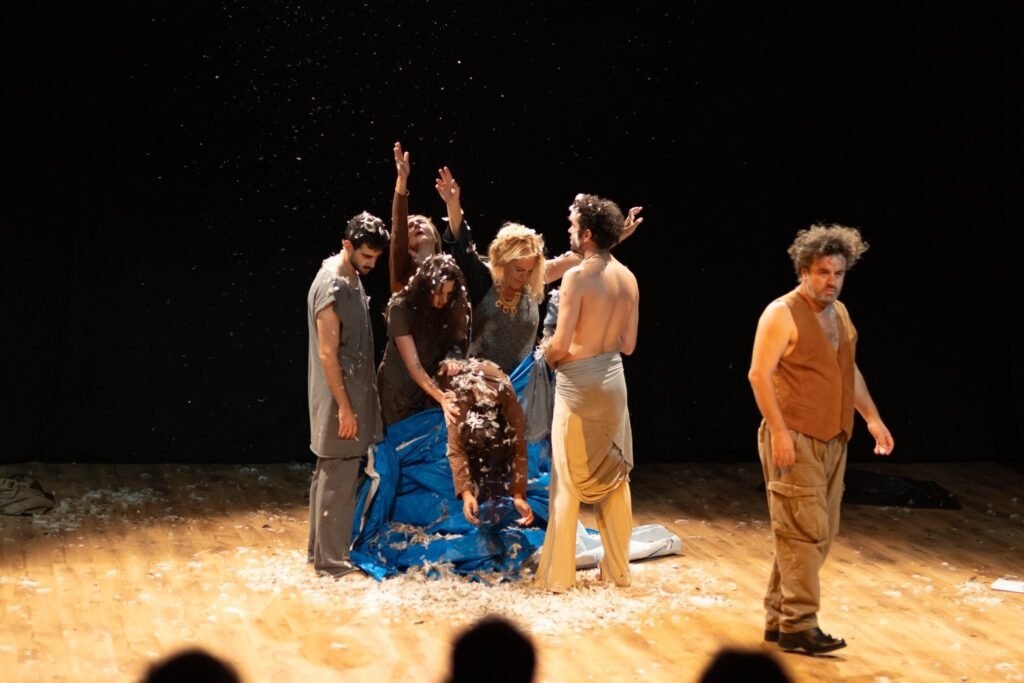
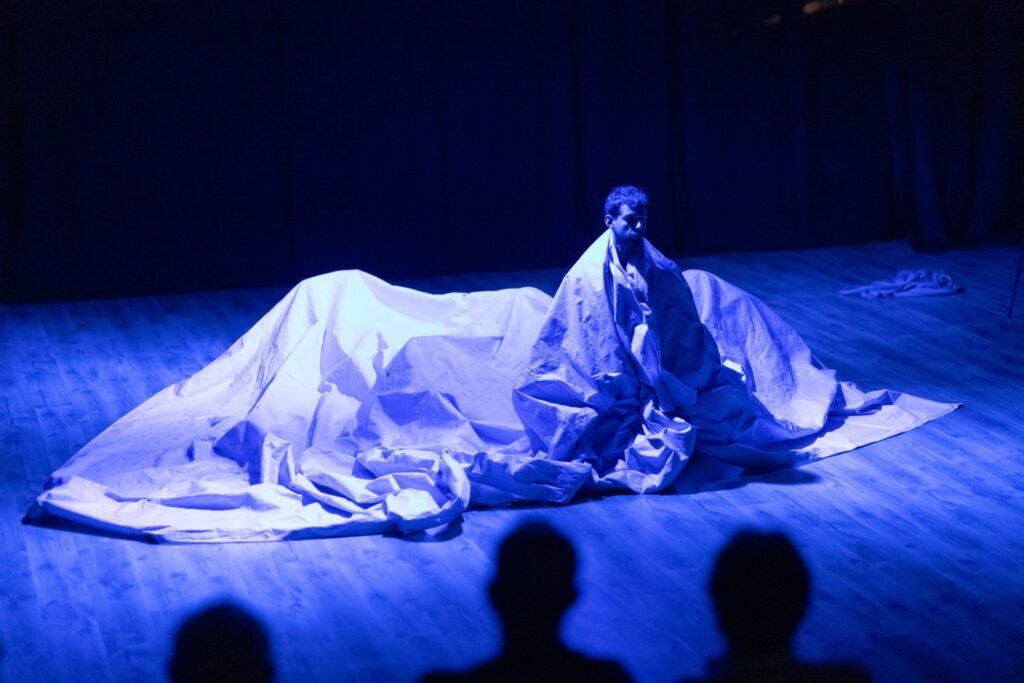
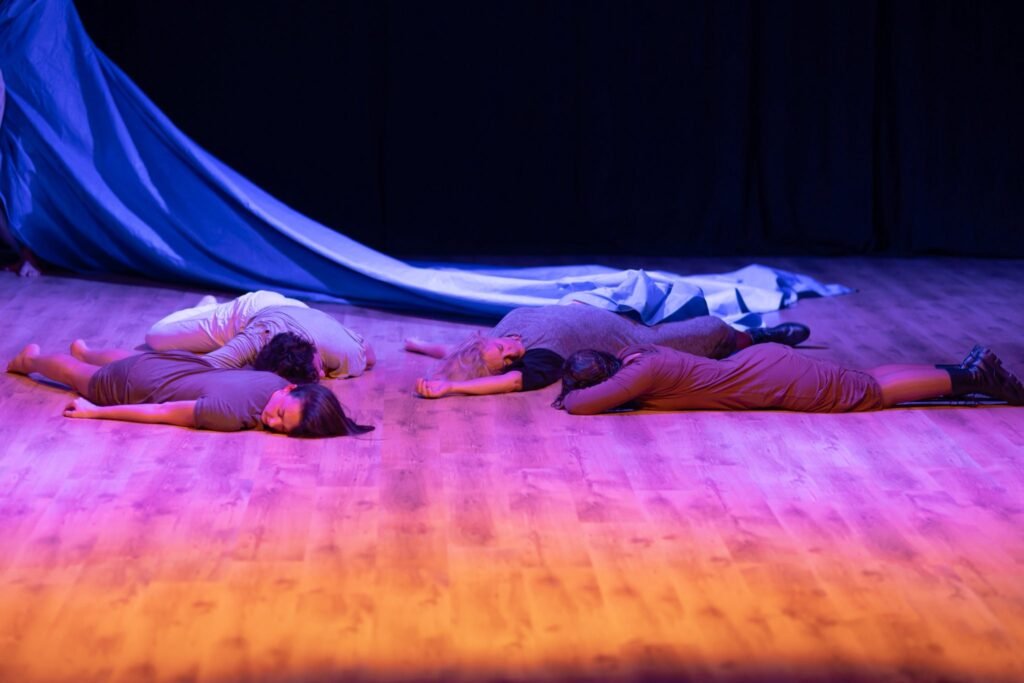
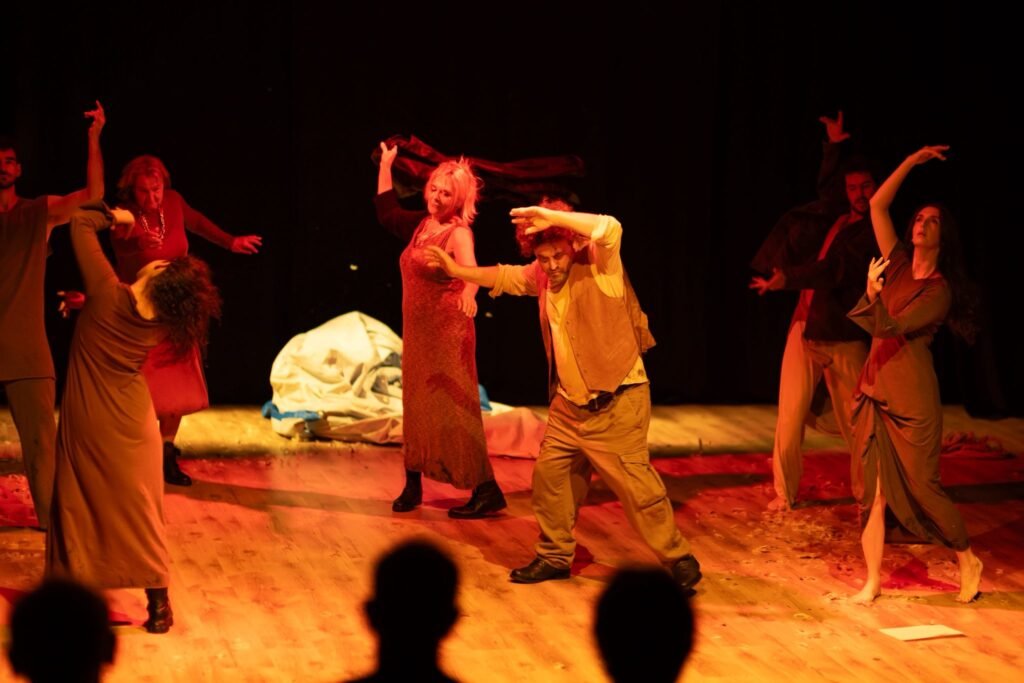
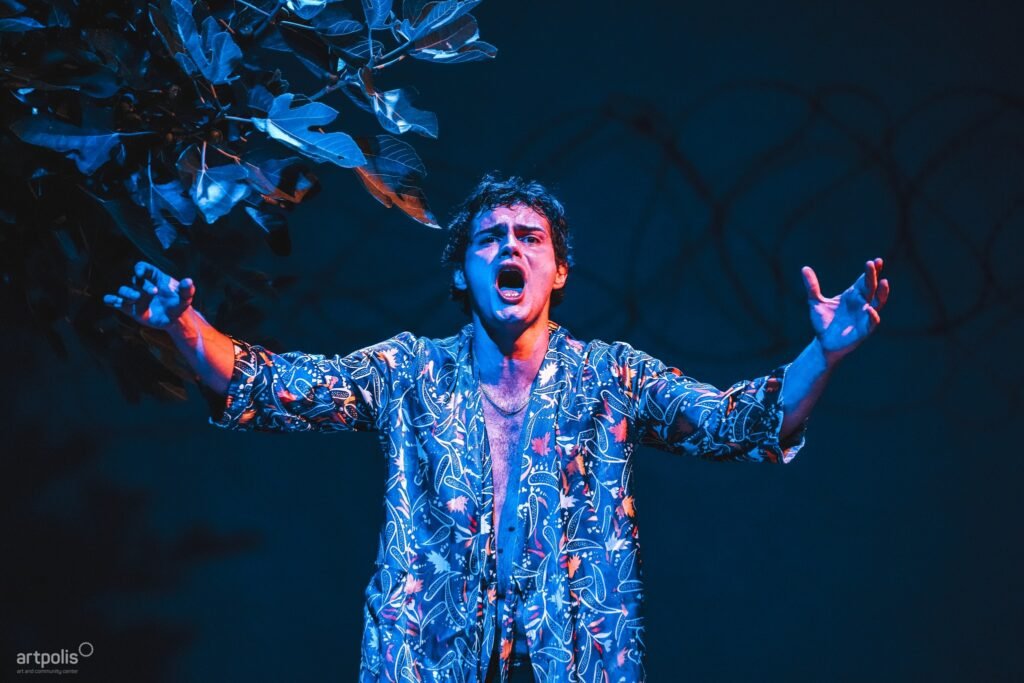
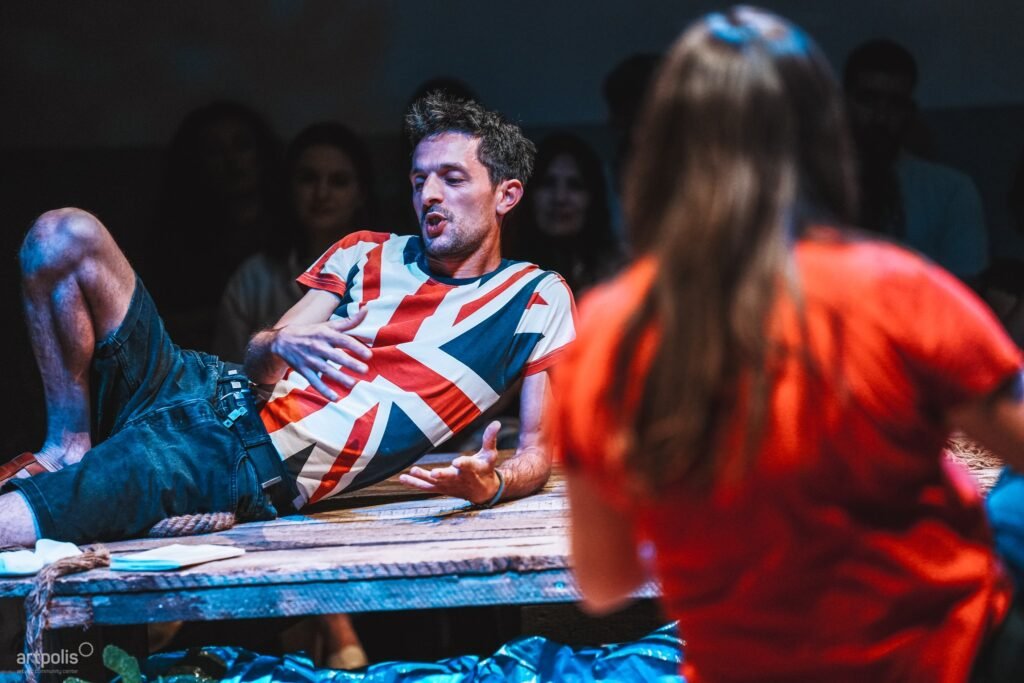
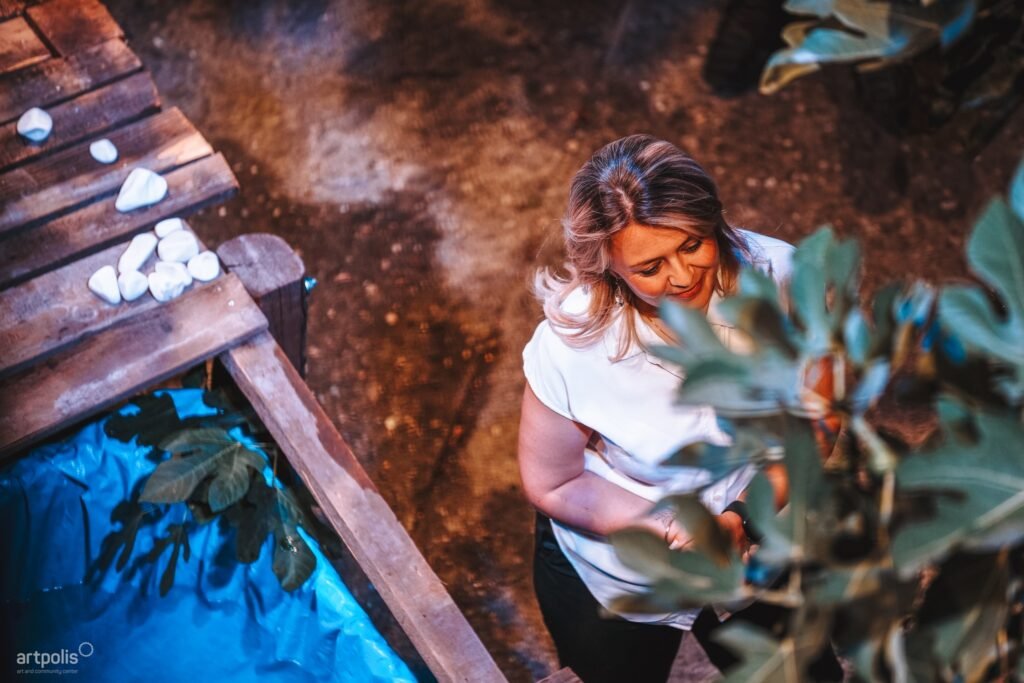
“Cabaret 1999” is taking shape — a musical theatre journey born between rehearsals, memory, and the stage. We are delighted to share with you glimpses from the rehearsals of “Kabare 1999,” directed by Zana Hoxha.
A musical theatre production set in post-war Kosova, where song, dark humor, irony, and collective memory intertwine to form a powerful narrative.
Under the direction of Zana Hoxha, inspired by Cabaret, the story shifts from 1930s Berlin to Prishtina in 1999 — a city learning how to live again, suspended between hope, exhaustion, and a deep hunger for life after war.
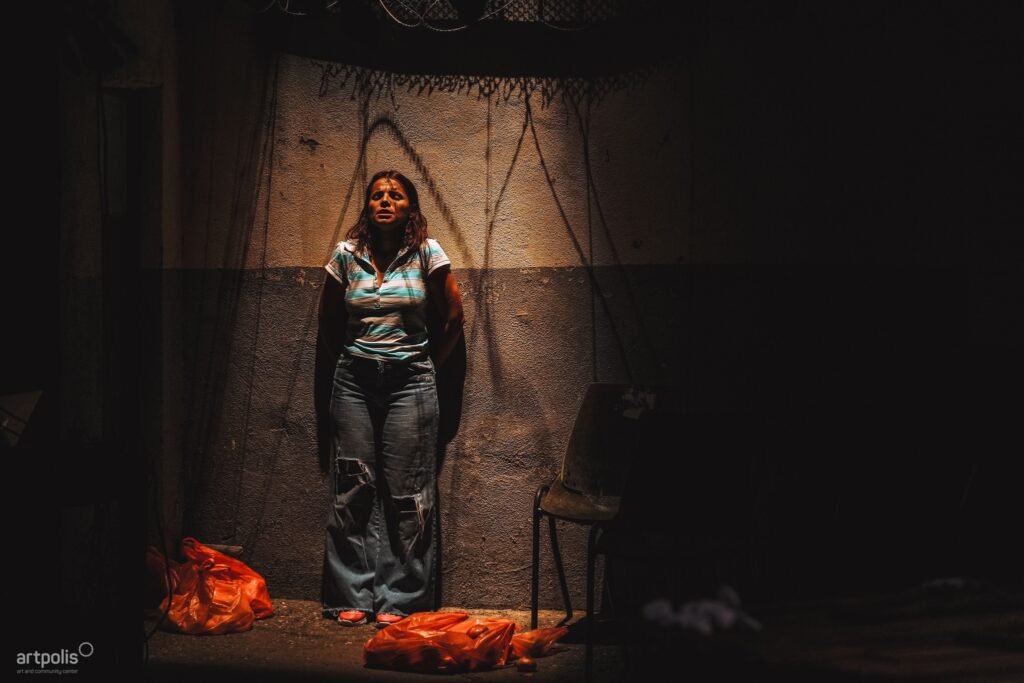
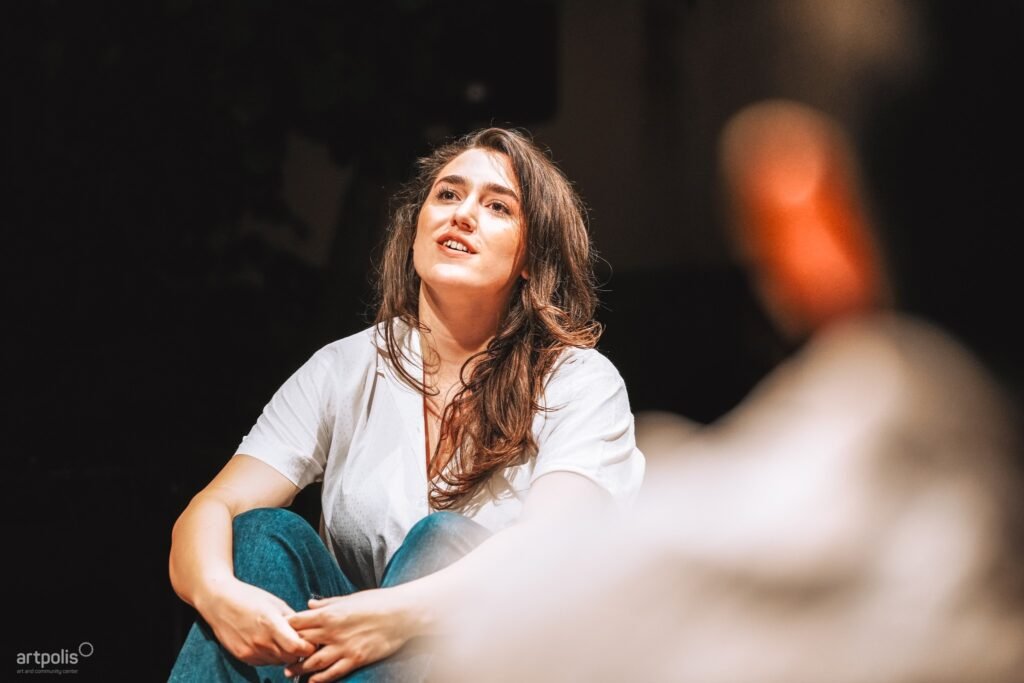
At the heart of the performance is Aida, a young woman who arrives in Prishtina to build a new future. By day she writes; by night she works as a bartender at “Club Europa,” an improvised cabaret where reality and performance blur, drawing her into a love triangle and a search for her own identity.
“Cabaret 1999” delves into the complexities of post-war Kosova, shedding light on the struggles and triumphs of people striving to rebuild their lives amid trauma and uncertainty.
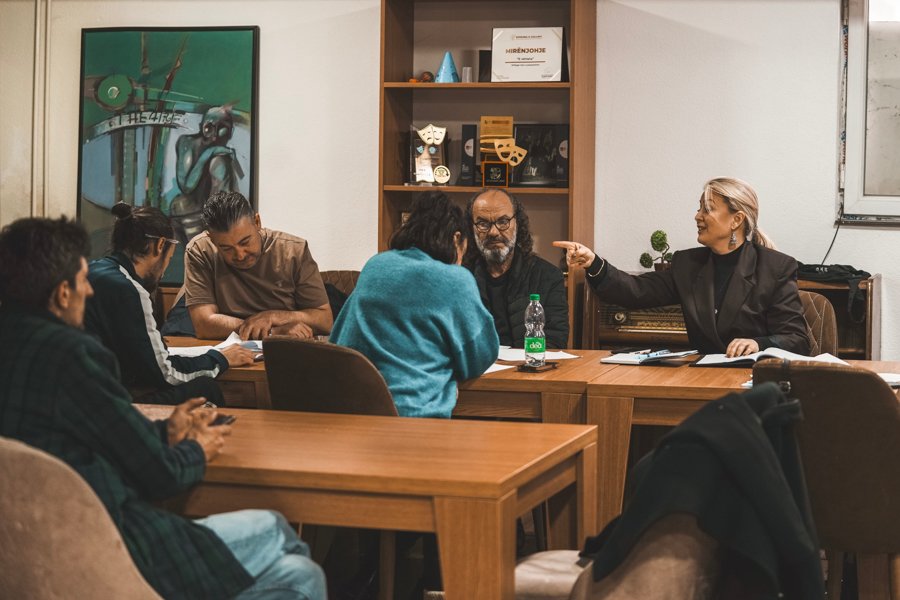
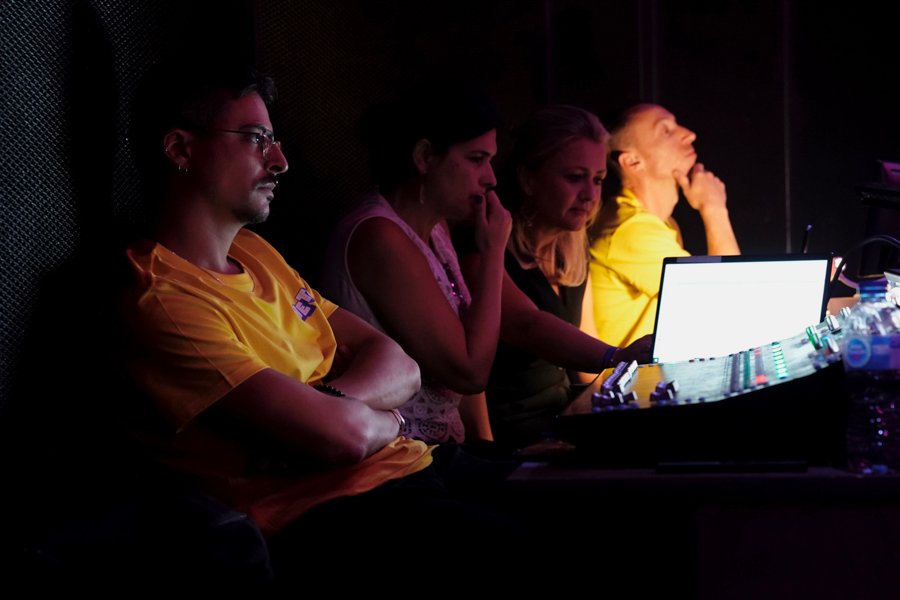
Rehearsals are unfolding with intensity on the stage of the Gjilan City Theatre, where music, physical performance, irony, and the ensemble’s energy come together each day to create a vibrant artistic mosaic.
Each rehearsal brings the production one step closer to a performance that challenges, moves, and invites audiences to reflect on time, humanity, and society.
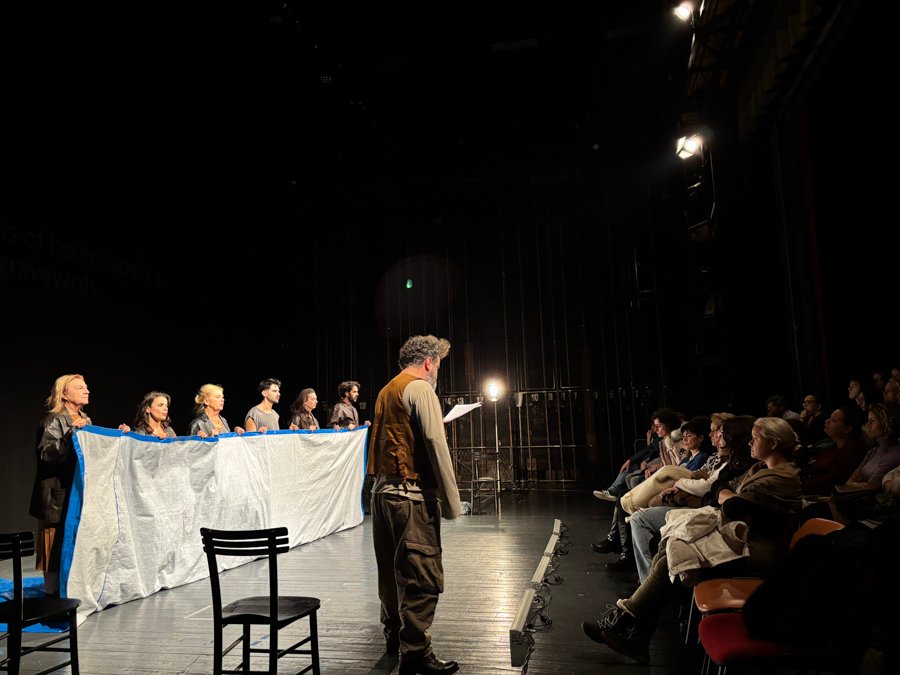
“Women of Troy” continued their journey throughout November with two powerful performances in Serbia. On November 29, 2025, at the Reflektor Theater Festival in Belgrade, and the following day at Puls Teatar in Lazarevac, the play showed that the legend of Troy is not just an ancient story, but a living reflection of the suffering of women who endure war and its aftermath.
The contemporary direction by Zana Hoxha and Maja Mitić offered a fresh and striking interpretation: Hecuba, Cassandra, and Andromache became mirrors of today’s women, confronting oppression, loss, displacement, and violence. The audience witnessed not only the tragedy of individual characters but also the weight that history has placed on women through the centuries, realizing that pain does not belong only to the past—it echoes across generations.
Actors Maja Mitić, Shpëtim Selmani, Semira Latifi, Branka Stojković, Qëndresa Kajtazi, Labinot Raci, and Aleksandar Stoimenovski created a deeply moving theatrical experience, blending the power of body, voice, and silence into a universal language of emotion.
Audiences of around 150 people at each performance left both shaken and inspired, recognizing that the strength and resilience of women is not merely ancient history—it is a reality that demands to be heard every day.
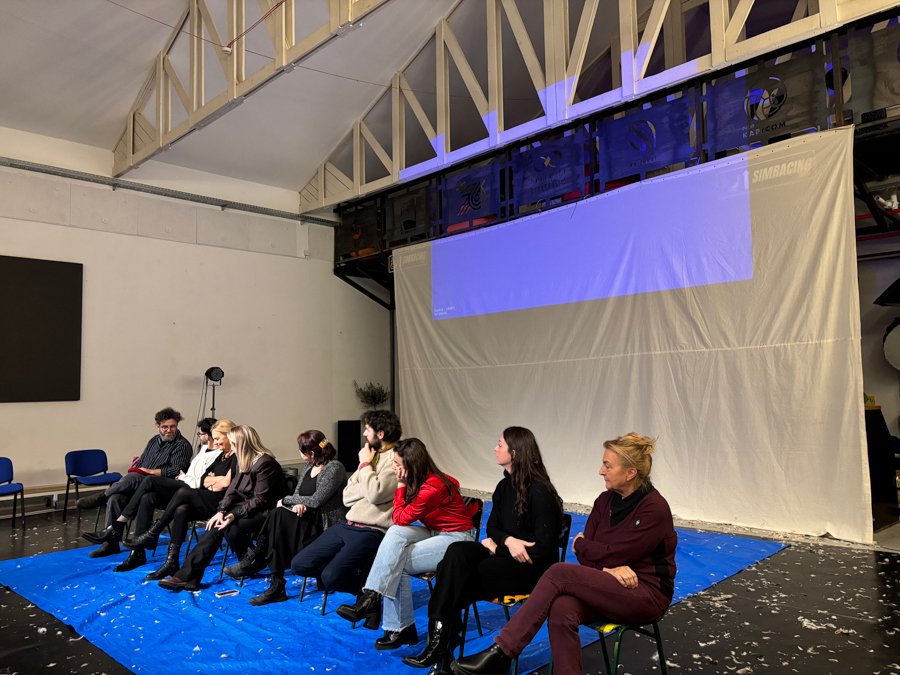
During the presentation in Belgrade, a discussion with the audience also took place, who shared comments and raised numerous questions about the production process, the themes addressed, the artistic collaboration, and the challenges of working together between artists from Kosova and Serbia—something still uncommon in the art scene.
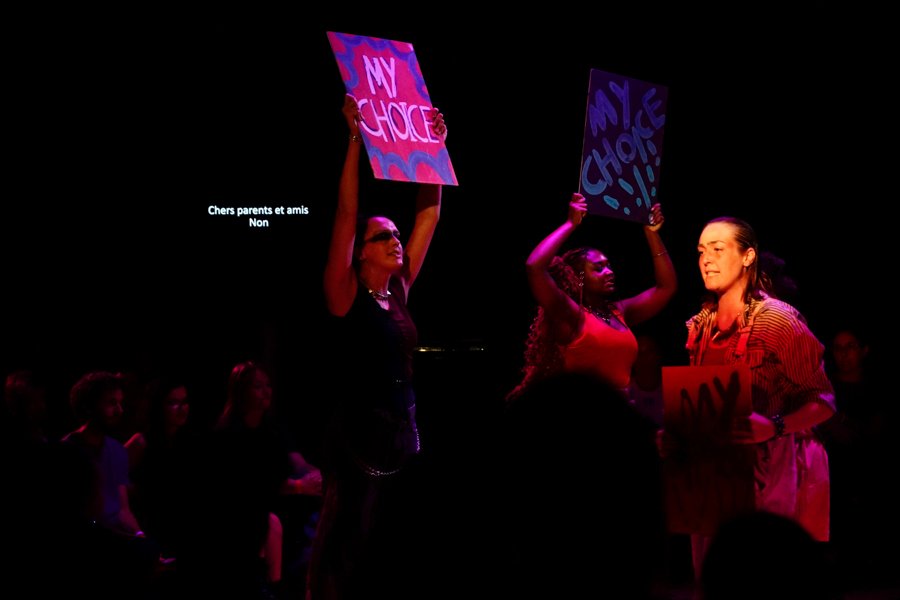
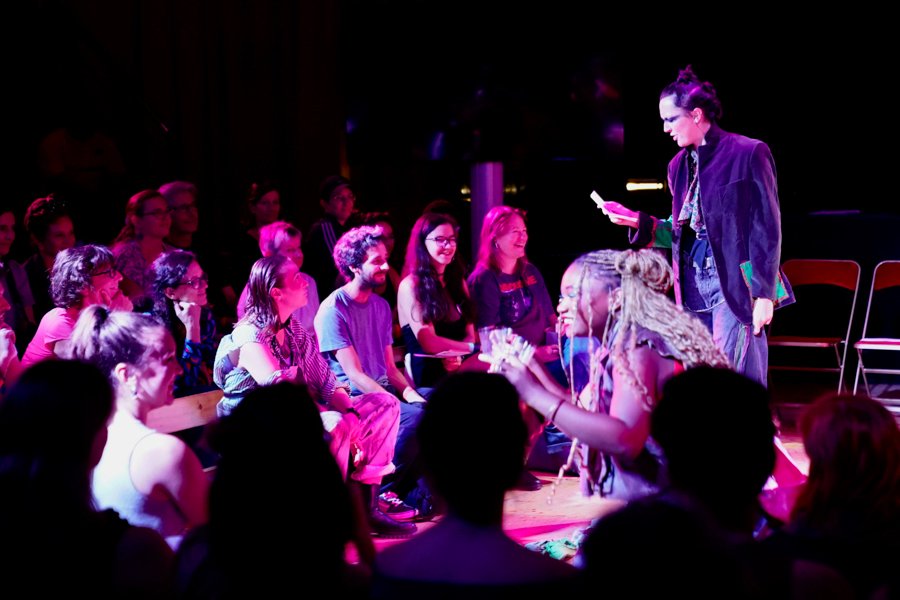
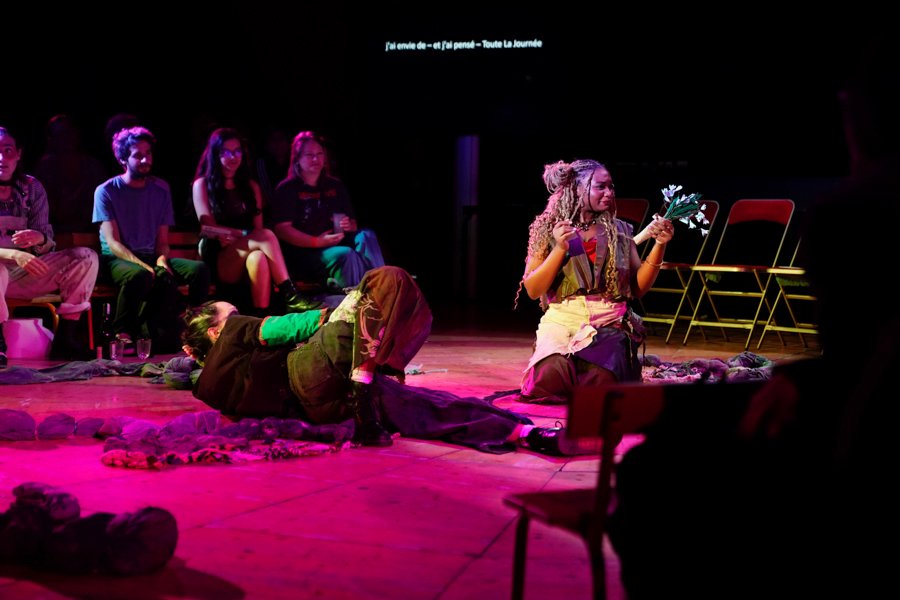
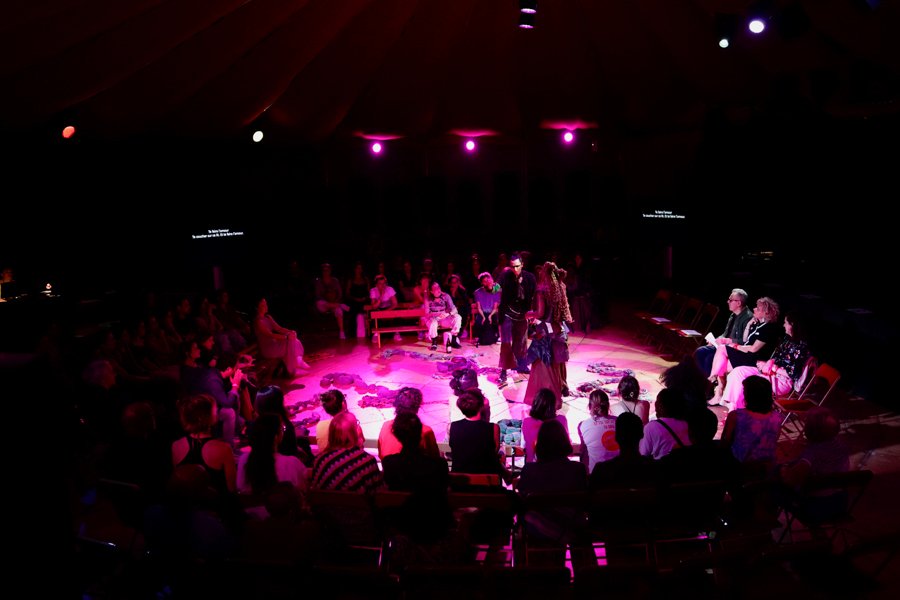
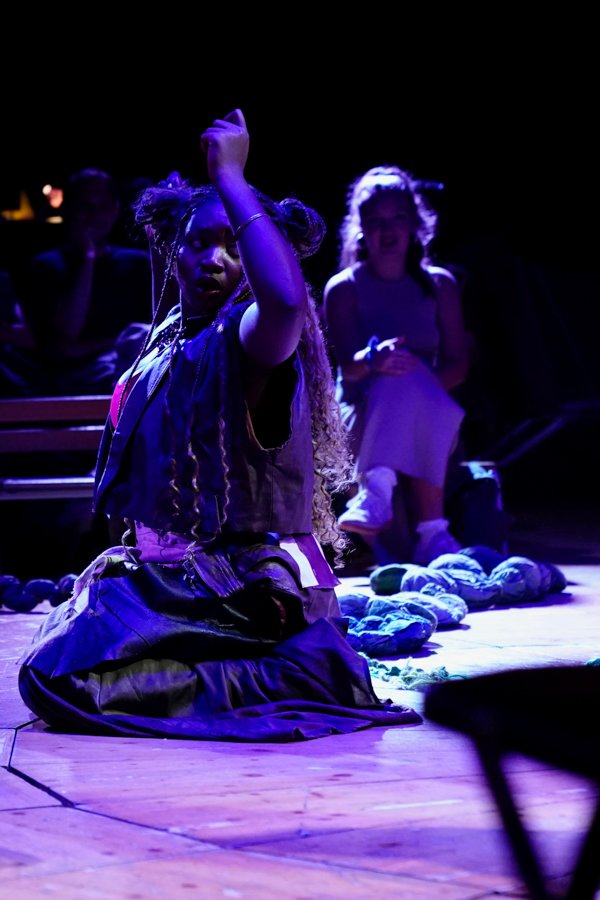
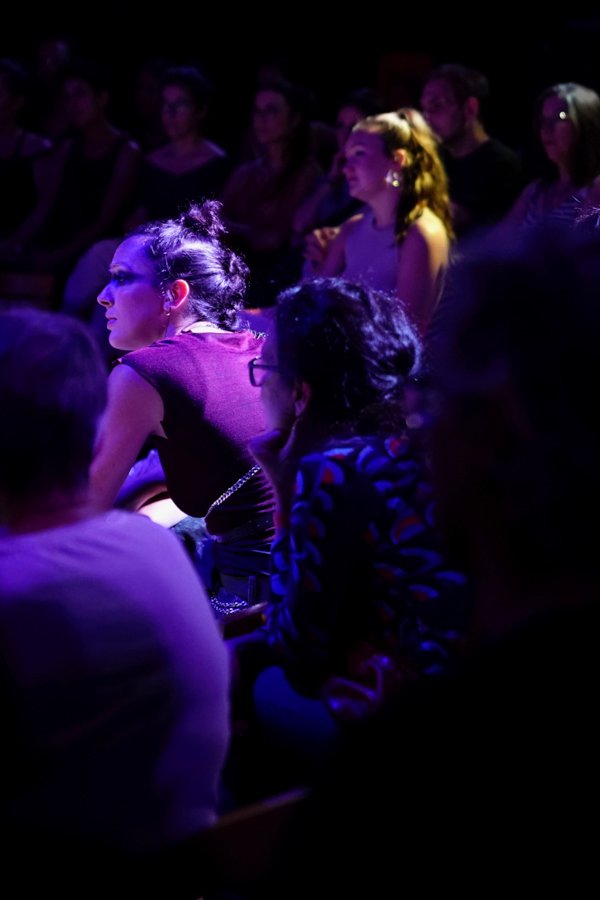
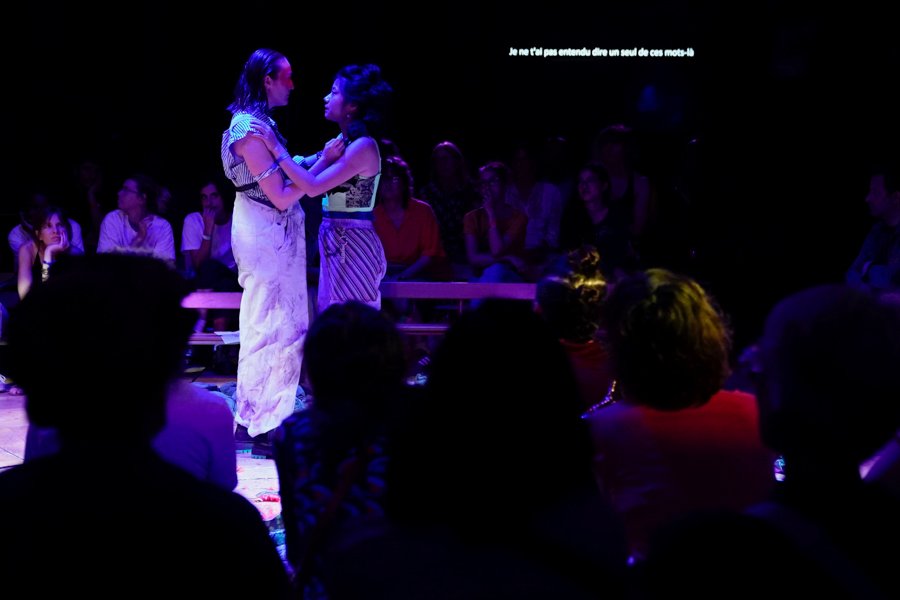
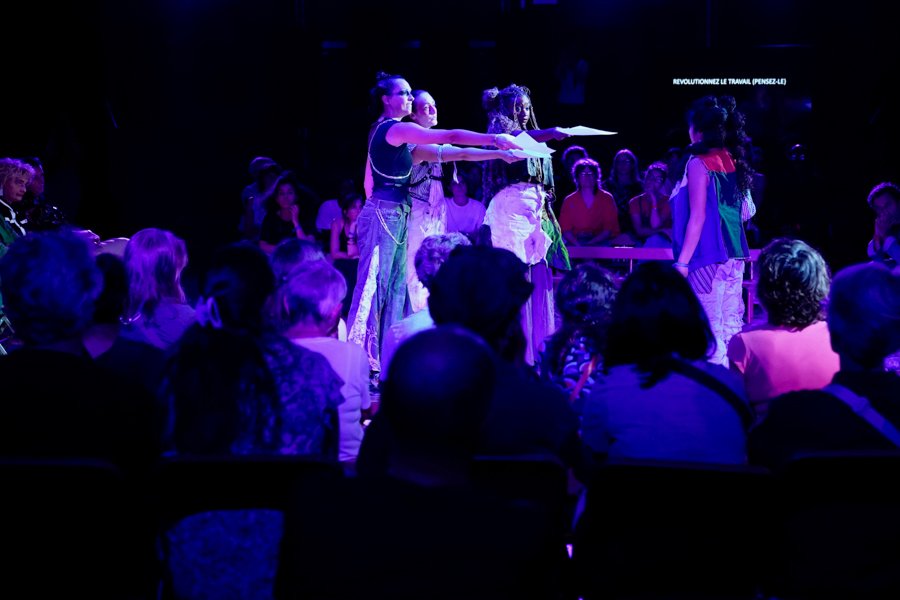
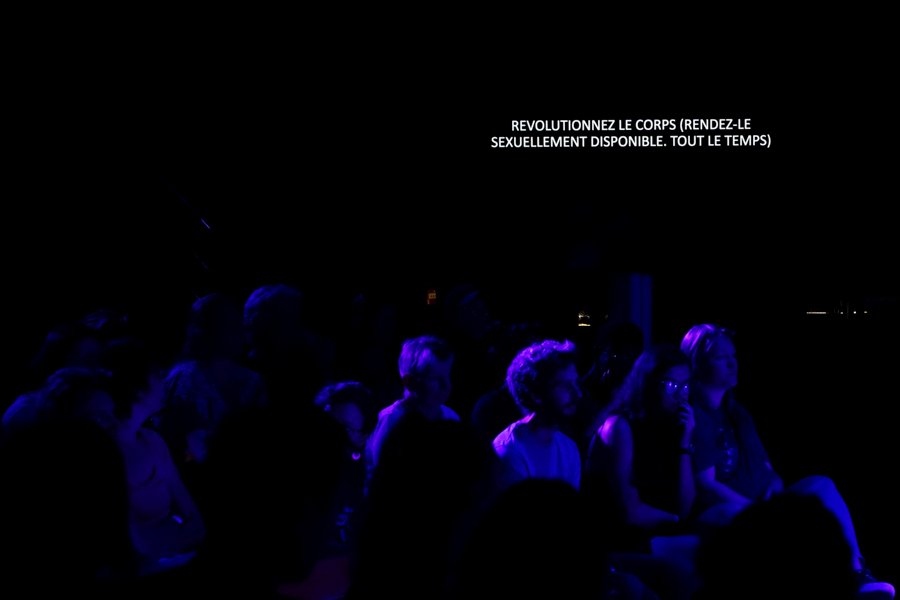
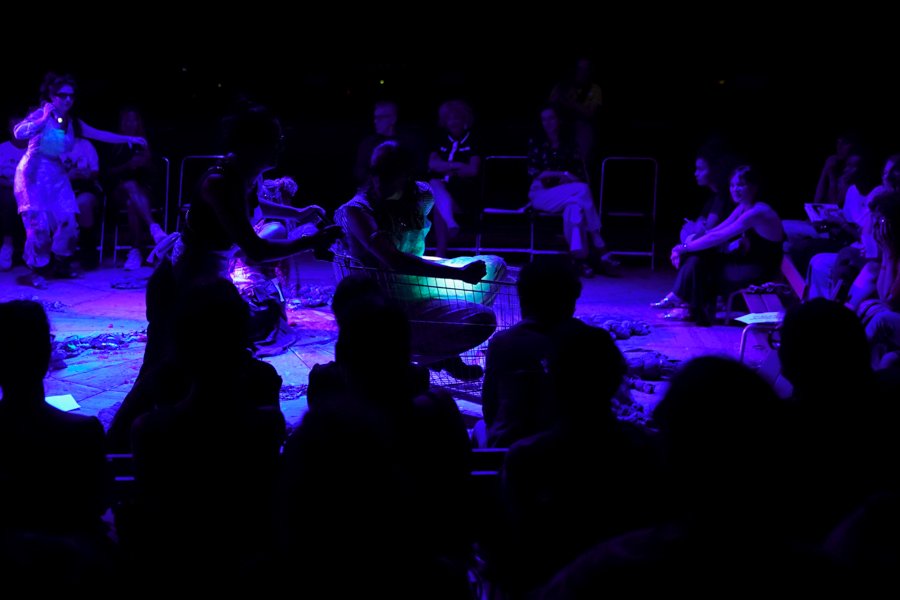
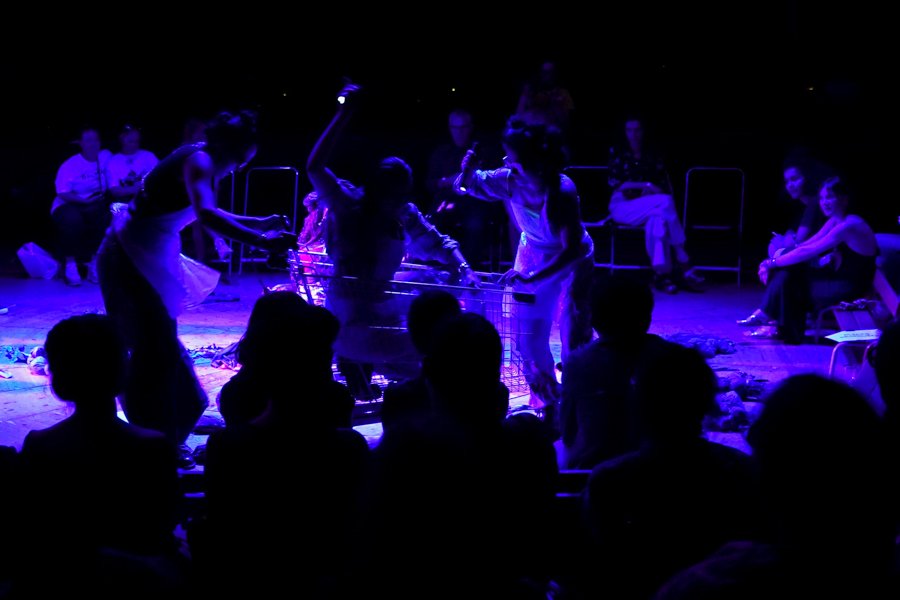
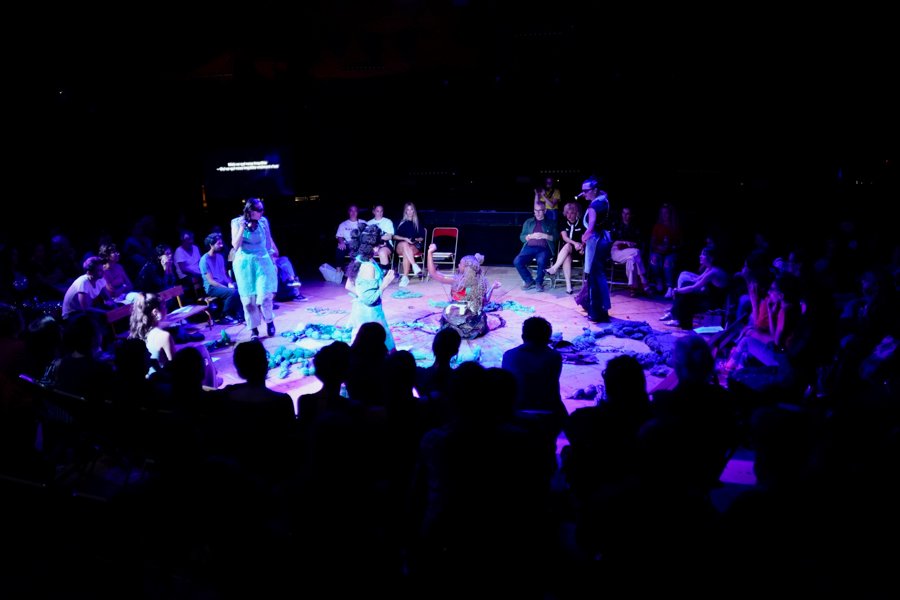
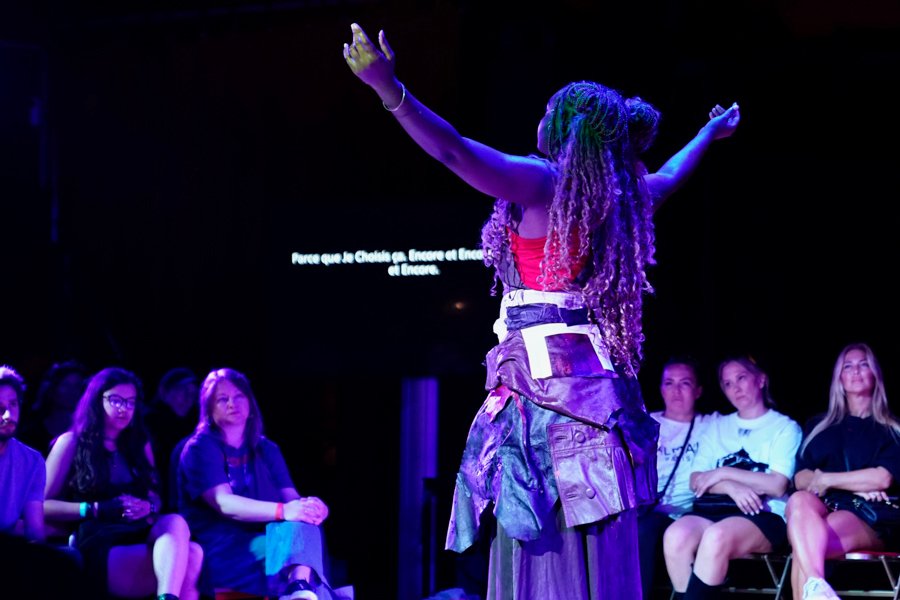
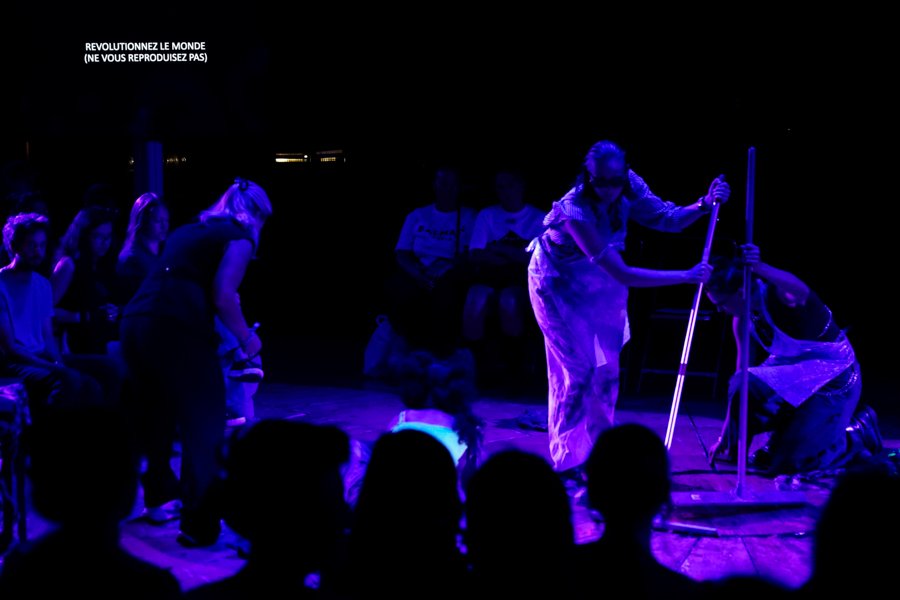
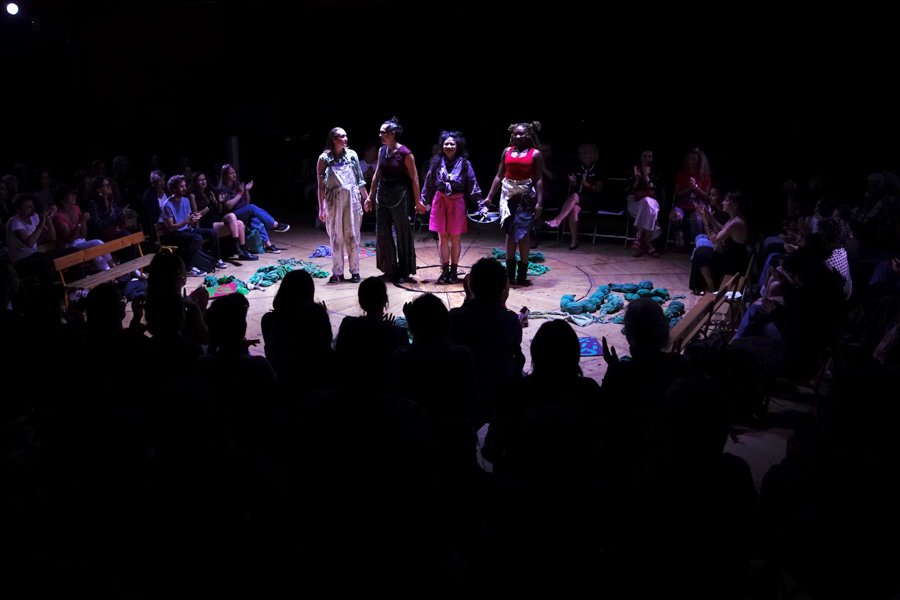
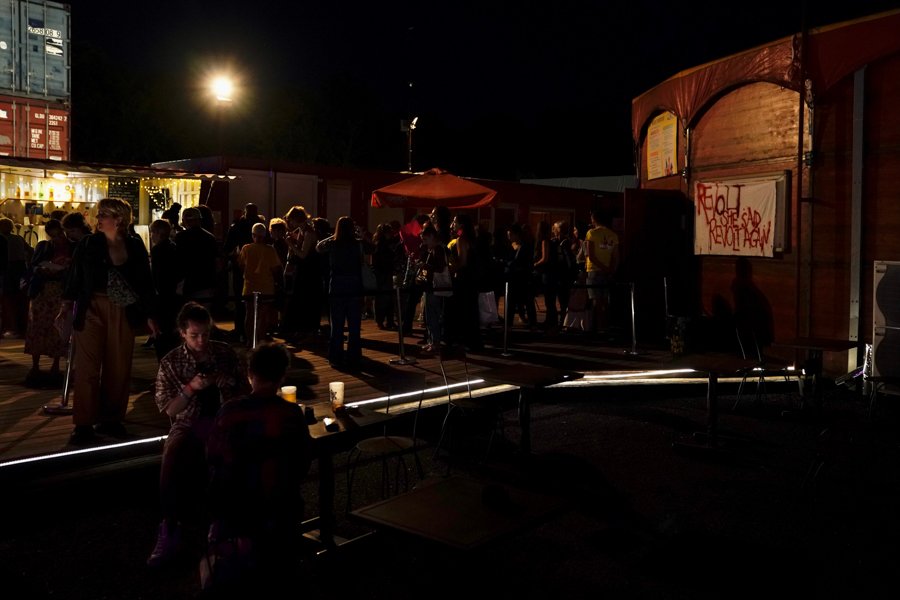
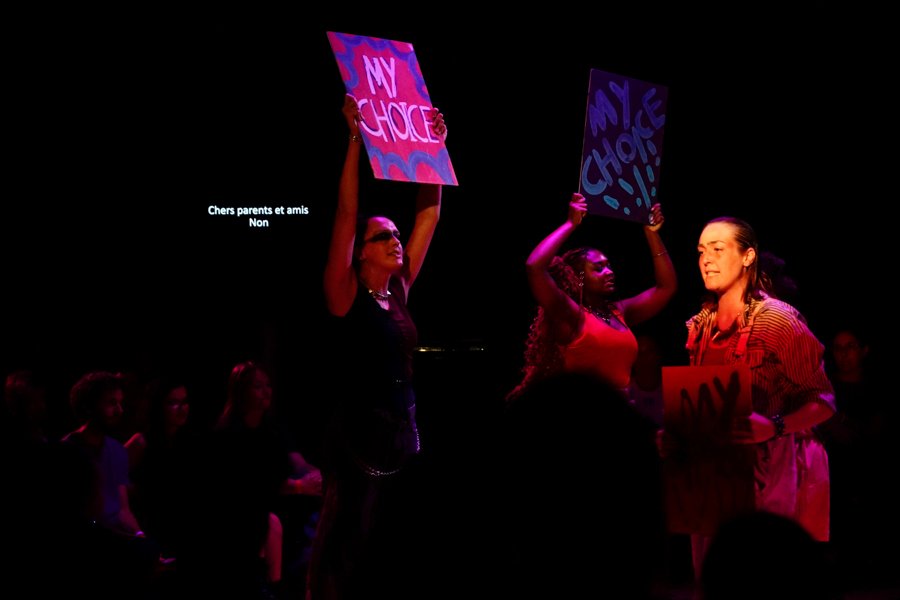
On September 19, 2025, Artpolis presented the play “Revolt. She Said. Revolt Again”, directed by Zana Hoxha, at the WeToo Festival in Paris – a feminist, inclusive, and innovative festival. Before an audience of around 80 people, the performance was met with strong reactions, opening a space for dialogue and reflection.
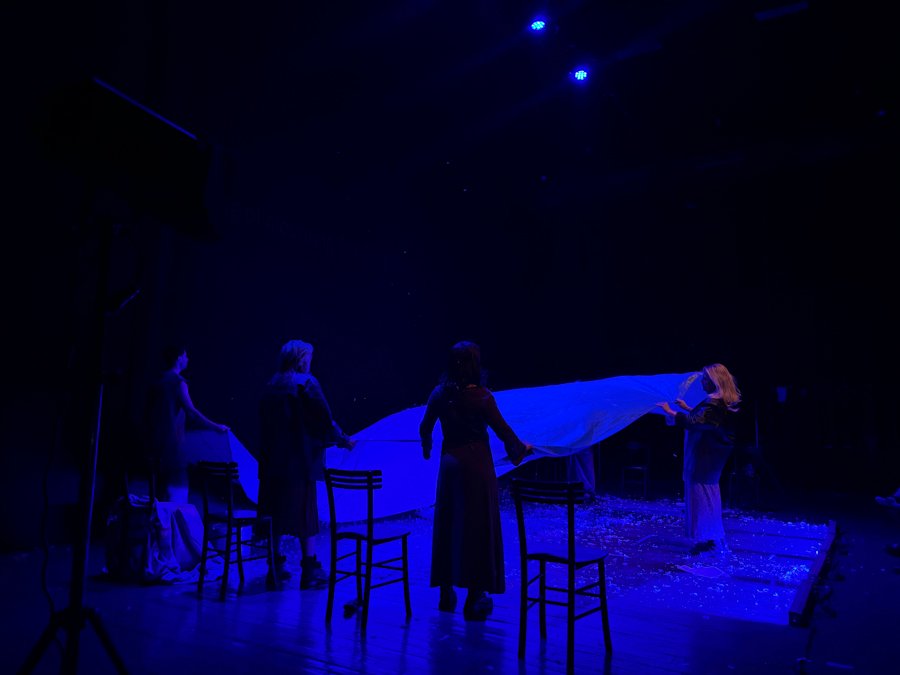
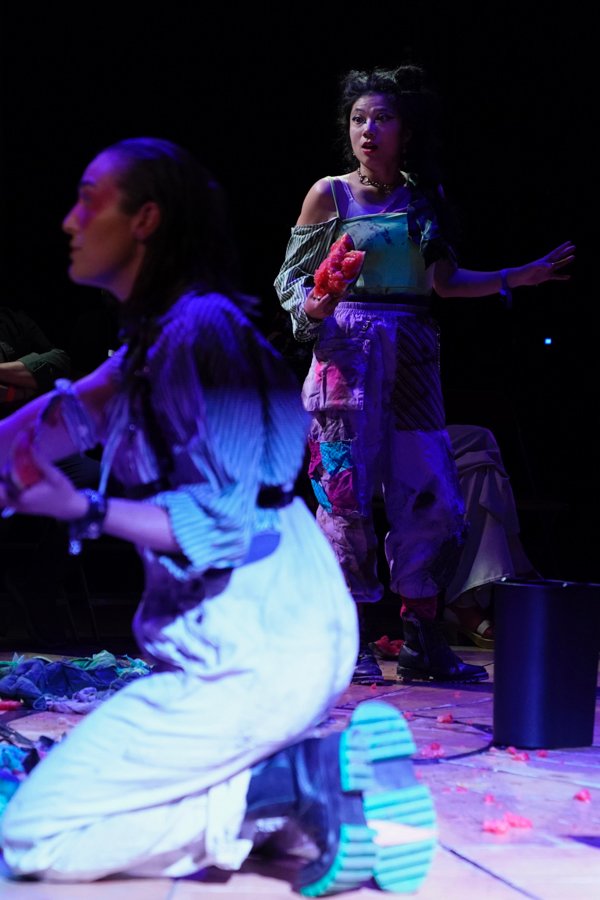
With text by Alice Birch and performances by Olive McHugh, Tanaka Mpofu, Xixi Xiao, and Natalia May, the play offered an intense and provocative theatrical experience, exploring themes of sexuality, power, labor, and freedom. Visual elements, such as a stage filled with watermelon, added an eco-feminist dimension, connecting patriarchal oppression with the exploitation of nature.
As Gili Hoxhaj writes: “In rebellion, mere thought isn’t enough—at least not for the women of the 21st century. That’s why the show ‘Revolt. She Said. Revolt Again.’ gives voice to this need.”
This presentation in Paris was more than a performance – it was an act of solidarity that transcends national borders, creating a universal language of equality and freedom.
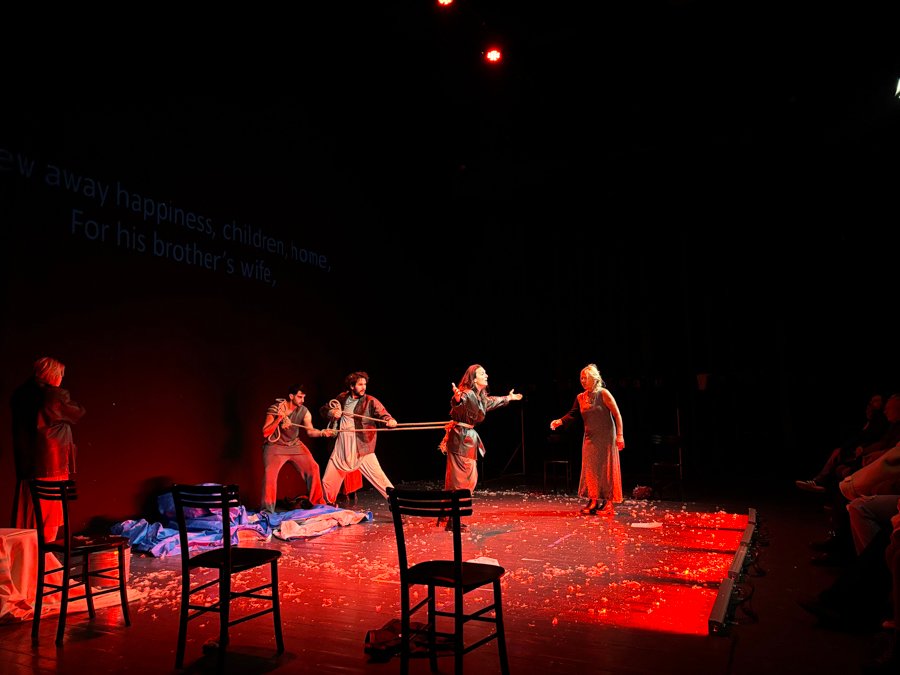
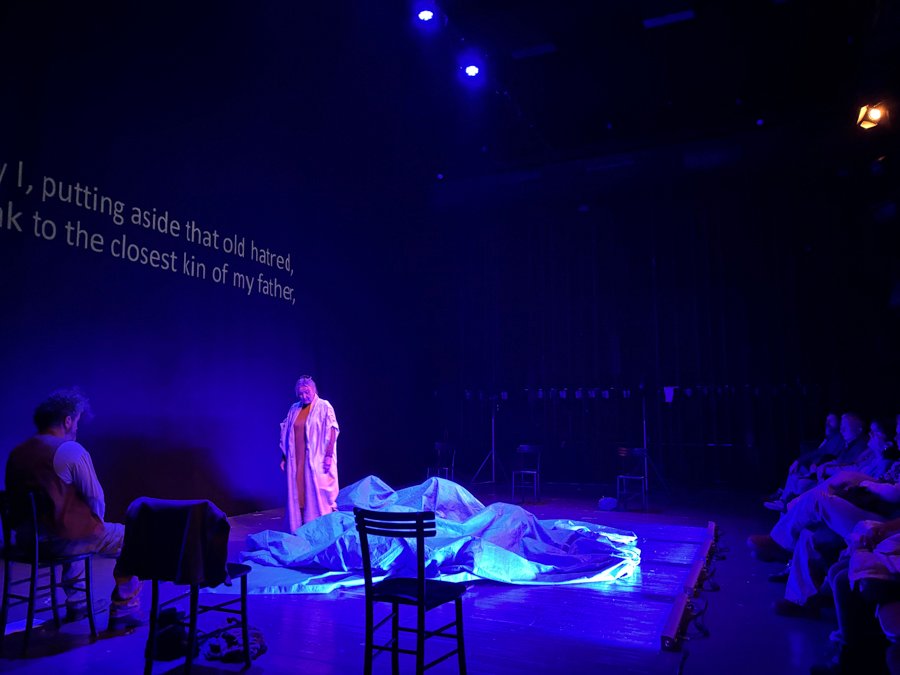
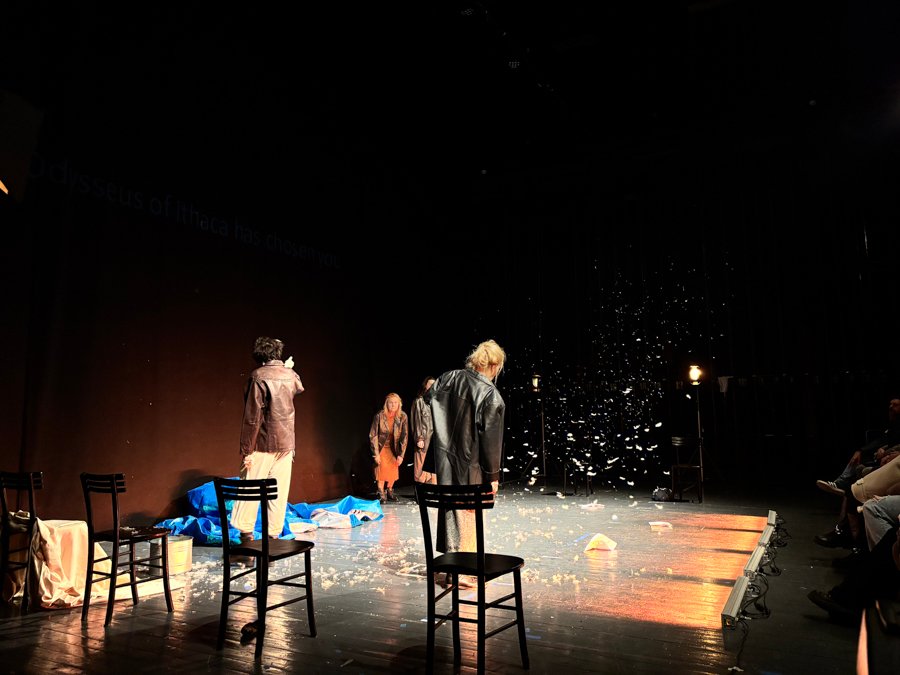
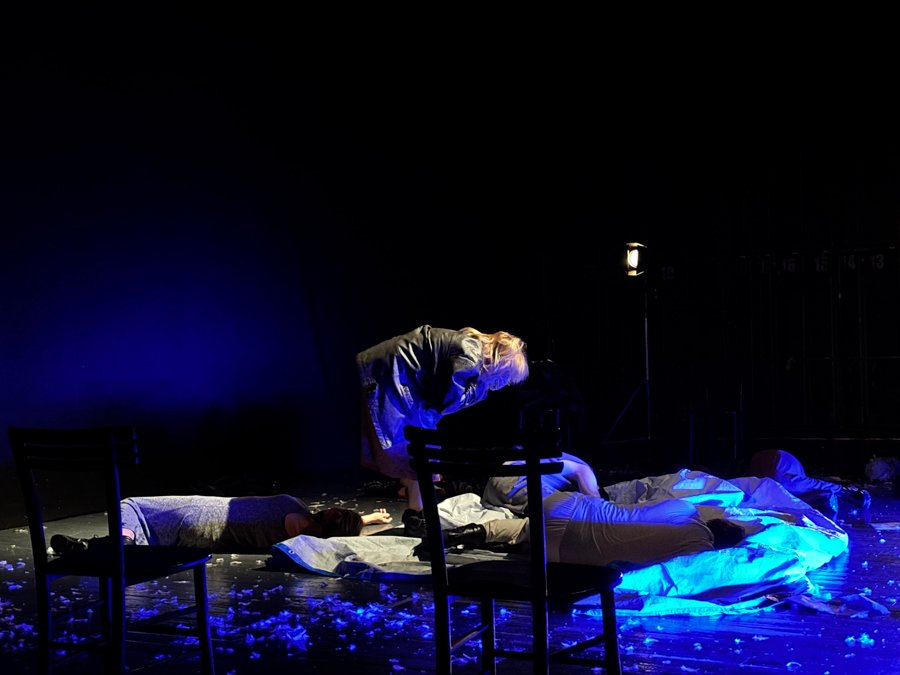
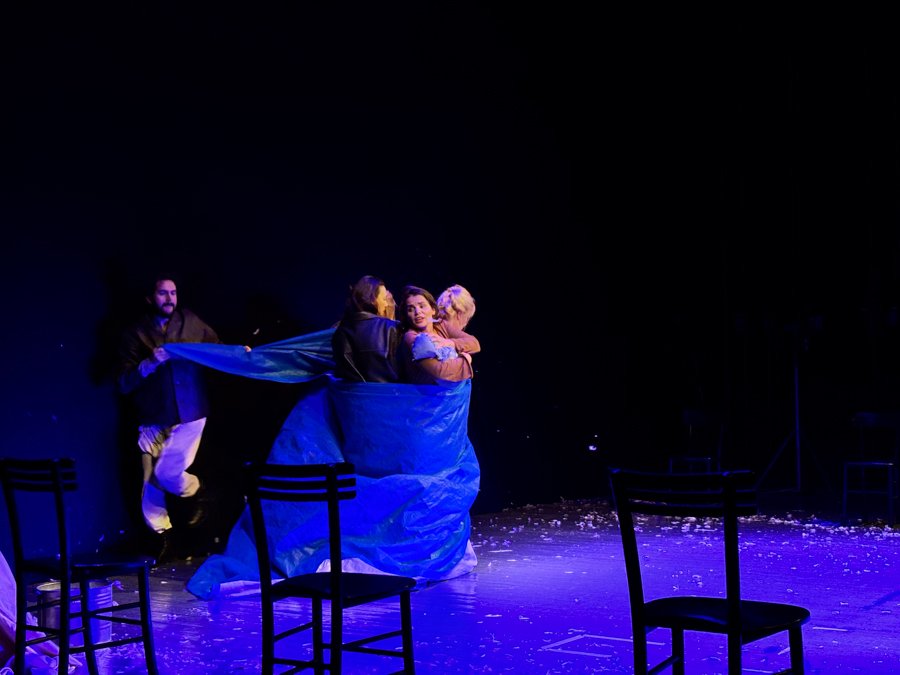
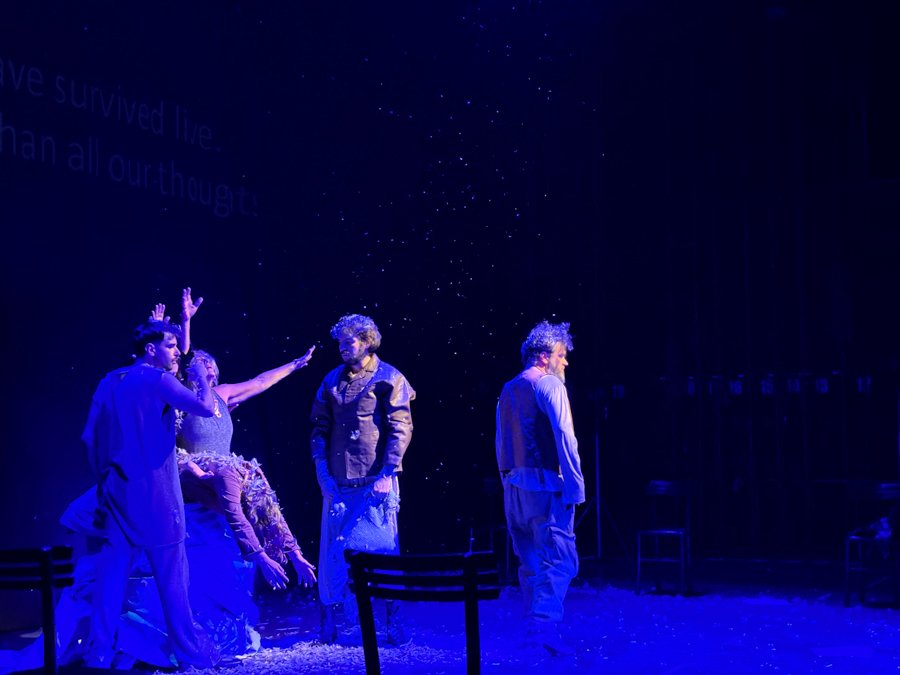
“The Trojan Women,” directed by Zana Hoxha and Maja Mitić, was staged at the “Tempora Contempora” festival in Lecce, Italy.
By: Besartë Elshani
The performance, which evokes the verses of Euripides and intertwines them with modern stories touching on suffering in Gaza, Ukraine, Somalia, Congo, and Kosovo, recently made its next stop in Italy. “The Trojan Women,” created through a collaboration between teams from Kosovo and Serbia, is already familiar to audiences in Belgrade and will return there in November as a work that, through the language of theatre, condemns what is happening in a world trapped in endless wars.
Kosovo’s enduring pain and the wound that still lingers today through the suffering of around 20,000 women who were victims of wartime sexual violence is one of the themes explored in The Trojan Women. The production was recently staged at the “Tempora Contempora” festival in Lecce, Italy. The collaboration between ArtPolis and the Serbian theatre company DAH Theatre, from direction to cast, became one of the main impressions left on the Italian audience.
This theme and this communication, transcending political borders through the language of theatre, will return to the heart of Belgrade in November.
The production evokes the verses of Euripides and intertwines them with modern stories. From the Trojan War thousands of years ago, the narrative extends to present-day suffering in Gaza, Ukraine, Somalia, Congo, and Kosovo—forming an endless cycle of tragedy.
Adapted by Shpëtim Selmani and co-directed by Zana Hoxha and Maja Mitić, the play is based on the Greek tragedy of the same title by Euripides.
Actors Maja Mitić, Shpëtim Selmani, Semira Latifi, Branka Stojković, Qëndresa Kajtazi, Labinot Raci, and Aleksandar Stoimenovski brought the story to life in Italy as well.
The Tempora/Contempora festival is described as an exploration of broad horizons that gives voice and space, “above all, to a new generation of artists and performers still unknown to wider audiences and the media.”
Co-director Zana Hoxha, who is also director of ArtPolis, explained that the play was very warmly received and deeply moved audiences in Lecce.
“One of the things that impressed audiences most was the connection with contemporary stories—the fact that the play begins almost four thousand years ago. It was written about the women of Troy, about women enslaved after war. But then we also bring today’s stories of war and conflict—for example in Gaza, Kosovo, and Cuba, which we used, as well as Algeria after the war with France according to Sartre,” she said in an interview.
The performance was staged at the cultural center Manifatture Knos last Thursday during the festival’s sixth edition, held from August 31 to September 6.
According to Hoxha, the production uses dramaturgical language to condemn the current chaos in the world.
“We condemn through dramaturgy what is happening today—wars that do not stop, pain that continues—and in a way we draw a parallel with the present. Audiences were especially impressed by how both teams appeared to have worked together for a long time; the cohesion among the actors made them seem like a single ensemble,” she said.
She also shared details about one of the real-life stories used in the production:
“We used the true story of a woman from Podujeva who was interviewed in the early 2000s by Associated Press. She described living alone with her parents. Her father was in a wheelchair when paramilitary forces entered and assaulted her in front of her parents. Her father later died from grief after the war, while her mother threw herself into a well because she could not continue living with what had happened. The woman herself continued to live on. Her parents suffered the consequences in different ways, which ultimately resulted in their premature deaths.”
This role is performed by Semira Latifi, who also portrays Cassandra.
“She says: ‘This is Cassandra of today,’ and ‘these are the twenty thousand Cassandras of Kosovo after the war,’” Hoxha explained.
A unifying feature of the production is that the characters communicate with one another without necessarily understanding each other’s language.
“The mother and daughter communicate with one speaking Albanian and the other Serbian, yet they understand one another as though they know each other’s language. The Serbian actors do not know Albanian at all. Throughout the entire project they understand each other through the language of theatre,” Hoxha explained.
The premiere of the production took place last October at Dodona Theatre in Prishtina. It was later staged in Belgrade at the Center for Cultural Decontamination in late November, where over two consecutive nights it presented, among other themes, the consequences of crimes committed by Serbian forces in Kosovo.
“When the play was performed in Serbia, many audience members heard for the first time that twenty thousand women from all communities had been subjected to sexual violence in Kosovo,” Hoxha recalled.
Now The Trojan Women will return to the Serbian capital after a year. In November it will be staged at Reflektor Teatar, whose mission is to promote “experimental, political, and innovative theatre forms, with a particular focus on independent performing arts scenes in the region.”
Many artistic productions from Kosovo traveling to Serbian cities encounter nationalist reactions. Last year, no such incidents occurred for the ArtPolis team, and Hoxha said they do not expect them this year either.
“In Serbia, the political situation is very sensitive right now. Student protests have continued for nearly a year. The situation is somewhat unstable and we will monitor it carefully. If it becomes dangerous for the team, I will not send them. But this is a festival organized by Reflektor Teatar in Belgrade, in a space intended for more open-minded and democratic people—not nationalists,” she said.
She described such incidents as staged.
“I believe there are groups in Kosovo and Serbia that sometimes stage incidents to gain greater publicity for a performance. We have never staged incidents and will never need to.”
And The Trojan Women still has more places to reach. Switzerland is among its next ambitions, pending confirmation.
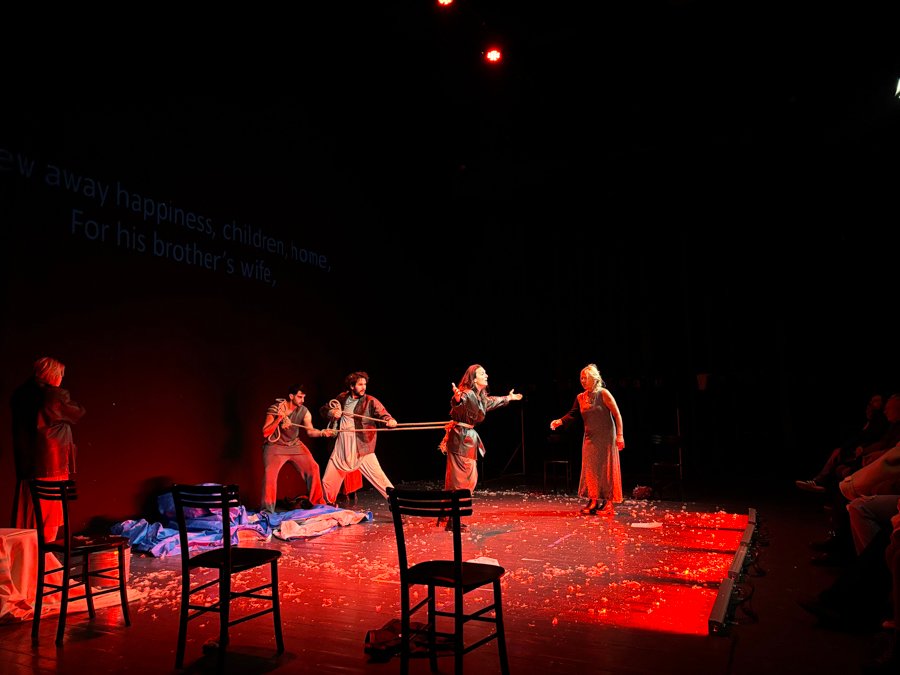
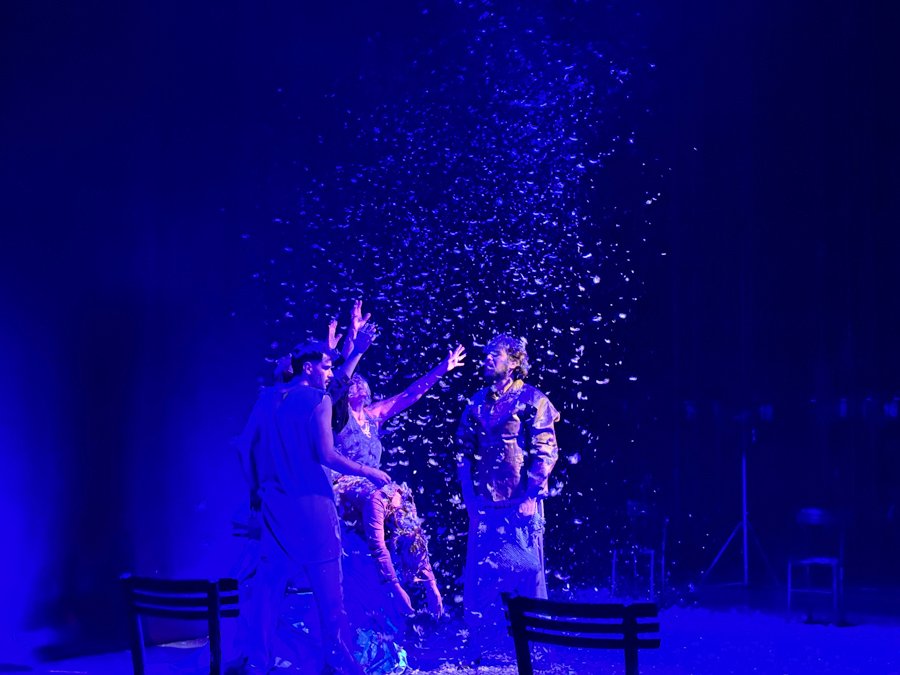
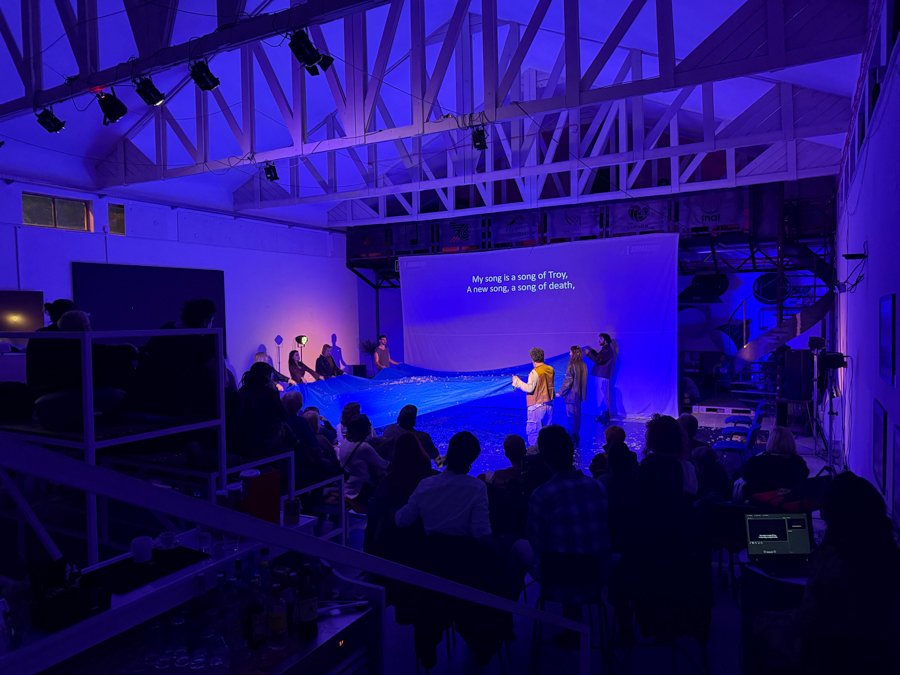
On September 4, 2025, the play “The Women of Troy” brought to the stage a painful yet powerful journey before the audience in Italy, as part of the Tempora Contempora Festival in Lecce. Wars, which for centuries have disfigured humanity, continue to leave deep scars on the bodies and souls of their victims. In this performance, the ancient grief of the women of Troy resonates in Gaza, Ukraine, Kosova, Somalia, and Congo—revealing that the wounds of war know neither borders nor time.
Based on Euripides’ work and reimagined through a feminist lens by directors Zana Hoxha and Maja Mitić, with a contemporary text by Shpëtim Selmani, this daring interplay allowed an audience of around 60 spectators to witness a story where women’s resilience transforms into a call for peace.
The bilingual production—performed in Albanian and Serbian—was the result of a two-year artistic co-creation that brought together artists from Kosovo and Serbia: Maja Mitić, Shpëtim Selmani, Semira Latifi, Branka Stojković, Qëndresa Kajtazi, Labinot Raci, and Aleksandar Stoimenovski.
“The Women of Troy” in Lecce was an act of remembrance and resistance, a testament that art can carry the wounds of the past and transform them into voices that call for universal justice and peace.
26, 27, 28 & 30 July 2025 / Prishtina and Novi Sad
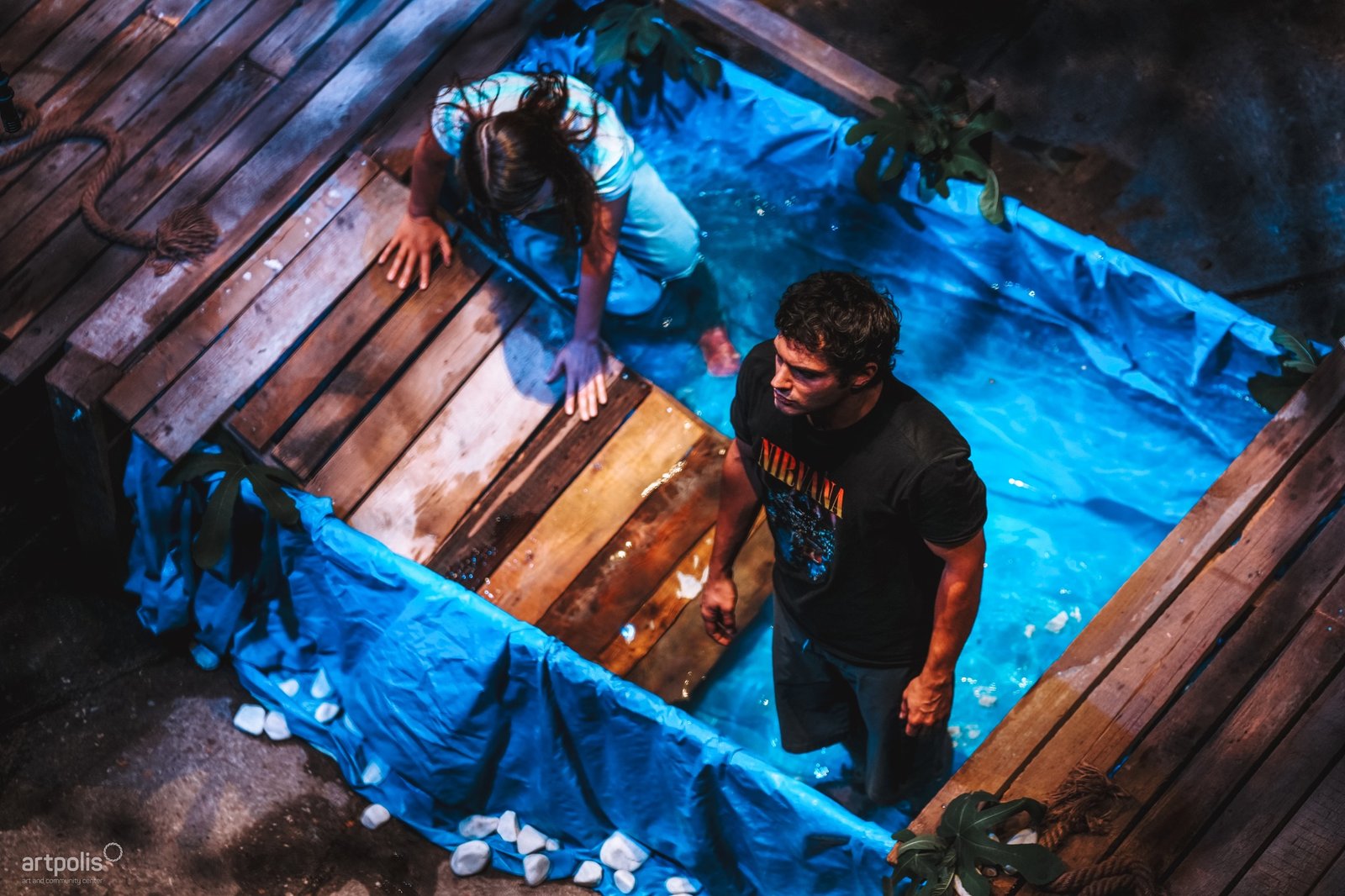
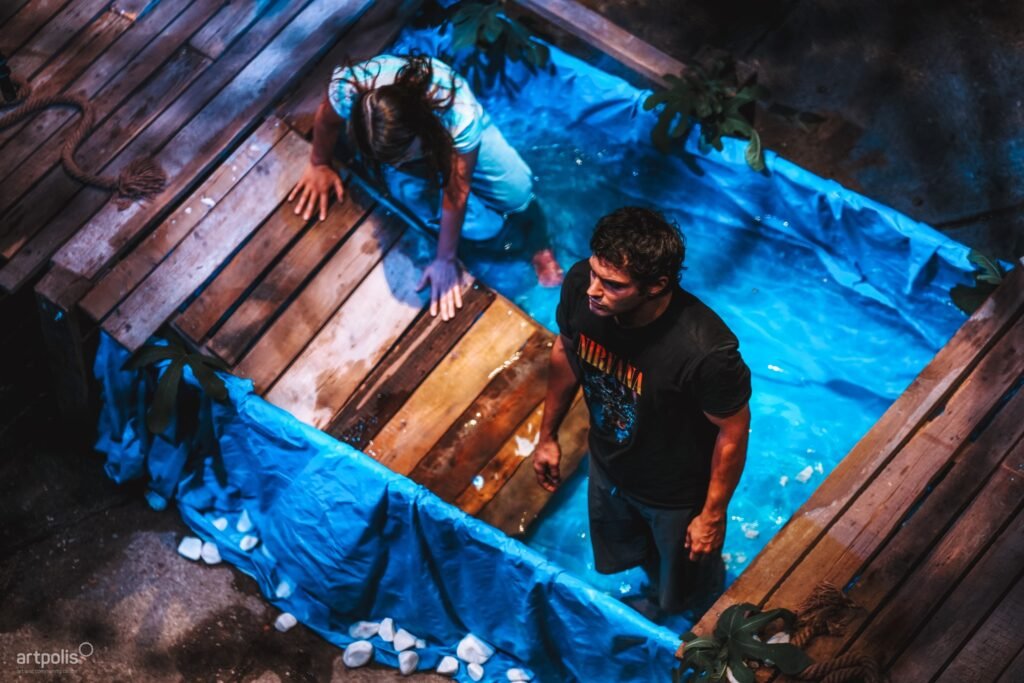
The performance “Memories from the River” had an open presentation for the audience on July 26, 2025, in Prishtina, followed by its official premiere on July 27. A rerun took place the next day, on July 28. Then, on July 30, the river of memories flowed beyond borders, reaching the stage in Novi Sad, where it was embraced as a poetic journey between art and remembrance.
Over the course of these presentations, more than 180 audience members experienced this unique theatrical event.
If childhood is the place where our inner world takes shape, then Memories from the River was a courageous return to that place — joyful and painful at once. In this experimental performance, Zana Hoxha invited us to face what we so often try to forget: the unheard voice of the child within us.
With deeply introspective direction and a dramaturgy that interwove poetry with brutal reality, the performance placed the audience on a tender trajectory — from innocence to the violence of a society that fails to embrace “the different.” Mance — portrayed by Edon Shileku — was not just a character; he embodied all those who’ve felt small in the face of scorn, talented yet silenced, a dreamer dismissed.
Hana (Qendresa Kajtazi) was the living memory of those no longer with us, a silent bearer of pain, a witness to her inability to save her friend. In her performance, there was a kind of solidified sorrow, making the pain even more palpable.
The play began in an open space — the Fountain at the Palace of Youth — and continued to the Prison of the Ideal, a physical journey that became metaphor for an emotional one. The song “I Know I Will See You” by Minatori accompanied the audience like an unspoken hymn of hope — to see, and to be seen. Actors Elsa Belegu and Flamur Ahmeti not only enriched this collective story, but brought to life, through voice and movement, a memory that never stops speaking. Each scene was a fragment of truth many keep hidden. What set this play apart was not just its experimental structure, but the way it became a shared act of healing.
Memories from the River did not merely aim to tell a story — it offered a safe space for reflection, for feeling, for crying, for sharing. The audience was not simply a spectator. It became a fellow traveler and storyteller. Theatre here was not spectacle. It was collective therapy.
A confrontation with the self. In a society that so often lacks the time — or the will — to listen, Memories from the River became a collective act of hearing. And that very act of hearing was, in itself, a form of healing — a release from the weight of the past.
Recently, the premiere of the play Vojcek was staged in Gjakova, directed by Zana Hoxha.
In this dramatic interpretation of human fate, the main character, Vojcek, emerges as a powerful reflection on human existence and the oppression imposed by circumstances, raising the fundamental question: Is a person free, or enslaved by fate and their past?
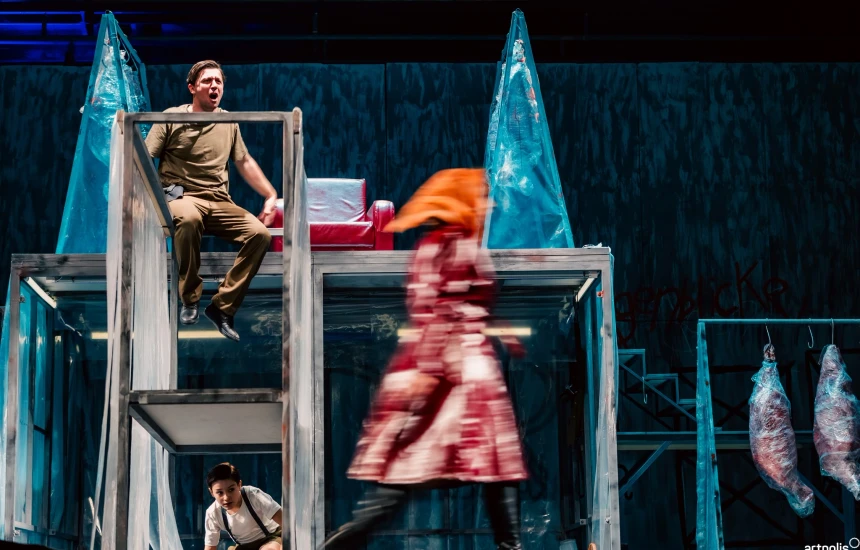
In Vojcek, the protagonist’s childhood is not explored directly, but the presence of a young boy on stage as the personification of his memory emphasizes the weight of the past in shaping his tragedy.
This scenic element creates a powerful link between memory and fate, deepening the understanding of the roots of Vojcek’s suffering.
Oppressed in his childhood, Vojcek reminds us of Friedrich Nietzsche’s saying, “He who fights with monsters should be careful lest he himself become a monster.”
His tragedy is not a random event, but an inevitable continuity, where he, driven by violence and injustice, destroys everything around him.
Vojcek is portrayed as a broken individual, oppressed by poverty and social injustice. He is unable to rise above his circumstances, suggesting that his life has been doomed from the start. From a psychological and philosophical perspective, his childhood can be seen as a period where he is taught submission and the lack of power to change his fate. The absence of a strong emotional foundation makes him vulnerable to exploitation, driving him towards destruction.
Thus, Vojcek’s childhood is not just a dark past but an inevitable beginning to the tragedy he lives. Through his eyes, we see an individual torn between instinct and morality, between reason and madness. His drama embodies existentialist ideas, where the person confronts the absurdity of life and the external limitations that shape their fate. He is not just a victim of misfortune, but a symbol of the inevitability of suffering that defines human existence.
The adaptation by Jack Thorne and the fantastic direction by Zana Hoxha bring this dilemma into a modern context, demonstrating that Vojcek’s challenges are not limited to a distant era but are universal.
In a society where the individual often feels insignificant against the larger social forces, Vojcek becomes a mirror of our reality, prompting us to reflect on the limits of our freedom and the weight of existence.
This performance is not just a tragic tale, but an invitation to reflect on humanity – on what destroys it and on the silent hope for a different reality.
At its core, Vojcek’s tragedy is the story of a man exploited in every way – economically, psychologically, morally, and emotionally. He is the victim of a society that uses him and discards him when he is no longer needed.
The greatest irony lies in the fact that after being destroyed by all these forms of oppression, society judges him as a monster. He is not seen as a man who has suffered, but as a criminal who must face the consequences. The victim becomes the culprit – a phenomenon that is not only found in Vojcek but also in our reality.
In a broader philosophical sense, Vojcek is not just an individual, but a symbol of all those oppressed by an unjust system. He is proof of how society can exploit a person to the point where they have nothing left to lose – and then judge them for their despair.
Is Vojcek a victim, or a reflection of the society that created him? This dilemma remains open, challenging us to reflect on collective responsibility toward oppressed individuals and on how society shapes their fate.
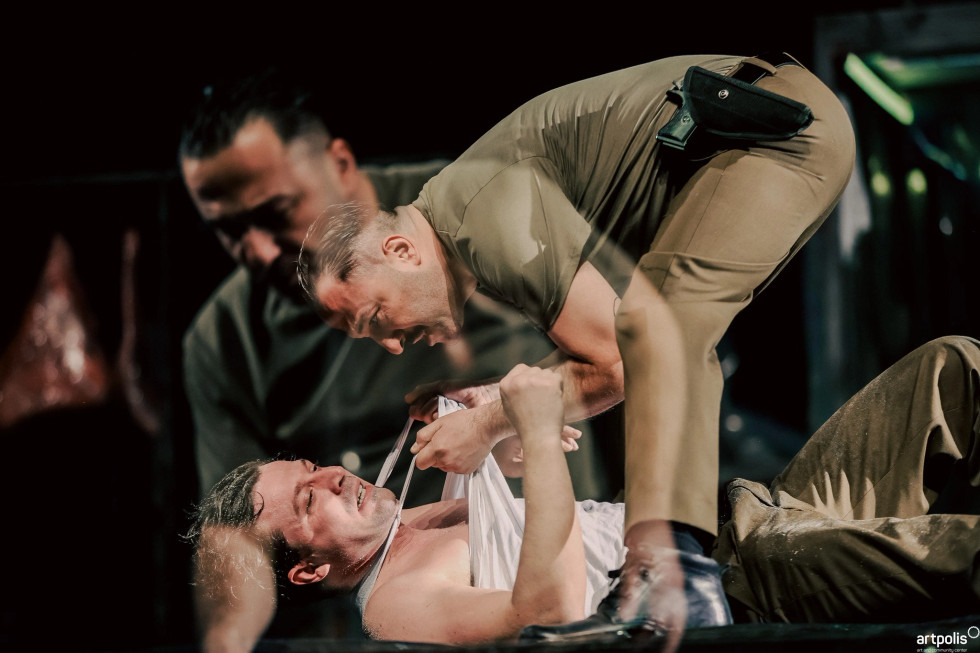
The life of Vojcek is an endless humiliation. He is mocked, despised, and degraded by everyone. On the stage of the “Hadi Shehu” theater in Gjakova, Vojcek by Georg Büchner, directed by Zana Hoxha, is presented as a more modern version of the work, with a text adapted by English playwright Jack Thorne. There, madness, the effect of inhumane labor, alcoholism, and more coexist. The ending is tragic, and in reality, it is an alarm.
Performances of such scale aim for an effect that lasts with the audience. It attempts to achieve what theater has aimed for from its very beginning – catharsis. This is the role of Vojcek, one of the works of one of the greatest German playwrights, Georg Büchner. Under the direction of Zana Hoxha, this narrative, inspired by real events, has been staged in Gjakova, and according to the director, it resonates quite well with this city. The drama is a powerful and deeply emotional portrait of suffering and the destructive effect of injustices in society.
At the “Hadi Shehu” theater in Gjakova, Vojcek is presented as a more modern version of the play, with a text adapted by English playwright Jack Thorne. There, madness, the effect of inhumane labor, alcoholism, and more coexist.
A work that stands out as a cornerstone for German theater, the play centers on Franz Vojcek, a soldier who supplements his insufficient income by performing some of the most bizarre jobs. He even “poisons” himself by participating in human experiments.
As the curtains rise, the music starts playing with rock rhythms, performed by Kreshnik Koshi. The opening love scene reveals that one of the central themes is the main character’s love for his wife, Marian, played by actress Vlora Dervishi.
Vojcek, a role played by actor Bujar Ahmeti, quickly returns to his duties as a soldier and reveals his character as a loyal and unassuming man while talking to his closest and only friend. It is Andrew, played by actor Edi Kastrati, who is a completely opposite character to the protagonist. But his financial situation is also revealed. The struggles of the working class can be summarized as the theme of the entire drama. The story takes place in Germany.
Vojcek’s life is an endless humiliation. He is mocked, despised, and degraded by everyone, especially by his captain, played by Arbies Komoni. Parallels between the rich and the poor arise, especially when the captain’s wife, Megi, played by Aurita Agushi, visits Marian, who is tasked with distributing two thousand envelopes around the city. Above the house where they live, there is a slaughterhouse that emits a strong, unpleasant odor.
When Vojcek encounters a way to earn money, his severe financial situation is reflected in the fact that he doesn’t care at all about how it’s done or what the effects and consequences are. It is a medication test to see how the body reacts to them.
“A boy who lives under difficult conditions and loves his wife very much. He wants to change his life a little by undergoing a medical test that leads him to a different mental state,” said actor Bujar Ahmeti, who plays the role that gives the drama its title.
The events also come as a result of the traumas the protagonist has gone through (Photo: Rilind Beqa)
It has been said that in the performance, Vojcek’s kindness is exploited, and his naivety is taken advantage of.
“This is a dramatization, an adaptation of Büchner’s text where the author has made a change that highlights the character of an ordinary boy, who doesn’t have a good financial situation, who undergoes the test. The people around him completely manipulate his life, misuse his kindness, his naivety, and he gradually starts to fall into the positions written in the text, which we have executed with performance,” said actor Bujar Ahmeti.
The strict diet of the doctor, played by Altina Kusari, gradually drives him towards madness. He begins to have hallucinations. He sees himself as a child running away from his mother. The young Vojcek is played by Eden Kastrati.
Actress Aurita Agushi considers the theme of this performance to be extremely emotional.
“I have been very well received by my colleagues, they made me feel at home. The process has gone smoothly. This is certainly when you work hard. The theme is very difficult, very heavy, very emotional. There are many dramatic situations, even leading to tragedy. We say that before the premiere, we were like a time bomb, but in the end, the result you saw is the result of extraordinary work, primarily by Zana, then the actors, but also the entire team that is not seen on stage,” she expressed.
As the curtains rise, the music starts playing with rock rhythms, performed by Kreshnik Koshi (Photo: Rilind Beqa)
Due to his severe psychological condition, Vojçek is suddenly struck by a fear of death. He turns into a monster in relation to his wife. His temperament begins to show. He faces his past, which doesn’t seem so great. He was raised without parents. Meeting his childhood self only worsens his condition.
Actor Ahmeti stated that it was necessary to thoroughly research the material to understand the character’s state.
“It’s a bit challenging because we need to research, we need to know what kind of nervous crises, problems, and concerns he has. In collaboration with Zana, the whole team, with many suggestions and proposals, we have come to this result. I hope we did good work. I believe the audience in Gjakova will receive this show well, and I hope it will have a long life,” he said.
The protagonist receives his final blow from his closest friend, Andrew.
Actor Edi Kastrati, who plays this role, said that this character reflects the behavior of the people around us and how they influence our lives.
“Andrew is one of the characters, a close friend and the only one of Vojçek, with whom we clearly saw what happened to him, how he ruined him and how he made his life miserable. A very good character who shows us very clearly that we must be very careful with the people around us, especially in these circumstances we are living in. The circle is the only concern of people. The circle pushes us to do things, conspires against us, and arranges bad situations for us. I think we’ve managed to realize what the author wanted to say with Andrew,” he said.
The play “Vojçek” lasts two hours, and it’s not easy to keep the rhythm and avoid monotony. Kastrati considered the work process both exhausting and satisfying.
“Now we are completely relieved from an emotion, as we had many emotions, to be honest. It was an exhausting show for us, but very satisfying, especially when we see that it has been successful with the audience. We are very pleased with the result,” he said after the show.
Actor Bujar Ahmeti considers it a great job by the entire team of the play.
“We are very pleased. It was an intensive job, for me it’s a great pleasure to work in the Gjakova Theater, it’s my city, and for the second time, I’m working with Zana. I’m very happy, I believe we have brought a very good show to life,” he said.
In the play, the love between the characters is fake. Betrayal is shown both openly and subtly. A strange and intriguing element is the black plastic material that extends across part of the stage. Its role is only revealed at the end when Maria wraps herself in it as a sign of protection from Vojçek, but suffocates from it. He also kills himself with the same material.
The director of the play, Zana Hoxha, said that all these events are also a result of the traumas the protagonist has gone through.
“The play is about an unfortunate person, Vojçek, who went through traumas during his childhood, which are highlighted and magnified even more when he becomes part of a medical experiment, due to the difficult conditions that push him toward this experiment. He loses the most precious thing in his life – his wife – who ends up being killed by him, and he kills himself. A tragic end, but I think there can’t be a happy ending after this,” she said.
She revealed that rehearsals started on January 15 and that there were a total of 24 rehearsal days for the two-hour show.
“There was maximum engagement from the whole team, and I’m very happy with the result because this theater is the only one of its kind in Kosovo with these infrastructural dimensions. I know that the audience tonight was moved, I was moved as well, and we’ve managed to bring out the best we could. My concept has been realized, and what I wanted with this play has been achieved. I believe tonight the spirit of this play has also reached the audience,” said director Hoxha.
The play also includes humorous scenes between the actors, but with the same effect, they do not translate well to the audience. Hoxha said that these scenes were intentionally not exaggerated.
“At the same time, very painful things are happening in parallel, and those moments of humor are cynical, sarcastic, and we didn’t want to amplify them more because then the character might end up being even more tragic than he is. I think we’ve made a play that can freely represent Gjakova on many levels,” said the director.
Bujar Ahmeti in the role of Vojçek and Edi Kastrati as Andrew in the play “Vojçek” (Photo: Rilind Beqa).
The music for the play was composed by Tomor Kuçi, while the stage movements were designed by Nicoletta Bonanni from England. The set design and costumes were created by the Englishwoman Grace Rumsey.
“The collaboration has gone very well from the beginning. We designed it together as part of a conceptual project, and then Zana told me that we would indeed go ahead with this set design. It’s an honor to work in such a wonderful theater, especially since this is my first professional design,” said Grace Rumsey.
Büchner’s Vojcek is considered one of the most performed and influential dramas in German literature. According to the play’s details, the author was inspired by the true story of Johann Christian Woyzeck, a barber and soldier from Leipzig, who, in 1821, out of jealousy, murdered his partner Christiane Woost with whom he cohabited.
Büchner wrote the text for the play in 1836, but it remained unfinished due to his death from typhus in February 1837. However, he clarified his intentions for the work through a letter he left behind.
“I do not despise anyone, especially because of intellect or education, for it is not anyone’s power to prevent us from becoming either a leader or a criminal – because under the same conditions, we would all become the same, or because outward circumstances deceive us all,” the author Büchner wrote.
Such a message resonates in Vojček in Gjakova as well.çeku” i Gjakovës.







Recent Comments