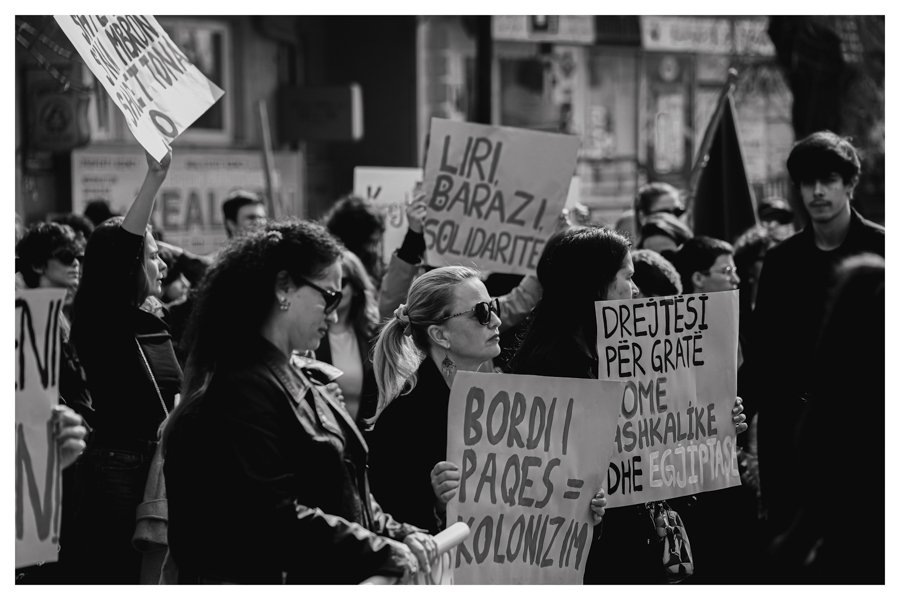
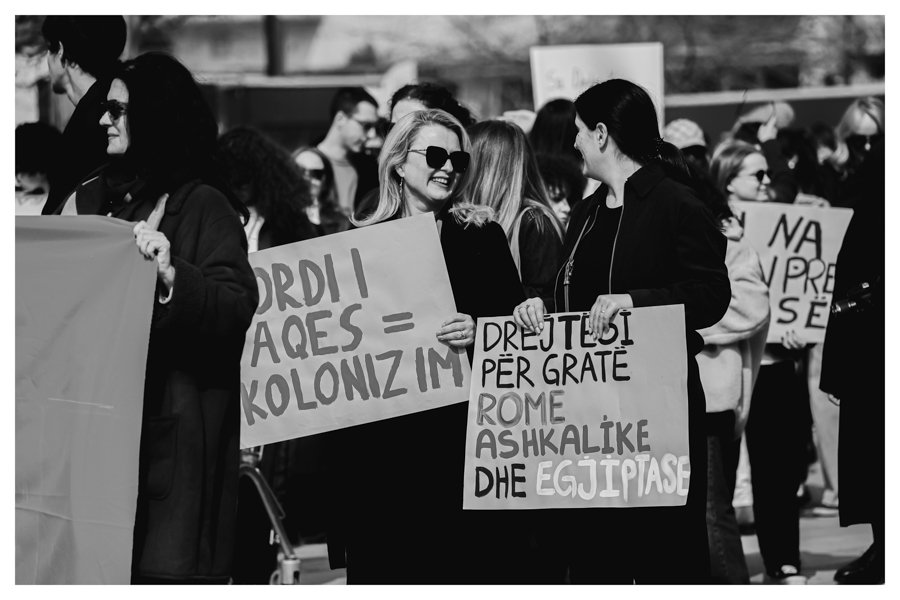
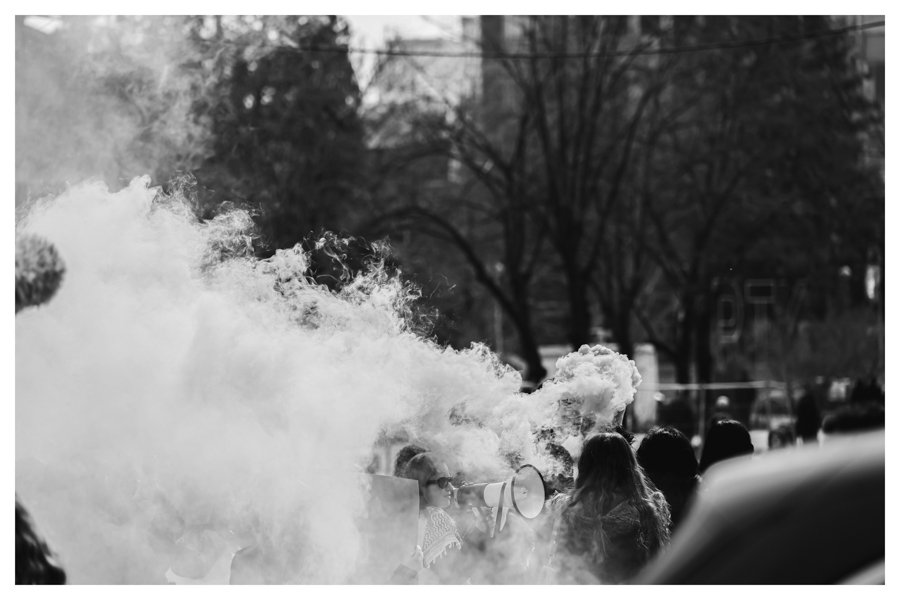
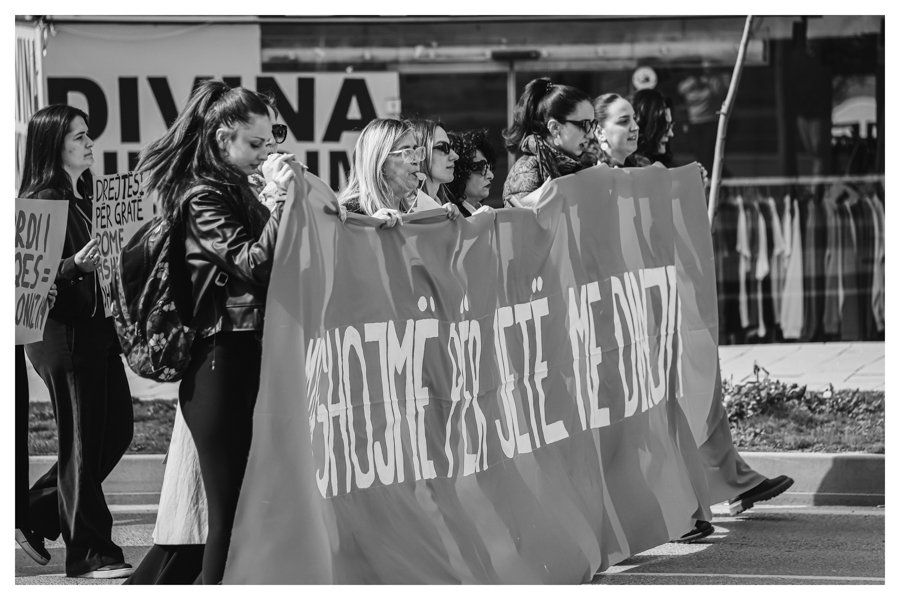
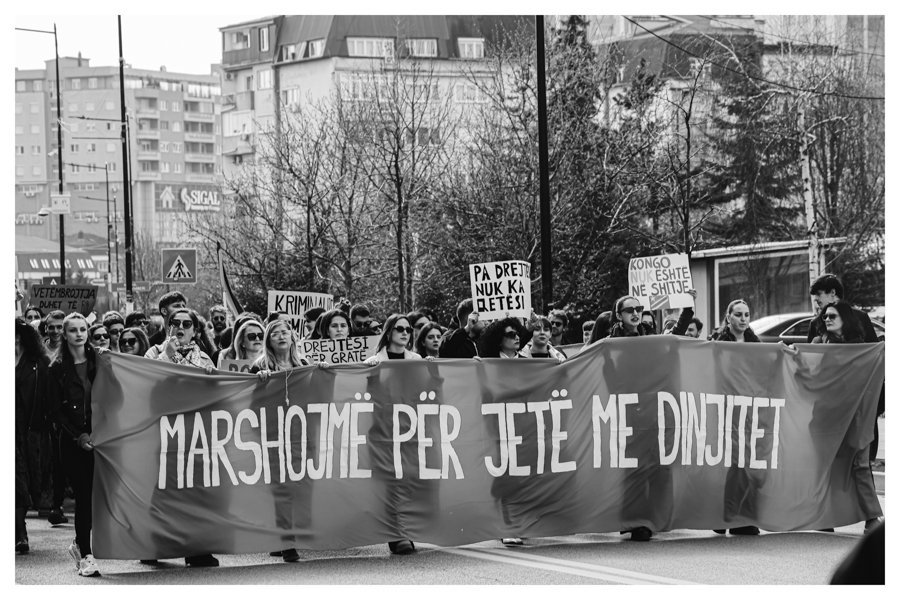
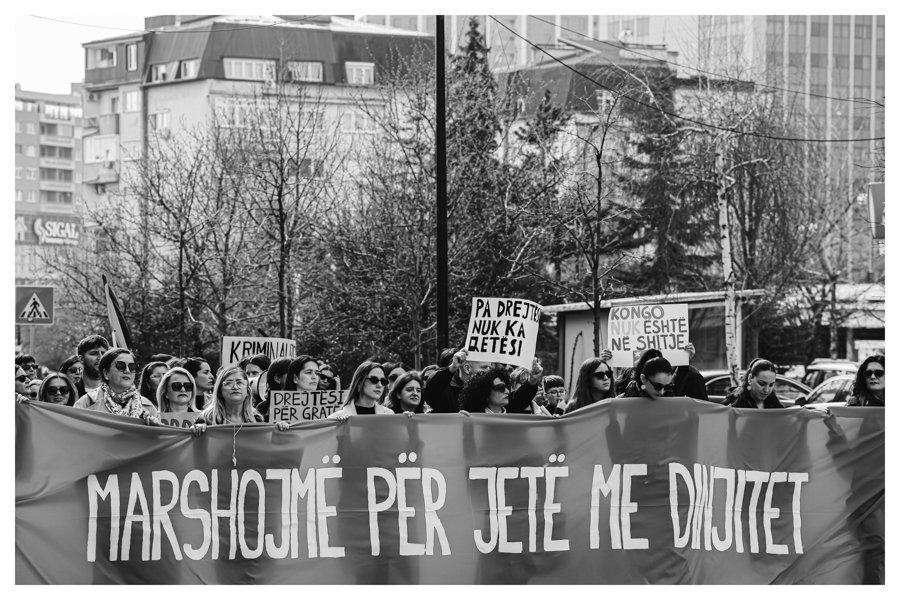
On March 8, the streets of Prishtina were filled with voices of protest and solidarity during the traditional march “We March, We Don’t Celebrate!”, organized by the collective “We March, We Don’t Celebrate!” under the motto “For a Life with Dignity.”
On International Women’s Day, women, girls, men, and activists took to the streets to demand equality, safety, and social justice. This march was a reminder that March 8 is not merely a symbolic celebration, but a day of protest and resistance against the inequalities that continue to affect women’s lives.
We marched and protested against gender-based violence, economic discrimination, inequalities in the labor market, unpaid women’s work, and the exclusion of women from decision-making processes.
We called for a society where women’s bodies, work, and lives are neither controlled, exploited, nor devalued.
In feminist solidarity, we raised our voices for women facing oppression and wars across the world – from Kosovo to Palestine, Sudan, Congo, Ukraine, and beyond. Freedom and dignity cannot be partial: our liberation remains incomplete without the freedom of all.
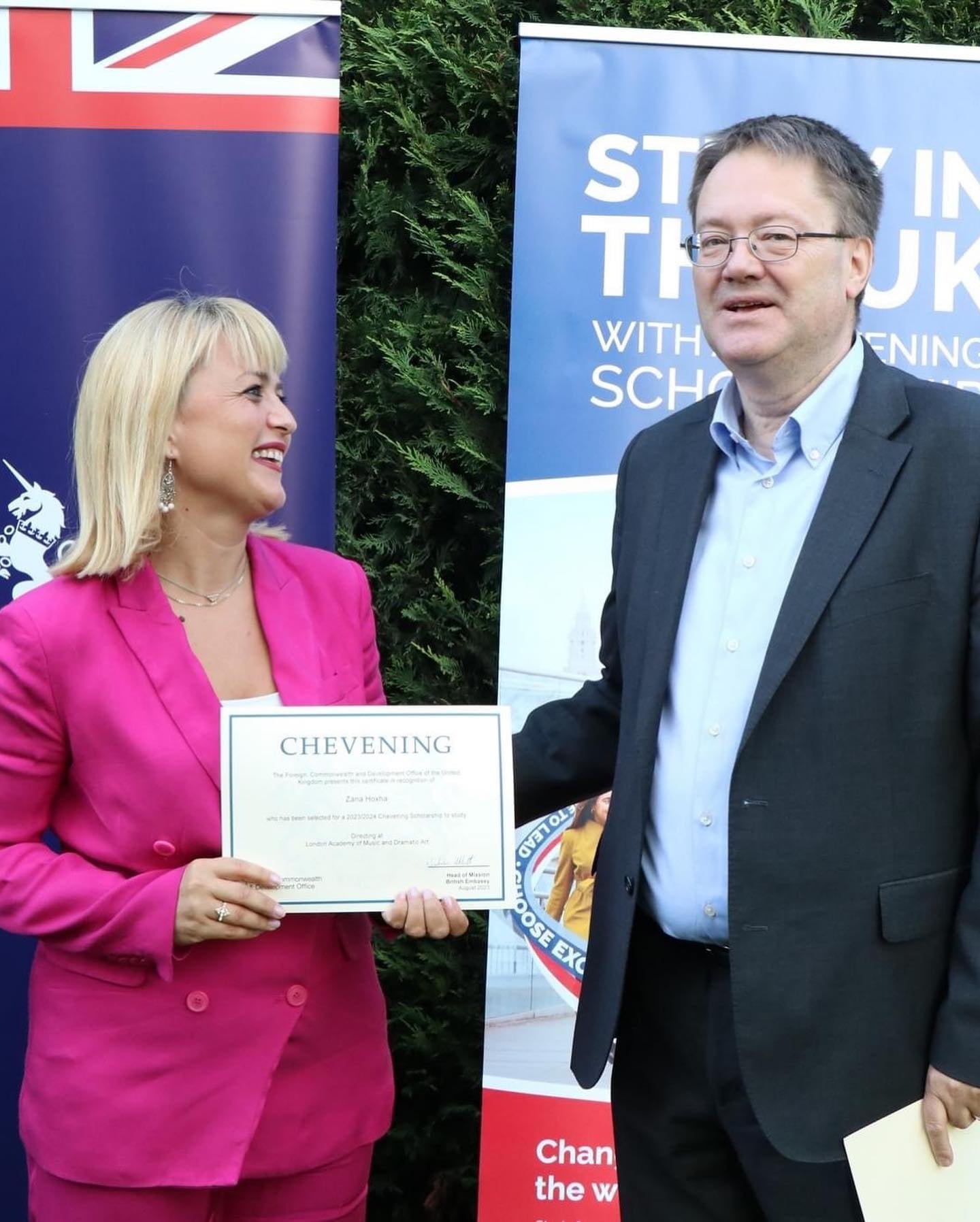
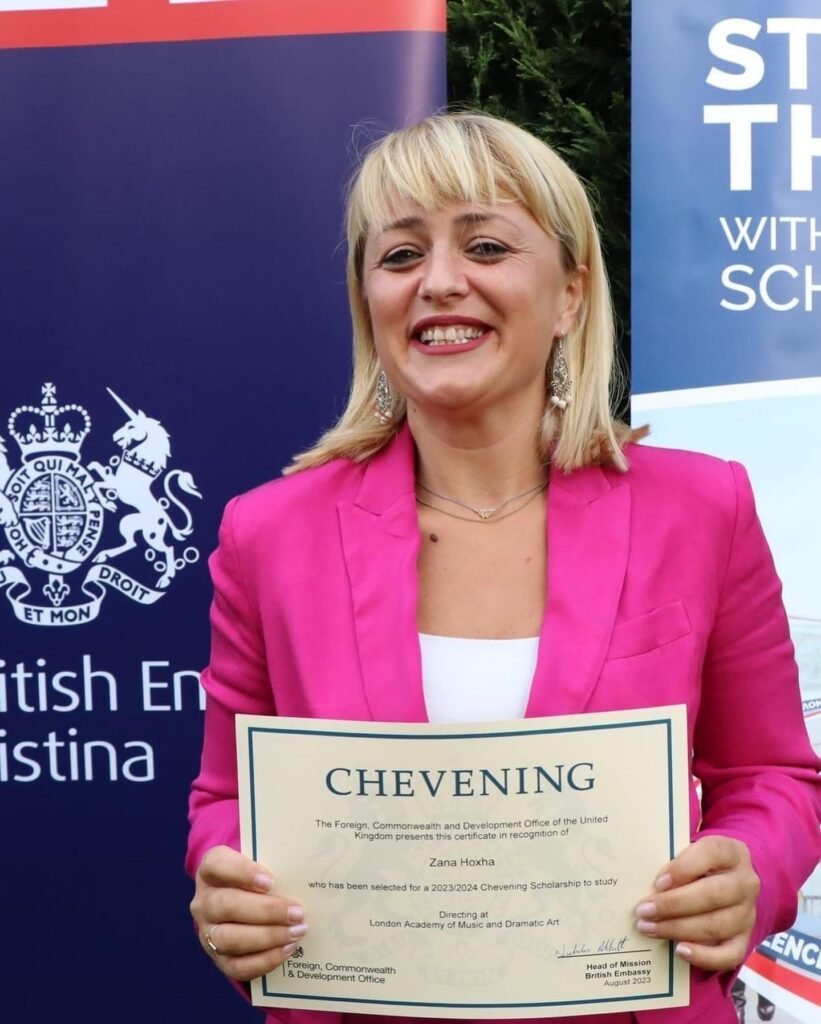
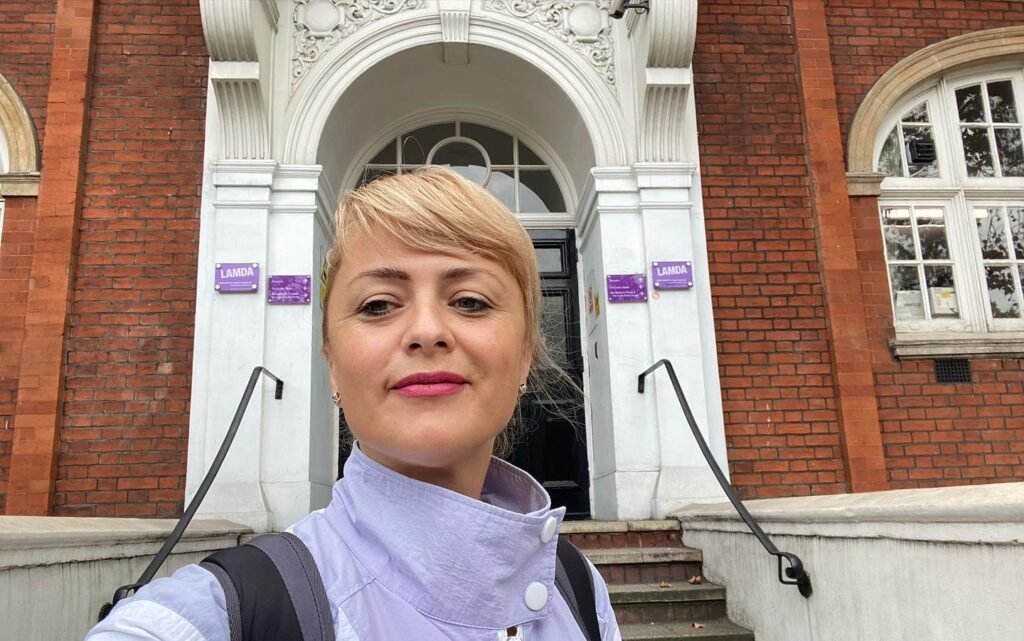
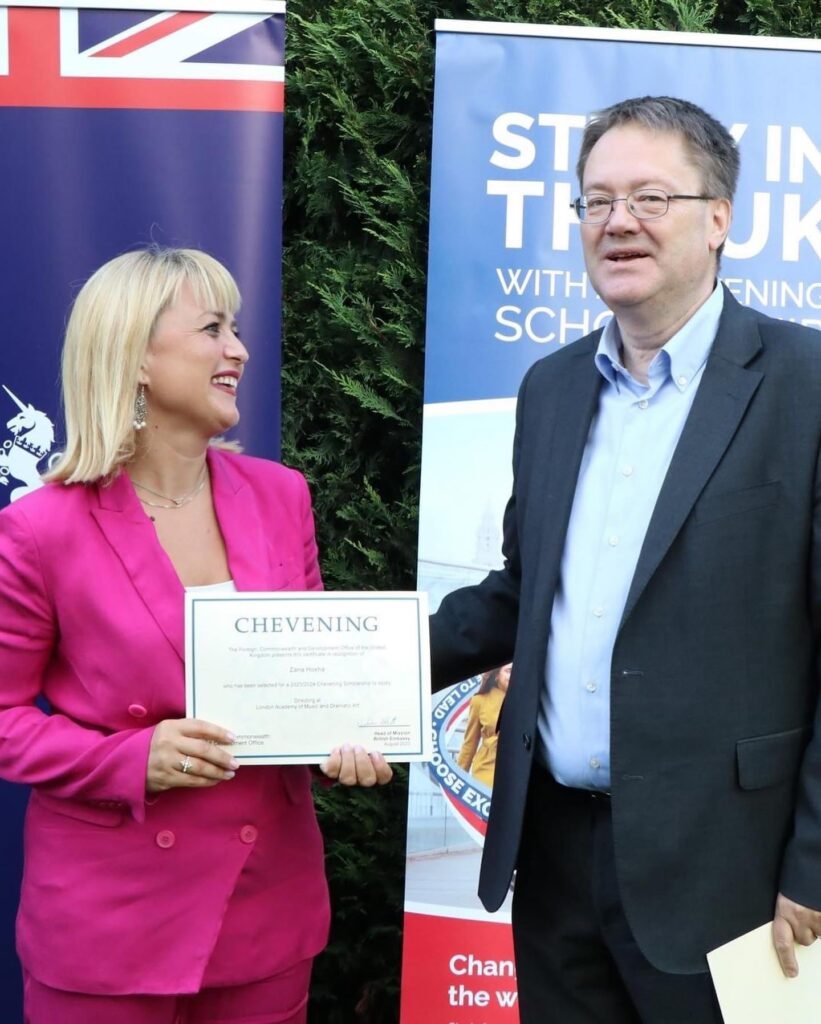
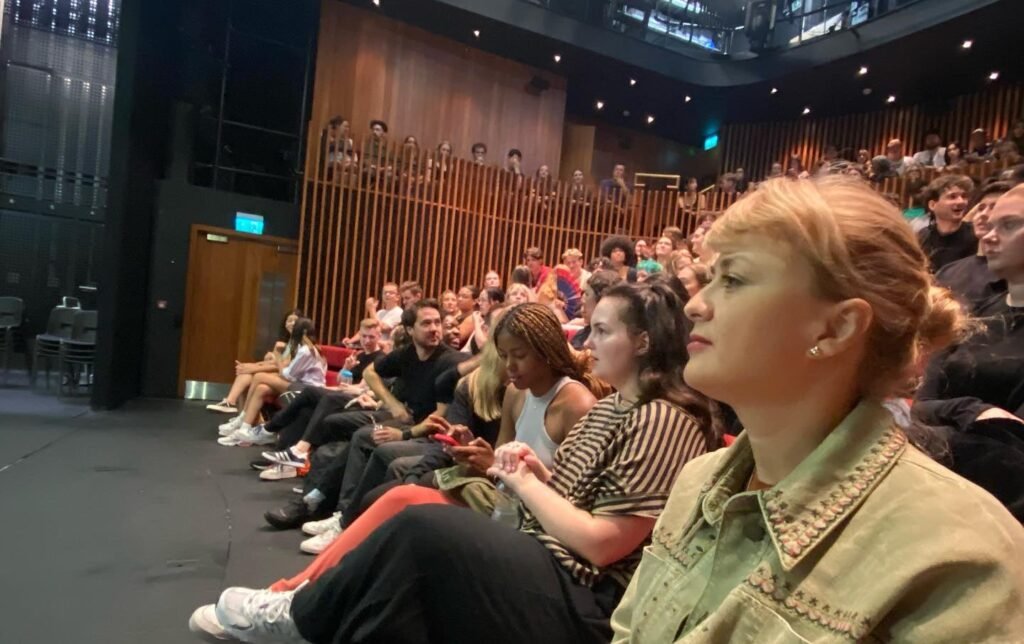
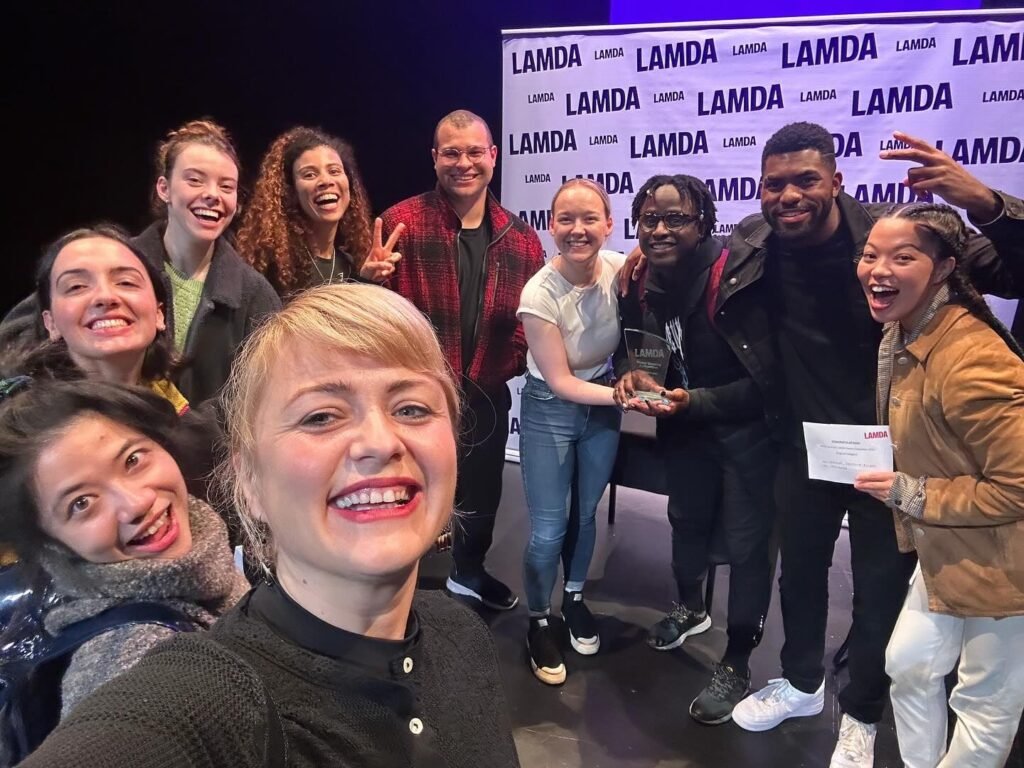
Zana Hoxha was awarded the prestigious Chevening Fellowship for a Master’s Degree in Theatre Directing at the London Academy of Music and Dramatic Art (LAMDA). She was also the first recipient of the Vjosa Berisha Memorial Scholarship, dedicated to supporting creativity and culture in honor of Vjosa Berisha’s legacy. This recognition marked a pivotal moment in Zana’s artistic and professional journey, reflecting her dedication, creativity, and vision for theatre in Kosovo.
At the start of her studies, Zana expressed her profound gratitude and enthusiasm for this transformative opportunity:
“I am profoundly grateful and enthusiastic to become a Chevening Fellow for the Master’s Degree in Theatre Directing at LAMDA London, a journey I embark upon with immense pride and determination.”
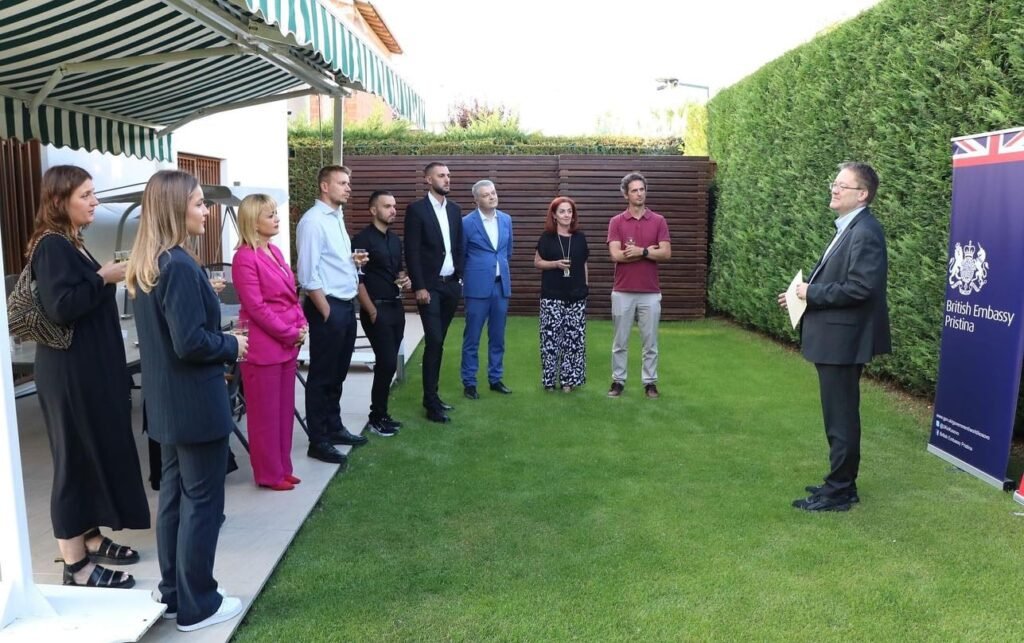
She thanked the British Embassy for their invaluable support and highlighted her commitment to cultural exchange:
“I am committed to absorbing the wealth of knowledge and experience that LAMDA has to offer and to utilizing this newfound expertise to enrich the artistic landscape in Kosovo. I am also eager to foster cultural exchange by sharing the essence of Kosovo’s vibrant theatre scene with British and international students.”
After completing her studies, Zana reflected on her graduation in 2024:
“I delayed this post for so long because I wasn’t ready to let it go and believe that my journey with Chevening was over. But after years of passion, perseverance, and creativity as a director, I wanted to challenge myself and everything I knew by starting from the beginning. I am thrilled to share that I graduated with a Master’s degree in Theatre Directing from LAMDA (class 2023–2024).”
Her time at LAMDA not only sharpened her craft but also deepened her belief in the transformative power of theatre and storytelling. She expressed gratitude to all who supported her journey:
“A huge thank you to everyone who supported and inspired me along the way—especially my family, my mentors, and my colleagues from Artpolis. I couldn’t have done this without you. LAMDA reinforced my belief in the power of storytelling and the transformative potential of theatre and art. Let go and let flow…”
Zana Hoxha’s Chevening Fellowship and graduation from LAMDA represent a culmination of passion, perseverance, and artistic growth. Her achievement stands as a testament to her commitment to enriching Kosovo’s theatre scene and fostering cultural dialogue on an international stage.
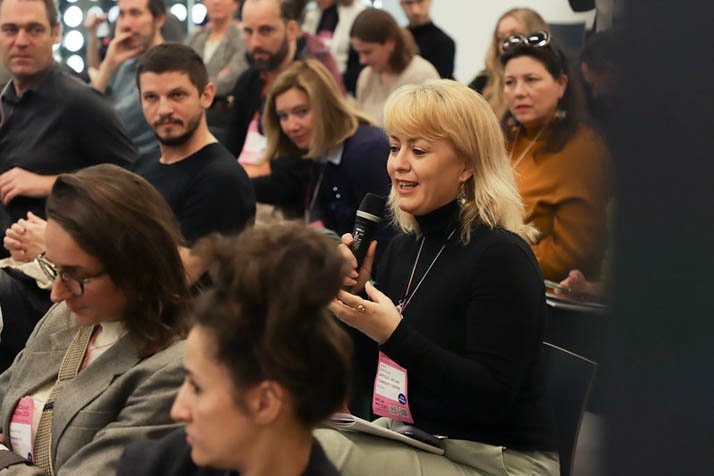
From March 14–17, 2024, Zana Hoxha, the Executive Director of Artpolis, participated in the IETM Caravan Ljubljana, a significant international platform for performing arts.
During this pivotal cultural event in the Balkans, over 60 professionals and IETM members from around the globe explored Slovenia’s independent performing arts scene through panels, discussions, and artistic showcases.
This experience offered an exceptional opportunity to foster collaboration between the artistic community in Kosovo and international artists. Hoxha’s visit to Slovenia resulted in the inclusion of international artists in the 12th edition of the FemArt Festival and initiated long-term partnerships for presenting Artpolis productions abroad.
Artpolis remains committed to developing intercultural dialogue and strengthening artistic networks to achieve a lasting impact on art and society.
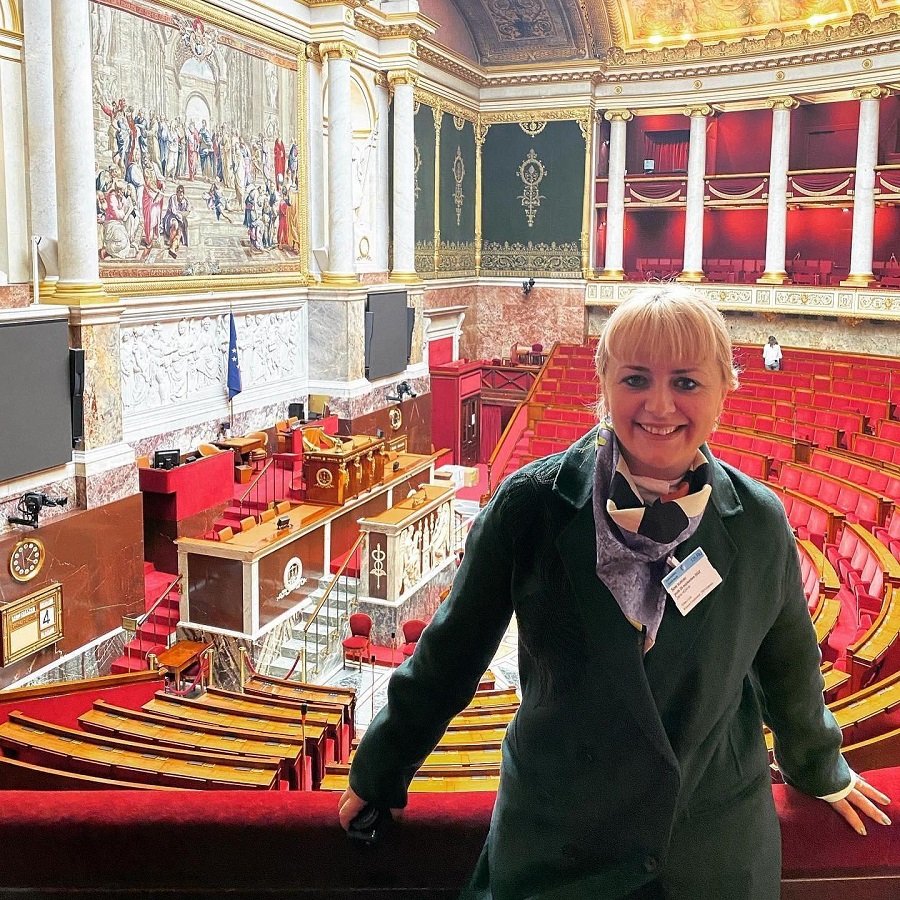
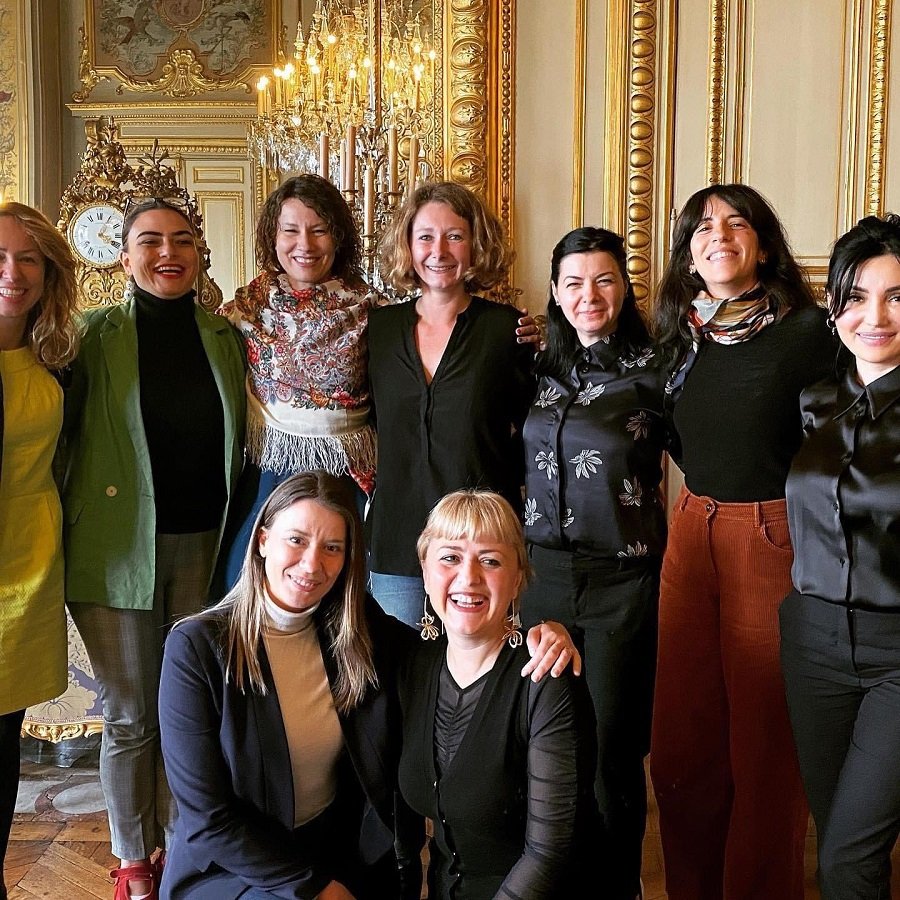
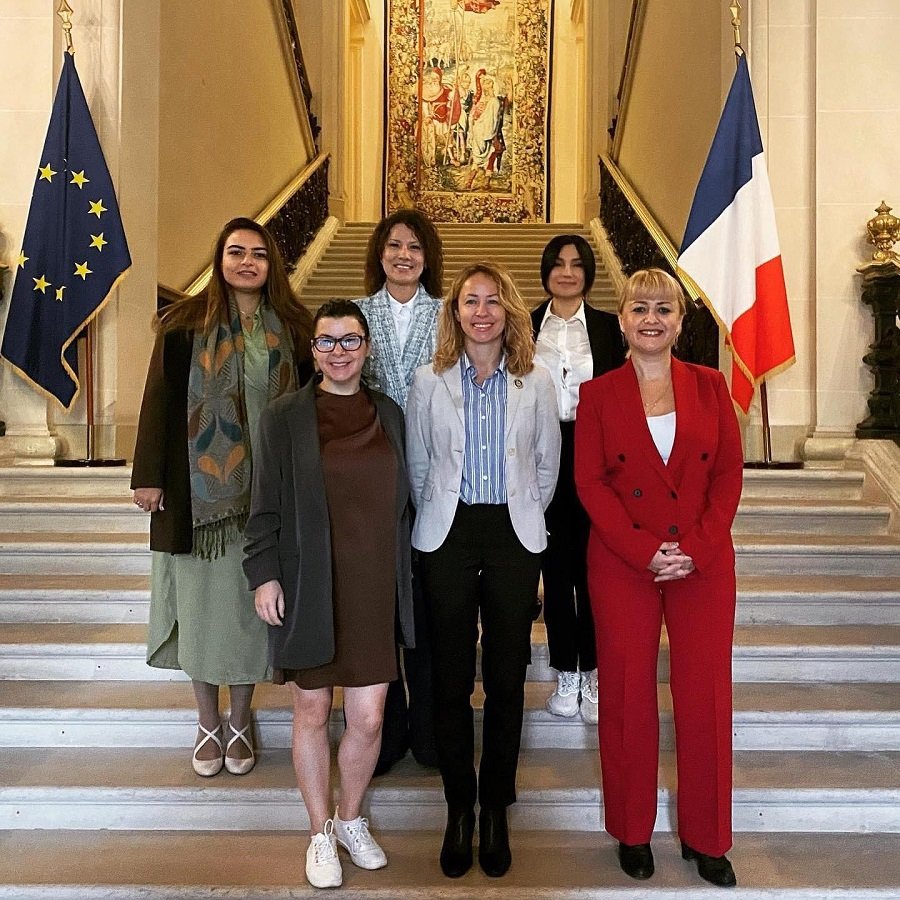
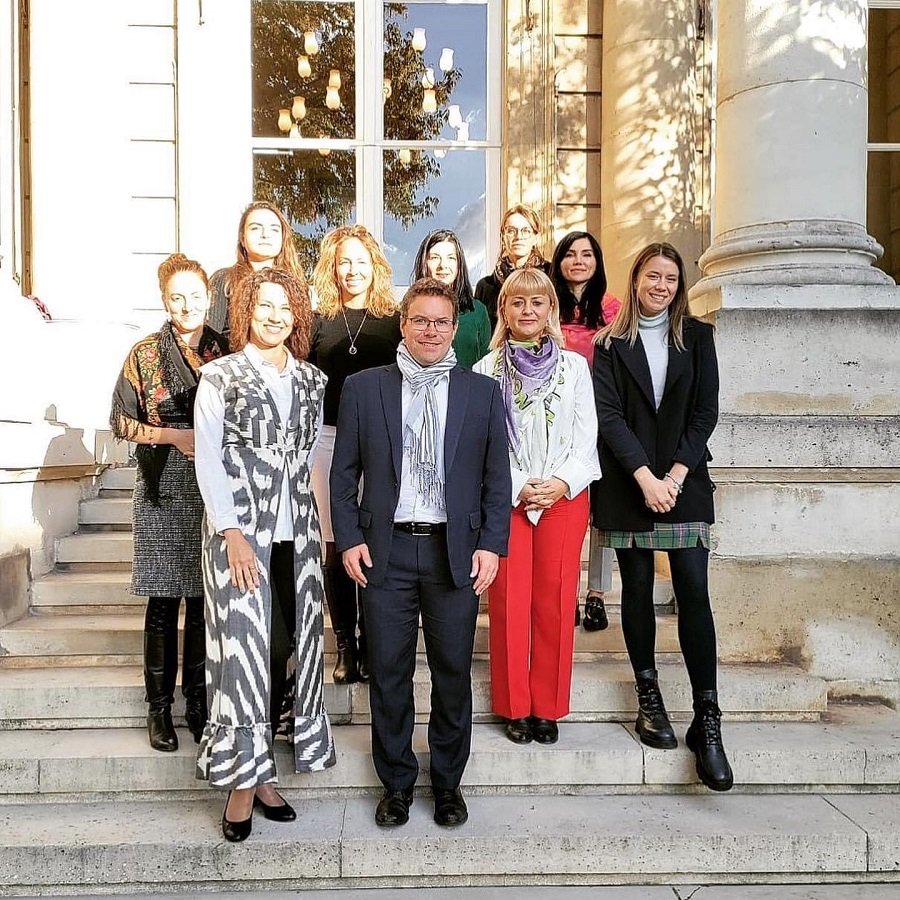
Nominated by the French Embassy in Kosovo, Zana Hoxha was honored by French Government for her leadership in gender equality, advocacy, social enhancement, and women rights.
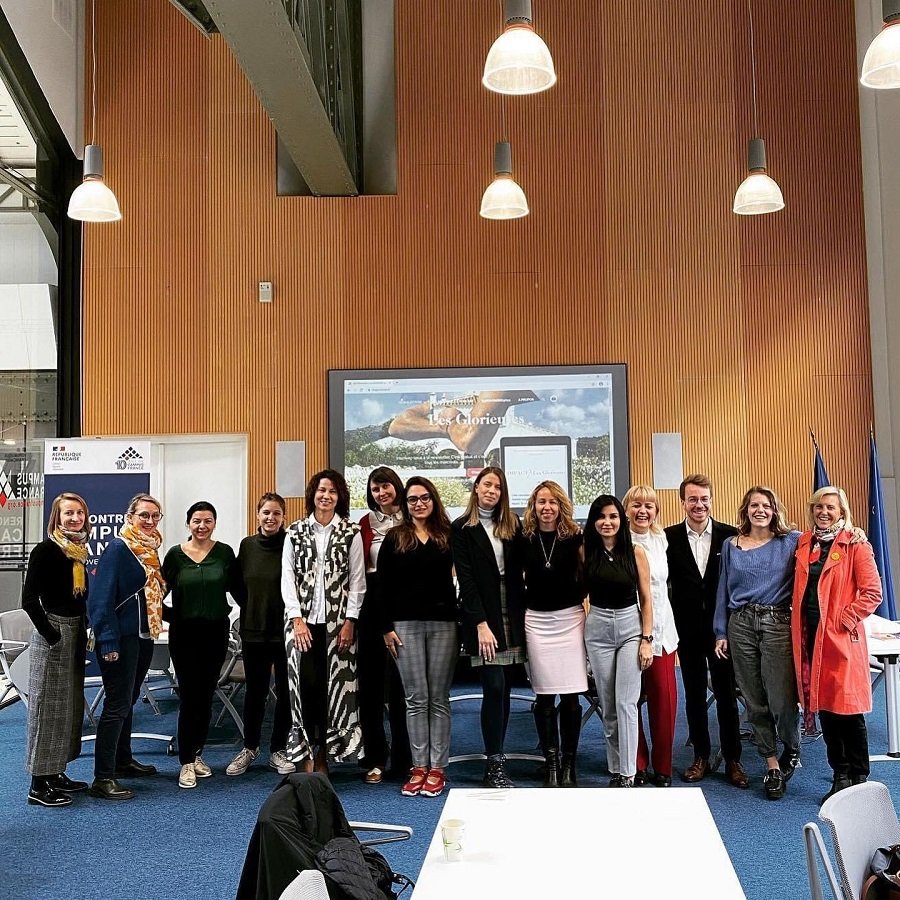
Zana, who is a Theater Director and Executive Director of Artpolis and FemArt Festival, stayed in France from 25th-30th September, 2022, sharing her experience with high dignified French personalities, as well learning more about Feminist French diplomacy .
“During her entire stay, she showed an unfailing commitment and impressed many of her interlocutors with her dedication to her work in Kosovo to fight for equality and against any kind of discrimination and violence against women”, stated by the French Ministry of Foreign Affairs.
Besides meetings and discussion on gender equality and feminism, she had a special reception from state institutions and non-governmental organizations in France.
“It is part of my identity,” says director Zana Hoxha. Since her student years, she has been accompanied by a combination of theatrical creativity and civic volunteerism. On the theater stage, she has often intertwined social causes, especially those focused on protecting women’s rights. Messages for change have been conveyed through art, which she has also transformed into a means of honoring the sacrifices of women and activists of the 1990s.
“First and foremost, Zana is a strong feminist, and through her work she fights for the rights of women and girls, something she has proven many times,” says Igballe Rogova, Executive Director of the Kosovo Women’s Network.
“Zana is a strong woman, but at the same time she is sensitive; she feels for and stands in solidarity with others who need her support,” emphasizes Venera Ismaili from Artpolis.
“…but this is Zana — she doesn’t like being second, she likes achieving things to perfection, both in life and professionally. Her work as a human rights activist, her extraordinary work with FemArt, where the professional and humanitarian aspects come together, makes Zana very special — a model, I would say, of the Albanian woman as we would like to see her,” actor Adrian Morina highlights.
These are the words of some of her closest friends and collaborators, reflecting both Zana Hoxha’s activism and her work as a theater director. Throughout her life, she has balanced civic volunteer engagement with the pursuit of professional ambitions in theater. That is where she feels most at home. Her message has always been a call for change.
The Chest as a Call for Change
The biggest turning points in her career are also connected to Kosovo’s historical transformations.
For these moments, Zana drew inspiration from her grandmother Hedije, a woman of strong character.
“My grandmother had an interesting life story. She never got tired of sharing her stories with me. She was a role model for how to accept people whom society judges, excludes, or sees as different,” Hoxha proudly recalls in her office in Prishtina. Its walls are filled with reminders of different periods in her life, each carrying its own story.
“Whether they were people from other communities, people with different preferences, or people with different lifestyles for that time — my grandmother was known as someone who embraced all these differences, who neither judged nor rejected others.”
She brought her grandmother’s chest from Gjakova to Prishtina. It even became part of theater performances. The chest represents her family’s past and constantly reminds her that the future must be built in the present.
The awards on her walls recognize her achievements, but she speaks with greater affection about her grandmother’s treasure.
“It was her dowry chest. She had others too and left behind other parts of her legacy, but I specifically asked for this one because it was also part of her mother’s heritage,” Hoxha says, gently touching the corner of the chest with her hand.
“For me, it is a reminder of where I come from, because we come from a particular culture and circumstances. I come from Gjakova, which is a very matriarchal city. It’s very normal there to see capable women leading — not only families, but businesses as well. I grew up with the model of women as leaders.”
Documenting the Horror of War
The social consequences of patriarchal heritage often form the core of Hoxha’s performances. Even when tradition imposes itself, she does not abandon her challenging mission. Art remains a means of conveying messages about protecting human rights, especially women and marginalized groups.
The strong presence of young people in her performances symbolizes hope for overcoming barriers — the same barriers her grandmother Hedije had once faced. Yet Zana relocates and collectivizes the struggle for equality onto the theater stage.
Zana Hoxha and her NGO Artpolis promote art and diversity through social dialogue and community-building. This is just one of many lessons she communicates through theater.
The circumstances of occupied Kosovo, particularly during the war in the late 1990s, deeply shaped her journey. As a teenager, she worked with international organizations in Gjakova after its destruction by Serbian forces. Through interactions with activists from different countries, she was introduced to new cultures.
She documented Serbian terror against Albanians, listening firsthand to testimonies of atrocities and different forms of violence inflicted upon innocent women and men.
“We have women who were leaders of the peaceful resistance movement in the 1990s. We have activists, women involved in protests from Prishtina to Drenica, women who joined student movements or peace movements. Yet these stories never made it to the theater,” Hoxha says.
“And I felt the need to carry this power, this line of women’s strength — women who decide for themselves and for society, for its benefit, and who never apologize for who they are. That is what I represent, not only as a leader and activist, but also as a director.”
“Strong and Sensitive”
Venera Ismaili, now part of Artpolis, had followed Hoxha’s artistic and volunteer work even before joining the organization.
“I admired her as an artist, but also as a strong woman who worked for and achieved what she wanted. She showed strength, but also sensitivity in her work. These qualities deeply impressed me and made me appreciate her as a woman. Zana is strong, but at the same time she is compassionate and stands in solidarity with those who need her support.”
“It is part of my identity,” Hoxha says. Since her student years, this combination of art and activism has always accompanied her.
Adrian Morina walked alongside Zana Hoxha from the early days at the Faculty of Arts at the University of Prishtina. Together they initiated student projects and creative ventures.
“Zana was always a dreamer, ambitious, and energetic. We started our first projects together during student exams. I remember Julius Caesar — an ambitious performance for a directing student at the time,” Morina recalls.
He remembers how Zana personally handled costumes, sewing and preparing them herself.
“She was always persistent in achieving work at the highest level, with tremendous love.”
The Performance That Changed Everything
In Kosovo’s year of independence, after one of her performances, Zana received recognition and encouragement from local and international activists and artists to further channel her energy into transforming theater into a public platform advocating equal rights.
“I staged a performance in 2008 and a Swedish feminist activist congratulated me. The play involved artists from across the Balkans during Kosovo’s year of independence. She told me, ‘Your art is very feminist,’ and I didn’t fully understand what she meant.”
Later she found support from activists and particularly from the Kosovo Women’s Network.
“Activists told me, ‘We need people like you in this movement.’ There I found solidarity and support for my art, which extended beyond theaters and into community work.”
A Slogan of Hope
Her work consistently connects art with civic activism.
“Solidarity with women and men most affected by COVID, solidarity with those who experienced violence, solidarity with women left without support, solidarity with women without a voice, solidarity with those who may only find freedom of communication through a television screen,” Hoxha says.
The office of the director and mother of three reflects what she calls the dual nature of her engagement: volunteer activism and art.
“My vision includes being an artist who protects human rights — a vision often opposed by certain groups. We know that women’s rights are abused in the arts. In Kosovo, very little is said about discrimination in the arts. Women face unequal pay, and there are few women leading institutions. Even when women are leaders, they are often expected to behave like men due to patriarchal expectations. There are many issues that brought me to where I am today.”
(This article was produced within the project “Human Rightivism,” implemented by Integra and supported by CDF and the Swedish Embassy in Kosovo.)
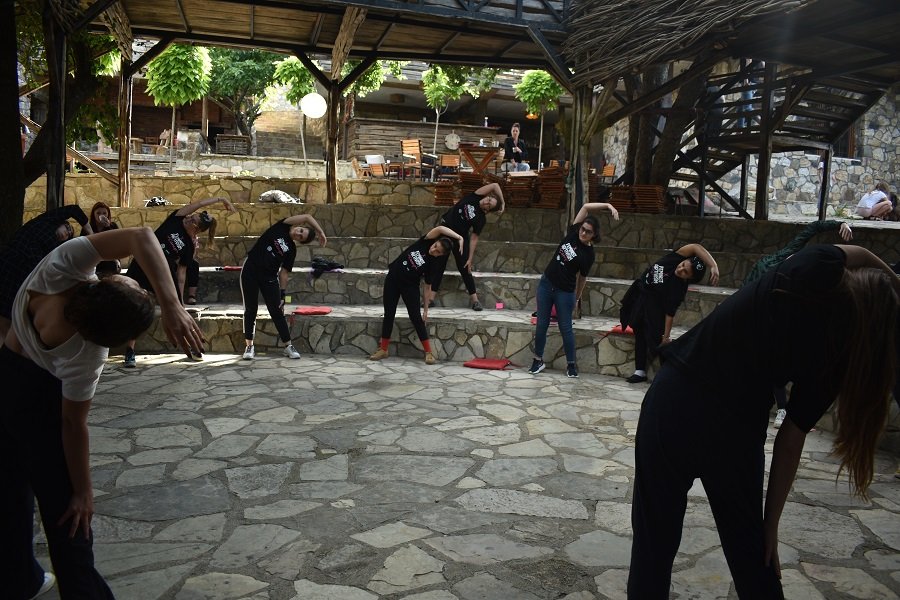
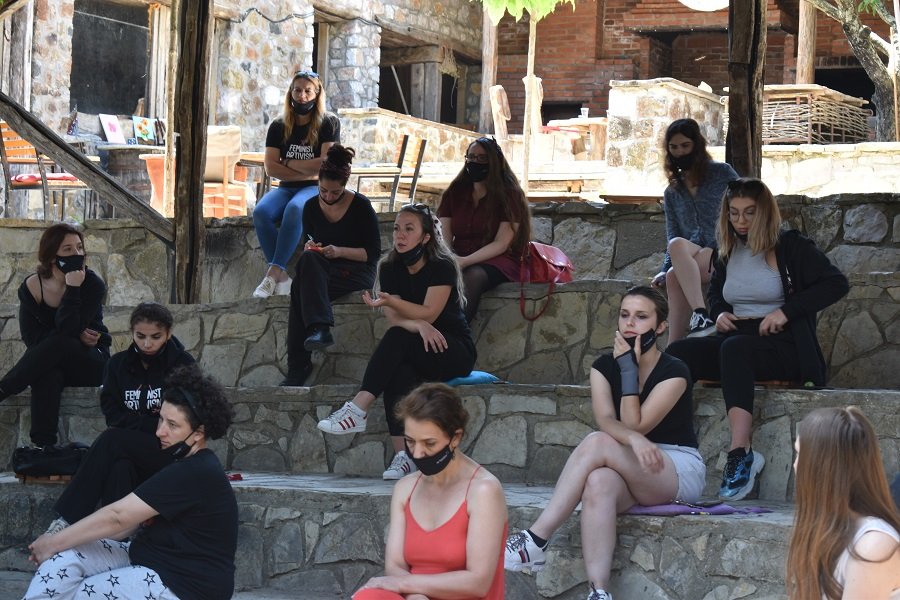
Human beings have continued to create even during unfortunate times and under the strangest of circumstances. The process of becoming and creating is part of our genesis and essence. With this in mind, Center for Art and Community – Artpolis has organized the feminist camp with artist and activists from all around Kosovo for four days, in Kukaj from 26- 29 June, 2020. Though, it’s just the second time, this camp brought together twenty-five women “ART-VISTS” to create and develop art works that reflect experiences, resistance, challenges, conflicts, cruelty, resilience and devotion in times of the COVID 19 pandemic all around the world,
A powerful series of stories, experiences and feelings have been told for four days in a row. Openness toward each other revealed similarities not missing. They grasped these similarities and approached each other even further, giving the power and inspiration/motives for more. These four days of intense work consisted of group work sessions, including rehearsals for scenic moves, creative writing, meditation and catharsis/ emotional relief. These have assisted artists and activists on expressing deliberately their experience and perception about society. Other than that, there were discussions going on with the aim to break down and reformulate concepts and ideas related to each of their artistic performance.
Artists and activists, which were divided in four groups established inspiring connections between each other and reunited with common goals and ideas to help one another carry out four artistic performances. This artwork is supposed to address messages on social matters. Every activity happening during these days was in function of developing their shows. They will proceed on betterment until finale which is presentation during 8TH Edition of FEMART Festival, from 15th -20th of October,2020.
Camp of Artists and Activists came into being thanks to facilitators: Zana Hoxha(director), Robert Nuha (choreographer) and Shpetim Selmani (actor, poet).
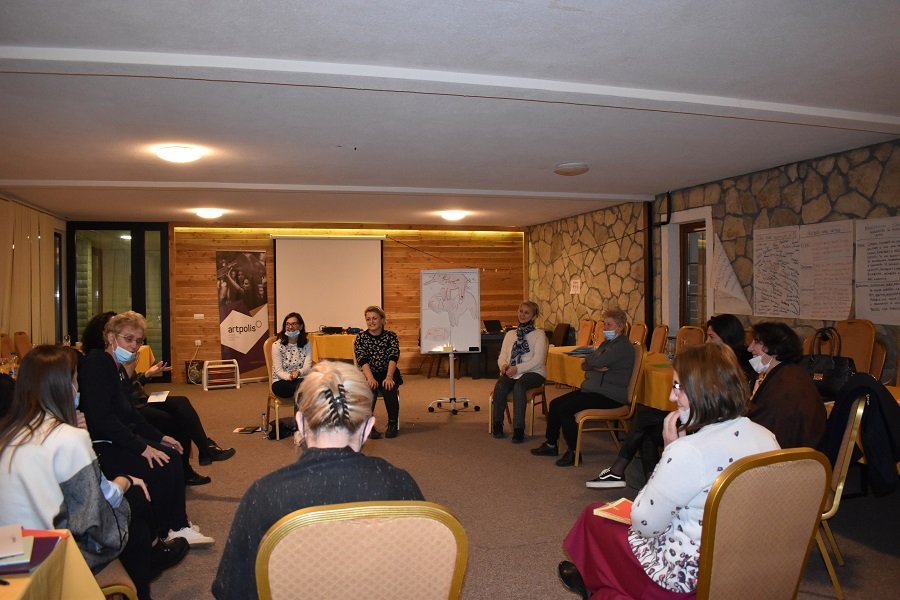
Integrated Security Workshop – Training of Trainers edition was held on 14-17 December, 2020 in hotel surrounded by beautiful mountains in Bogë with 11 women staff members from five shelters from different municipalities in Kosovo, including: Prishtina, Peja, Gjakova, Mitrovica and Drenas.
Women participating in this training were trained by certified trainers Zana Hoxha and Yllka Soba on techniques and methodology of self-care, such as: coping mechanisms, finding a common ground, creating a social network, how to protect themselves and how to address their needs.
The workshop helped participants connect to their bodies, emotions and experiences
For three days’ participants shared their stories with the group and trainers, or in teams of two, in addition to the exercises and facilitating sessions.
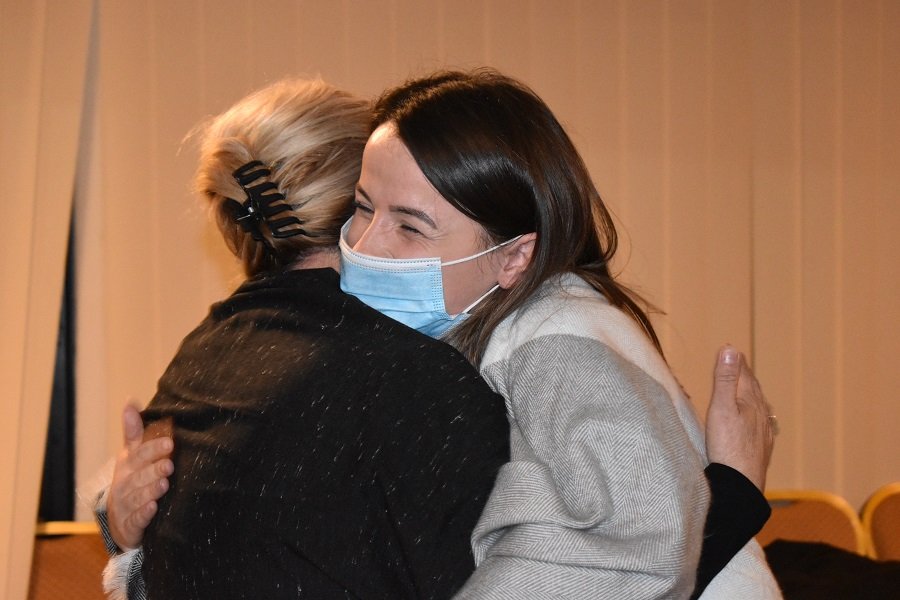
All participants, shelter representatives and trainers pledged to be there for each other, to help and support each other, while these types of collaborations considered to be long-lasting and beneficial for both parties.
A handbook including a summary and exercises on stress management with explanations on the exercises and facilitating sessions adapted and translated in Albanian language was shared with participants women – shelters staff that took part in this Integrated Security workshop.
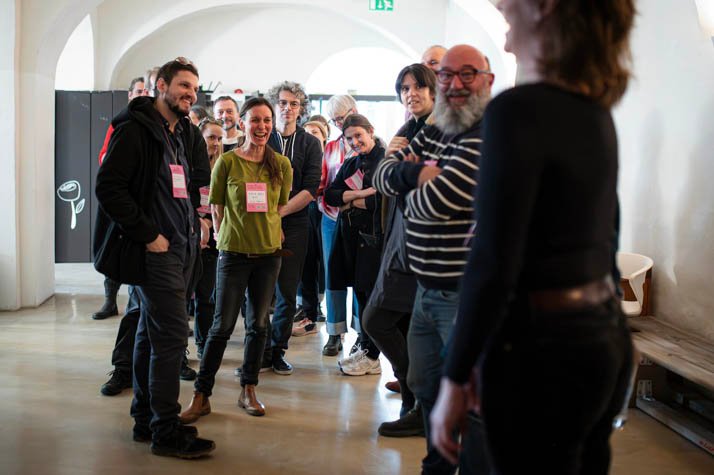
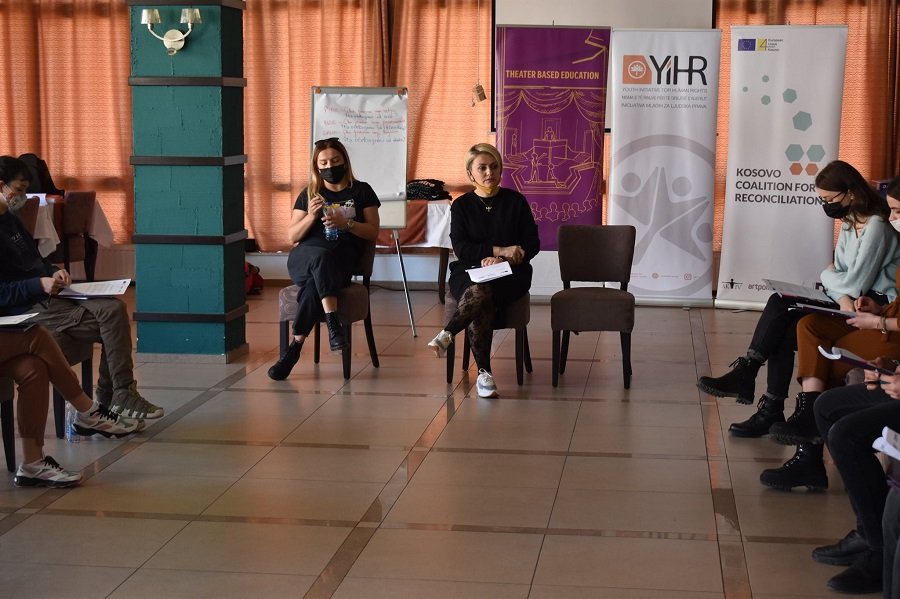
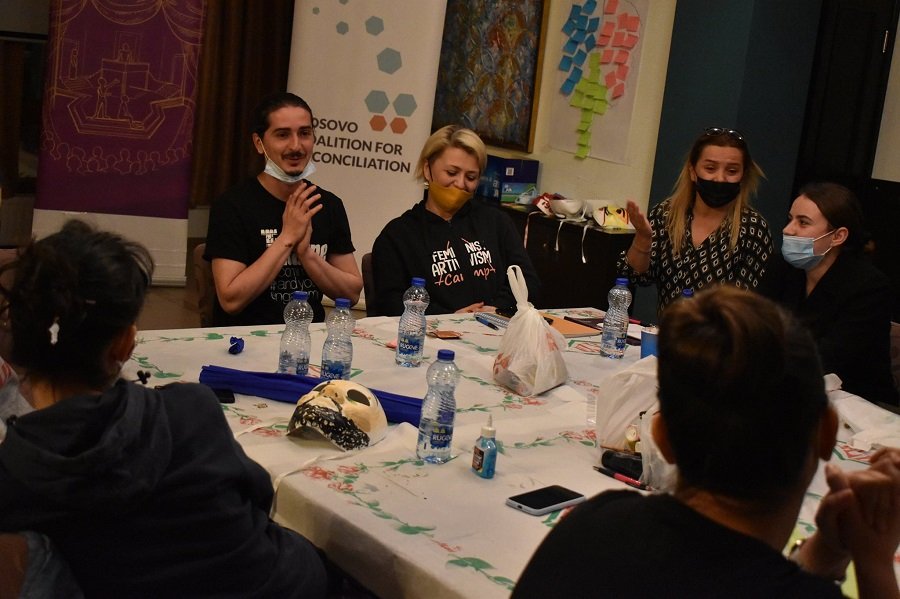
In beautiful Prizren, girls and boys from communities living in Kosovo gathered to participate in the four-day training “Theater-based education”. The beautiful and sunny weather pushed the training organizers to modify the exercises and flood the stage of Prizren Castle. Then, coaches Zana Hoxha and Edlir Gashi continued with the agenda, developing exercises and improvisations of theater scenes, on socially discussed topics with a focus on multiethnic coexistence.
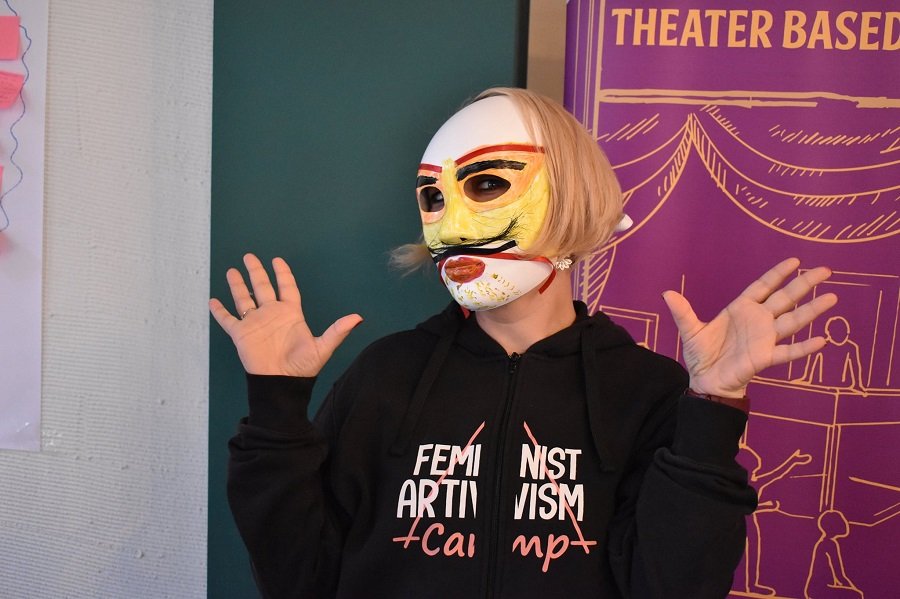
The special feature of this training was the masked workshop which was a relaxation but at the same time a stimulus for the development of creativity. Masks became part of the shows. The novelty of the training was the game with body movements, led by choreographer Robert Nuha, which also helped the performance of the participants.
“What distinguishes this workshop and group from the others, is that I have not seen any kind of prejudice here, something I have encountered in other workshops. And what was characteristic, we all tried to understand each other, since we do not speak the same language, and this is my strongest and most positive impression of this training “- says the participant of the training from North Mitrovica , Djurdjica Kaziq.
The 4-day training “Theater Based Education” was held in Prizren, organized by members of the Kosovo Coalition for Reconciliation, Artpolis and NGO Aktiv.
All activities were carried out in accordance with the recommendations for preventing the spread of Covid-19 virus.














Recent Comments