

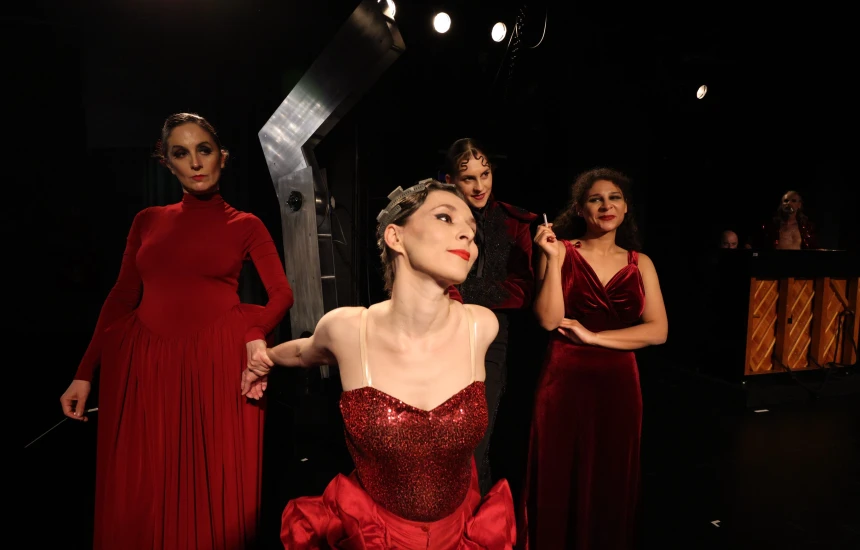
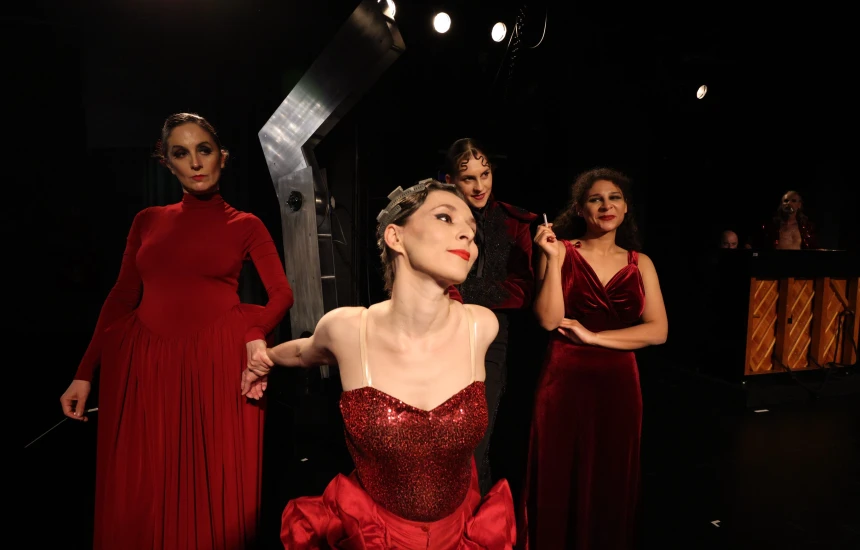
“No Carmen!” is a deconstruction of music and an exploration of what themes would occupy this Carmen and who Carmen would actually be. (Photo: Borut Bučinel)
By: Besartë Elshani
The Slovenian production, which reimagines the iconic figure of Carmen through a contemporary lens by shifting her from the traditional framework of opera into an experimental, physical, and political theatrical universe, has brought a unique approach to the Slovene Youth Theatre, with direction entrusted to Zana Hoxha. The music was composed by Liburn Jupolli.
“No Carmen!” appears as a unique theatrical version of Carmen, the famous opera by Georges Bizet. Written by Slovenian playwright Urška Brodar, the production takes an unconventional directorial approach in which scenes are illustrated primarily through the actors’ actions. It premiered on Thursday evening at the Slovene Youth Theatre.
The production addresses political and social themes through Carmen’s iconic character and is also intended to be staged in Prishtina, although circumstances have hindered this possibility.
This Slovenian production serves as a contemporary reinterpretation of Carmen, moving her from opera’s traditional conventions into an experimental, physical, and political theatrical world. Music plays a central role. Alongside ten actors, pianist Jozhe Šalej is also part of the cast. The score was composed by Liburn Jupolli.
“This performance is a contemporary reinterpretation of the opera Carmen and of the novel by Prosper Mérimée. It is a deconstruction of music and an exploration of what themes would occupy this Carmen and who Carmen would be,” director Zana Hoxha said in an interview.
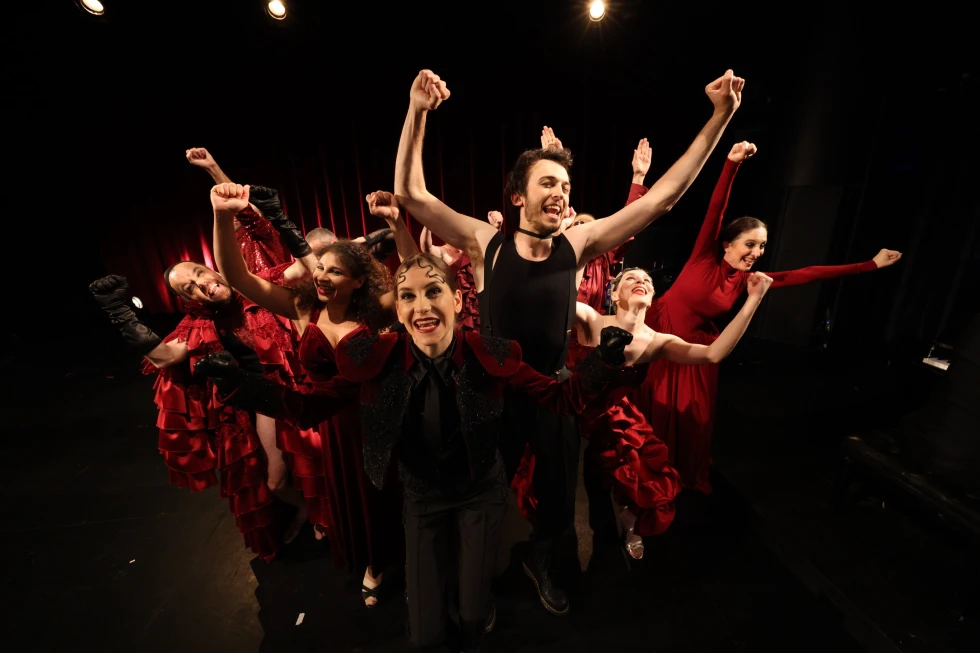
The cast includes actors Lina Akif, Dasha Doberšek, Natasha Keser, Boris Kos, Klemen Kovačič, Anja Novak, Maruša Oblak, Ivan Peternelj, Blaž Šef, and Stane Tomazin. Choreography was created by Lada Petrovski Ternovšek, while scenography was designed by Dunja Zupančič.
According to the director, the creative process strongly relied on co-creation with the theatre ensemble.
“For me, it was important to develop a collaborative process and create together with the entire artistic team. Considering my experience, knowledge, and skills, I witnessed extraordinary organization within the theatre. The way they supported this project—with every possible resource, through the actors’ abilities and the contributions of collaborators in music, choreography, and scenography—was remarkable. It was a major undertaking and a production in which a great deal was invested. I believe we achieved a successful premiere,” Hoxha said.
One of the production’s most distinctive features is its stage form, since most of the performance unfolds without dialogue.
“Only twenty percent includes text, meaning eighty percent of the performance is without text, which is something new. It is a wordless performance,” she explained.
Hoxha described it as one of the most challenging processes of her career, emphasizing the professionalism and dedication of the Slovenian ensemble.
“It was one of the most challenging processes because this ensemble is known as one of the most professional. They are also deeply engaged in addressing sensitive political themes—not only in Slovenia but also in the region and beyond. Working with ten actors and one pianist required stamina, dedication, and passion for the project. I’m happy they took something from my way of working, and I equally gained something from these artists,” she said.
“No Carmen!” dismantles the familiar image of Carmen as a female archetype in opera. Trapped within one of Western culture’s most famous myths, Carmen in this performance tears herself away from the role written for her. Positioned between opera, performance, rehearsals, fantasy, violence, desire, and spectacle, the production challenges the way women continue to be reduced to myths, fantasies, or sacrifices.
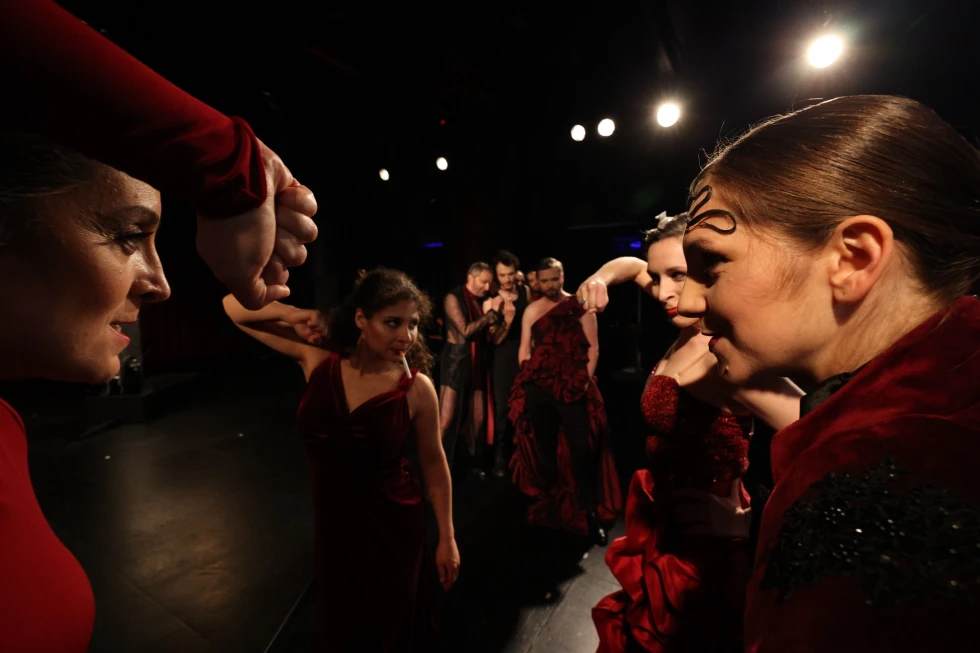
This project marks Hoxha’s first collaboration with the Slovene Youth Theatre, and she emphasized that she is the first Albanian director to work in a state theatre institution in Slovenia.
Hoxha explained that the production addresses powerful social and political issues:
“The reviews have generally been very positive because this is considered a very special and unprecedented performance in the form I brought it. Usually performances begin and develop in a way that allows you to understand the story, but throughout our entire performance we never truly understand who Carmen is or what Carmen is, because we search for her through different contexts and themes—misogyny, chauvinism, femicide, workplace discrimination, violence, and the manosphere,” she said.
The production demythologizes Carmen by dressing her in the realities of today.
“All these themes are interconnected, and at the end of the performance we revisit the opera and the novel’s entire storyline and make it clear that we have been deconstructing and recreating what a woman today would be like, who that person would be. Would they have a specific gender? A specific age? And how would they behave in today’s context?”
The director also revealed plans to bring “No Carmen!” to Kosovo. However, this depends on the technical conditions of the National Theatre of Kosovo, which since July 2022 has operated in temporary facilities following the closure of its original building for renovations.
“Considering the stage requirements and technical demands of the performance, it is impossible to present it on the current improvised stage. We discussed bringing it next year, hoping that plans for reopening the National Theatre building will be completed by the end of the year as announced by the Ministry of Culture. I hope we’ll be able to bring it next year,” Hoxha said.
The Slovene Youth Theatre was founded in Ljubljana in 1955 as Slovenia’s first professional theatre for children and young people. Throughout its history, it has collaborated with theatre reformers who shaped Slovenian theatre during the second half of the twentieth century.
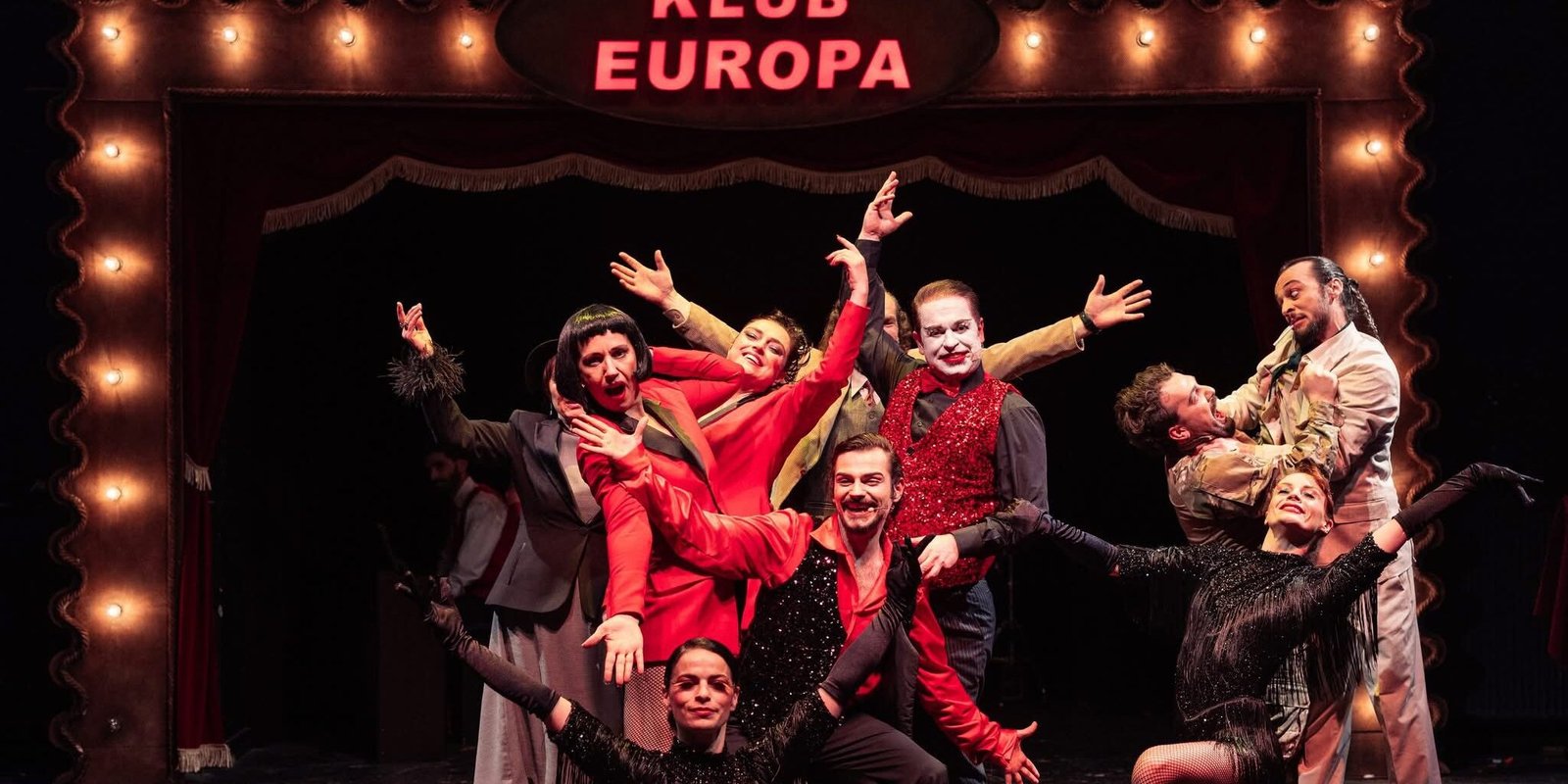
Gjilan City Theater, premiere 5 February
“Maybe I’m not a good novelist, but I am a good liar,” admits Aida (Semira Latifi), the protagonist of Kabare 1999, adapted and updated from the classic1966 Kander and Ebb musical by Zana Hoxha. It’s a line that reflects that feeling of not really being in control of where your life is going, but still trying to make it all sound like it makes sense, even if that means bending the truth a little, trying to convince others, and maybe even yourself.
You can feel the weight of those lies in a city like Prishtina, which the characters describe as a place where “everything can happen.” Yet the way this is said does not sound hopeful or exciting. It sounds restrained, almost a little strange, more like a warning delivered with a frozen, uncertain smile. This makes sense given when the play is set, in 1999, shortly after the war, a moment that still feels fragile, unresolved, and deeply present throughout the performance.
Though Hoxha’s adaptation follows the story of the original musical – itself an adaptation of John Van Druten’s play I Am a Camera, based on the semi-autobiographical novels by Christopher Isherwood – relatively closely and the show contains echoes of the famous Bob Fosse choreography, it never feels like something imported from somewhere else. Set in1930s Germany, the musical captured a society in which war was imminent. Hoxha’s version fits just as naturally into its post-war setting, as if it belongs to a reality where the aftermath of the war is still present, like something that hasn’t fully passed. The shift of central character to Aida, instead of the original’s Isherwood stand-in, also changes something in how you move through the story. While it’s clearly based on Cabaret, it never feels like a copy.
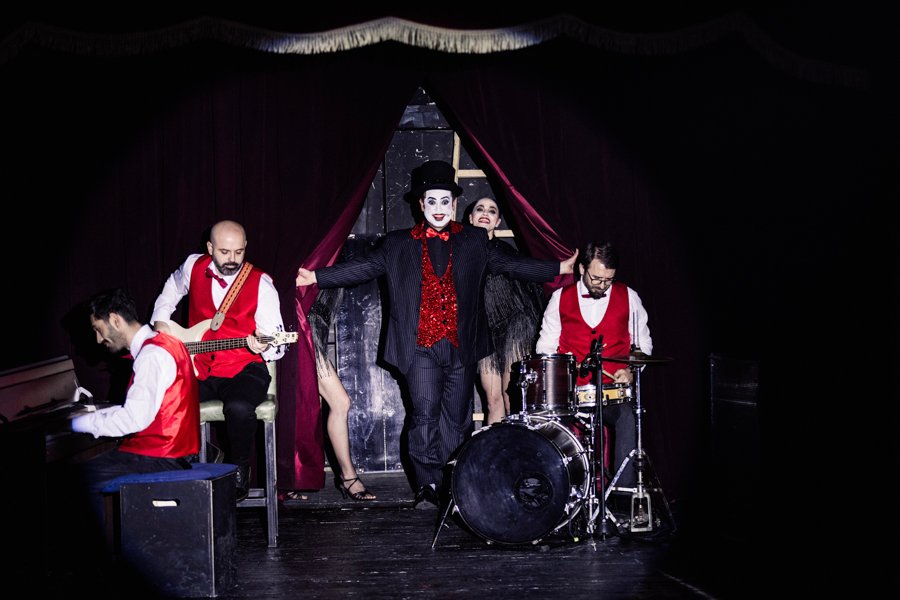
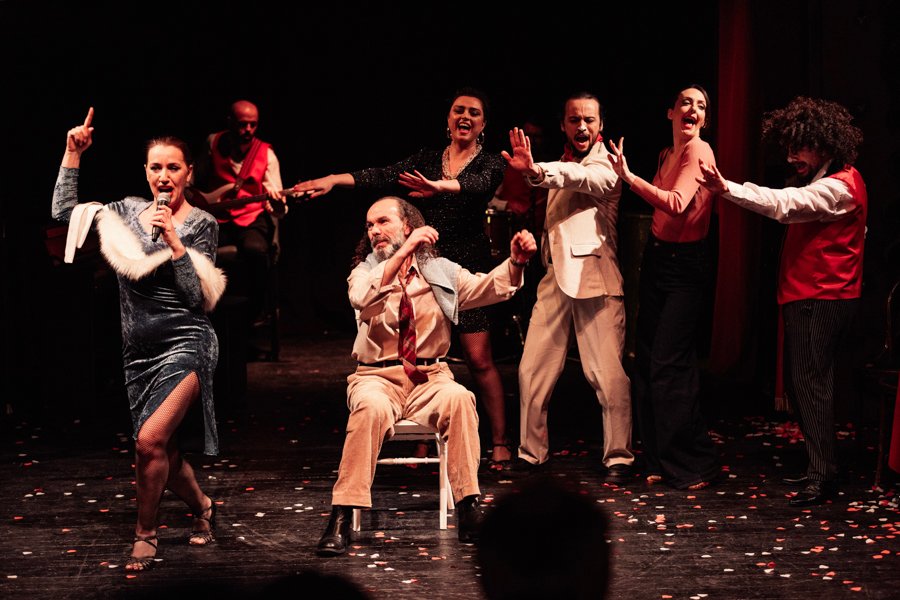
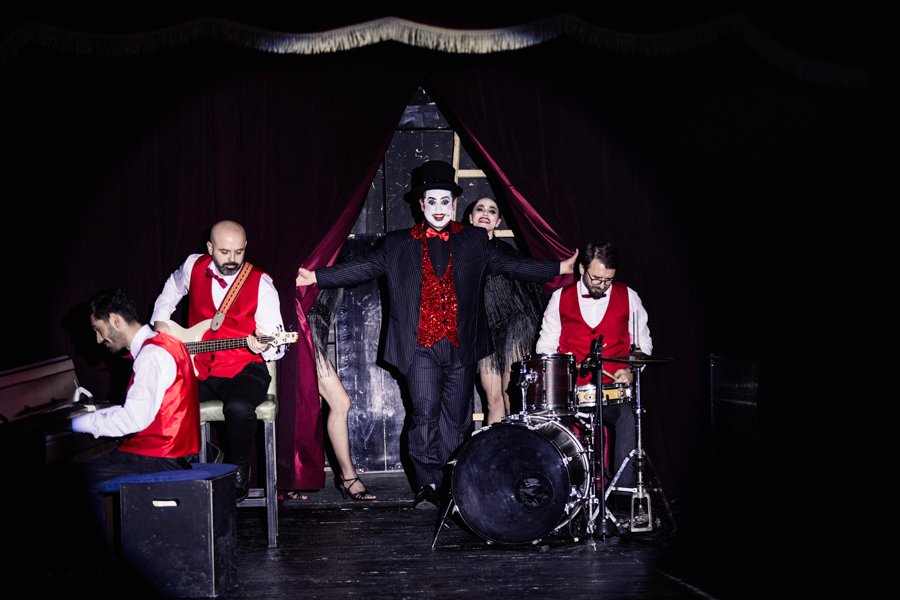
Nor does Hoxha ease the audience in. The show starts loudly with the iconic opening song Willkommen with some Albanian added to the multilingual mix. This is performed by Kushtrim Qerimi as the MC, his face caked in white makeup. The bodies of the dance troupe, especially those of the women, give the sense that they are there to be in service of the gaze, to be consumed, almost to the limits of discomfort. The performance puts you in a double position: you are laughing because the songs and dances are comic, but you are not fully comfortable with that. This has the effect of making you feel all the more intrigued, wanting to understand what will happen next, or simply where all of this is leading.
Kabare 1999 tells the story of Aida, a young writer from Skopje, who arrives in Prishtina and meets a man (Gezim Bucolli) at the bus station who helps her find an apartment and later a job at Klub Europa (the show’s version of the Kit Kat Club). From that moment on, things begin to unfold in a way that can be read as her “bad luck,” not through one clear turning point, but through a gradual accumulation of small situations that slowly start to define her experience.
We are also presented with the story of landlady Afërdita (Aurita Gashi), a widow who slowly finds herself moving back toward love, but in a way that feels slightly off, almost playful and absurd, where small everyday moments turn into something bigger than they should be. A pineapple becomes a proposal, and that same thread eventually leads to a wedding staged inside the cabaret, where the husband, Agimi (Ali Demi), dies. Dudija (Safete Mustafa Baftiu) brings a different kind of disruption into the home, as her nightly visitors create a tension. And then there is the older woman played by (Mejreme Berisha), who keeps coming back, always in search of her son, Fatbardhi, who was taken from her during the war. Her presence feels almost repetitive, but not in a way that becomes tiring. It feels necessary. As if the play refuses to let that absence disappear into the background. While other scenes move, shift, or even lean into humour or absurdity, she remains fixed, unable to move forward. Her search does not develop, nor does it resolve, and that is exactly the point. It interrupts the rhythm of the cabaret and reminds us that for some, the war is not something that ended, but something that continues in a different form.
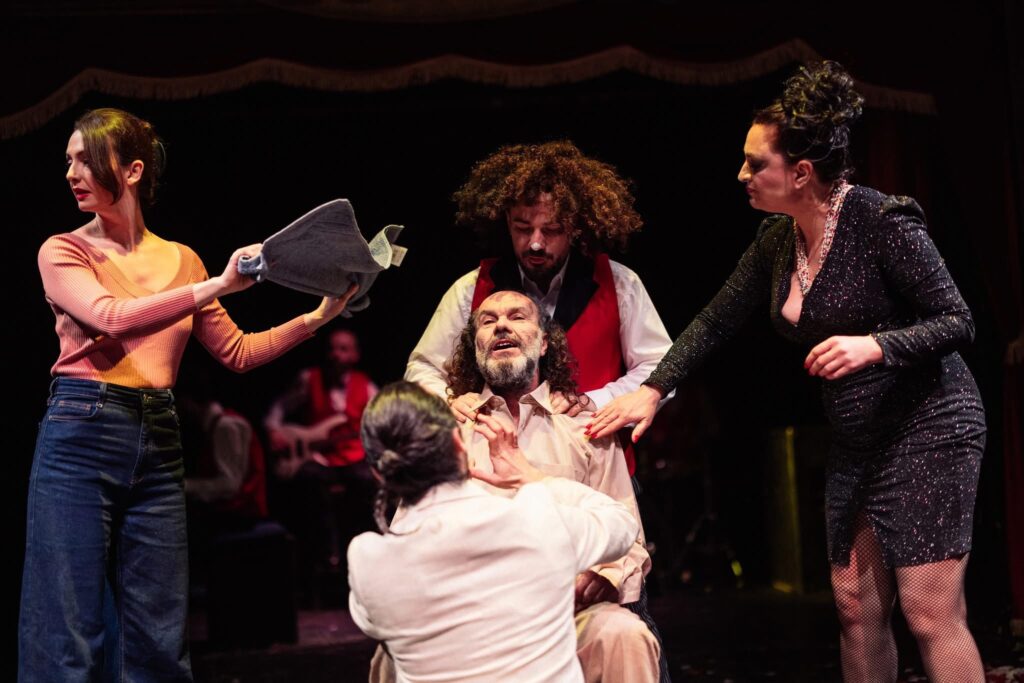
Kabare 1999
The way in which the men in the play function is particularly noticeable. They are present, but rarely the main focus. They move through the scenes more as interruptions, as obstacles, or as passing forces that influence the situations of the women without fully belonging to the emotional core of the story. The man at the bus station appears briefly in Aida’s story, then disappears into the background. Others appear through Dudija’s encounters or within Afërdita’s storyline, but they do not carry the same depth or continuity. Instead, they come across more as figures that set things in motion or interrupt them, but never really stay.
In contrast, the women are the ones you keep coming back to. Their stories overlap and keep returning in different ways. That’s where the emotional weight of the play really sits. It doesn’t feel random. Kabare 1999 isn’t just about post-war reality in general, but about how it impacts the lives of these women.
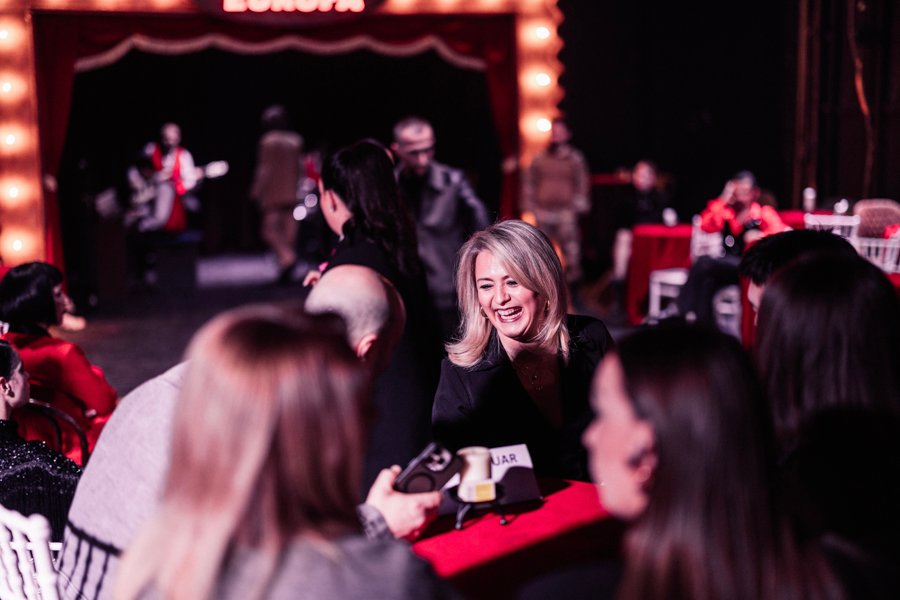
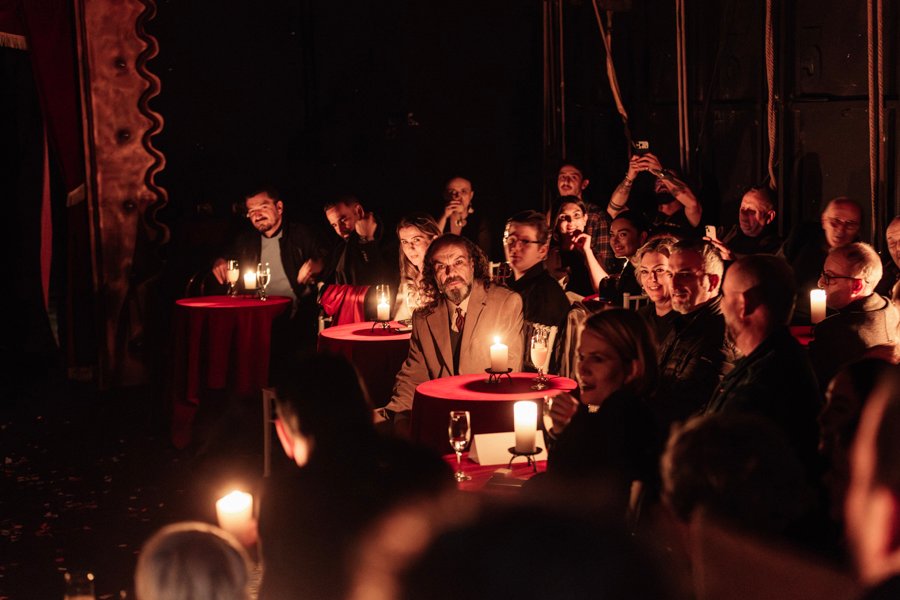
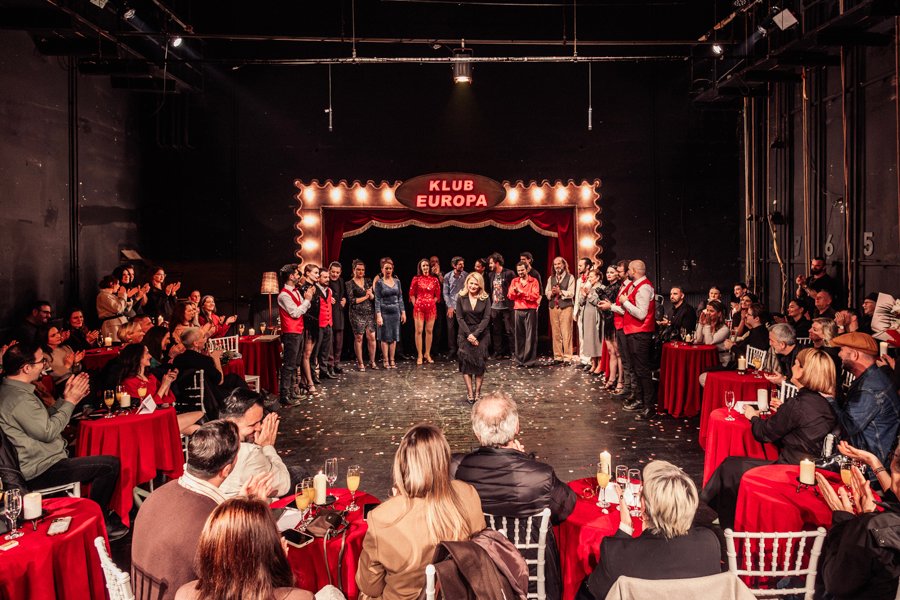
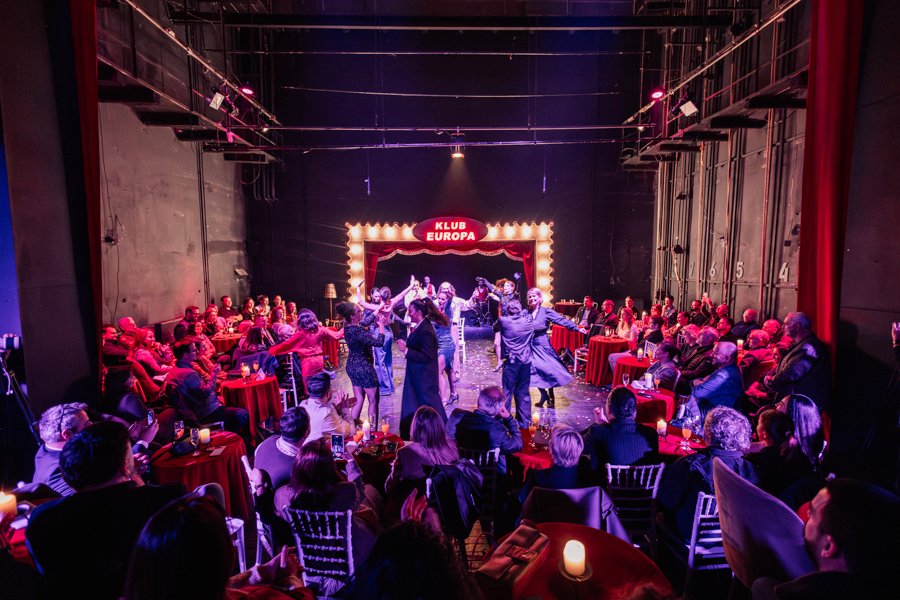
The scenography, by Bekim Korça, is designed in a way that made the audience feel like part of it, like guests at Klub Europa. We were seated at small tables which were draped in red and placed around the stage in typical cabaret fashion, each with a candle in the middle and a box of matches. At one point, when the electricity went out during the performance, we were asked to light the candles ourselves. It was a simple but powerful detail, reflecting something every citizen here has experienced, especially in the post-war period. I especially appreciated how they included a moment that felt familiar to many of us. When the lights went out, the theatre turned into a space for sharing stories about the war, each from a different perspective. At one point, one of the actors, sitting among the audience, began to speak about how afraid he once was to say the words “Kosova Republikë.” It showed just how delicate and difficult that time was, when even expressing a simple thought could feel unsafe.
The play keeps moving from one moment to another, letting different stories exist next to each other without trying to force them into one direction. Some scenes stay with you without fully explaining themselves, and you find yourself thinking about them after they’ve already passed. Klub Europa becomes the place everything returns to, not to explain anything, but to hold these lives for a while. It feels like a space where things happen, linger for a moment, and then slip away again. What stays with you is that sense of continuation, that these lives extend beyond the stage, even as the play itself begins to gather them into a single, shared moment.
Kabare 1999 offers a sense of closure, though not by neatly finishing its storylines. Instead, it allows these different stories to settle, where the past is neither erased nor fully processed, but simply acknowledged.
Credits:
Adaptor and director: Zana Hoxha//Scenography Bekim Korça
Producers: Gjilan Theater and Artpolis.
Write: Fatlinda Daku
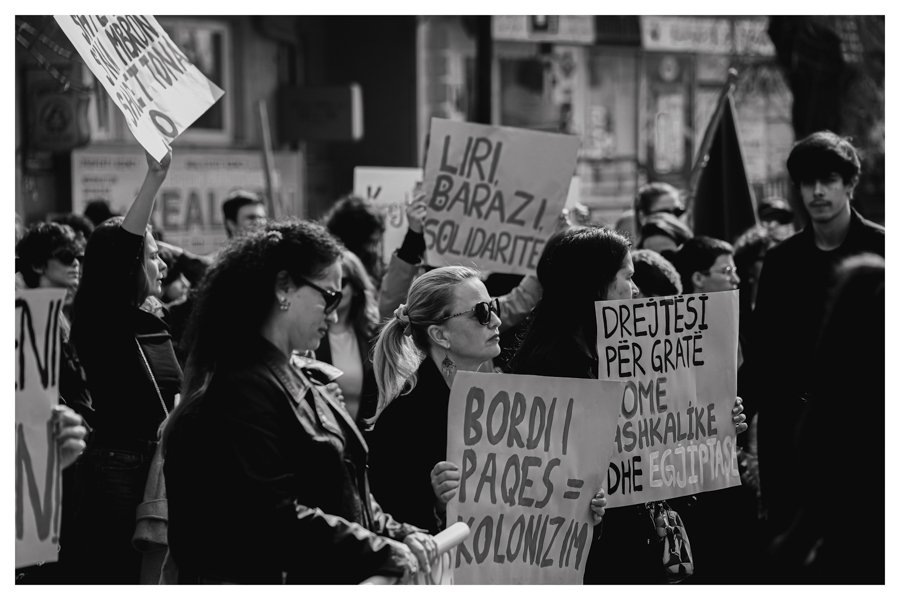
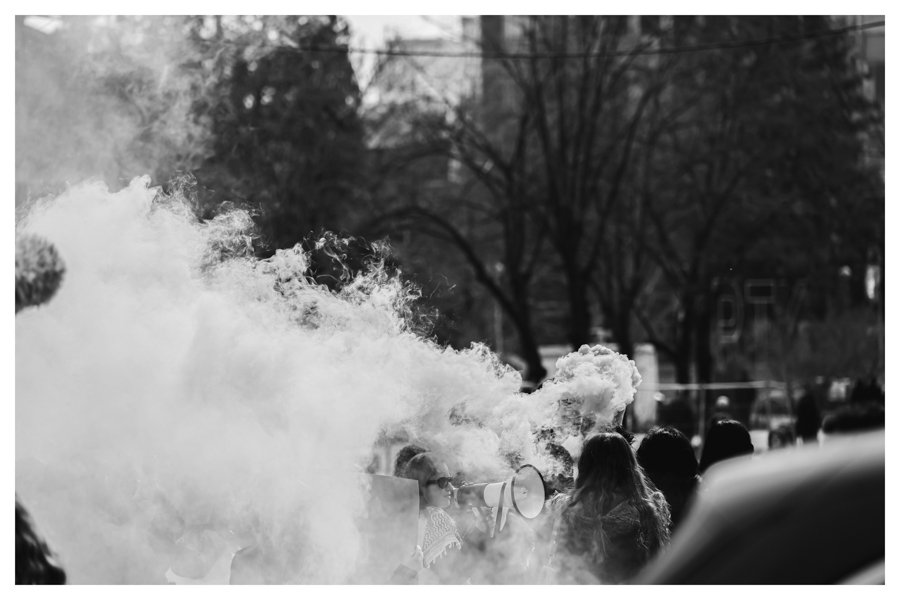
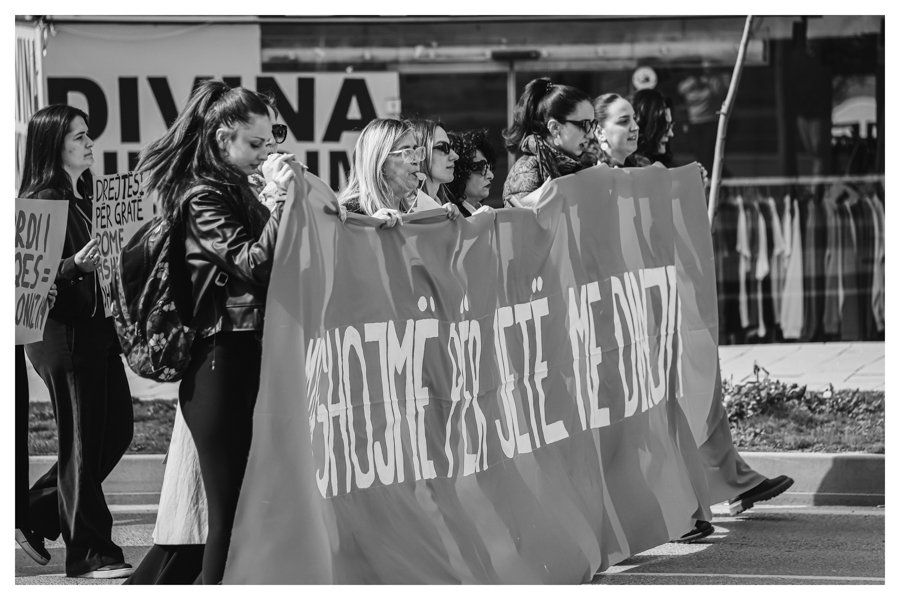
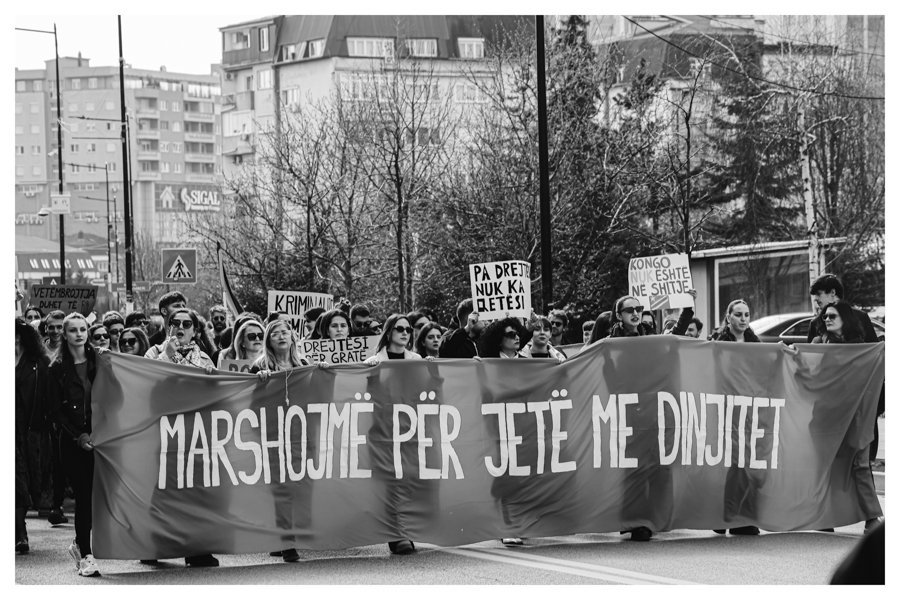
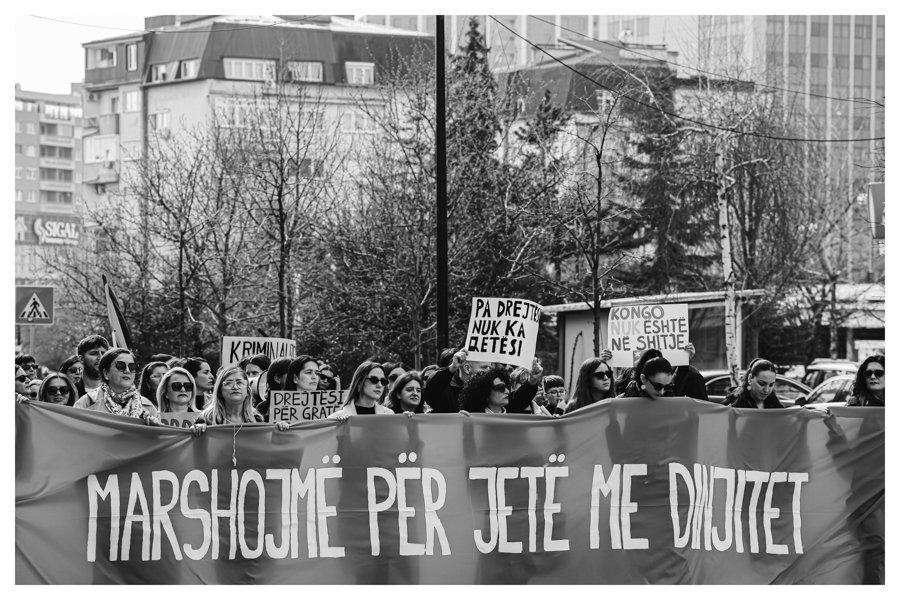
On March 8, the streets of Prishtina were filled with voices of protest and solidarity during the traditional march “We March, We Don’t Celebrate!”, organized by the collective “We March, We Don’t Celebrate!” under the motto “For a Life with Dignity.”
On International Women’s Day, women, girls, men, and activists took to the streets to demand equality, safety, and social justice. This march was a reminder that March 8 is not merely a symbolic celebration, but a day of protest and resistance against the inequalities that continue to affect women’s lives.
We marched and protested against gender-based violence, economic discrimination, inequalities in the labor market, unpaid women’s work, and the exclusion of women from decision-making processes.
We called for a society where women’s bodies, work, and lives are neither controlled, exploited, nor devalued.
In feminist solidarity, we raised our voices for women facing oppression and wars across the world – from Kosovo to Palestine, Sudan, Congo, Ukraine, and beyond. Freedom and dignity cannot be partial: our liberation remains incomplete without the freedom of all.
Photo: Engjellushe Avdiu
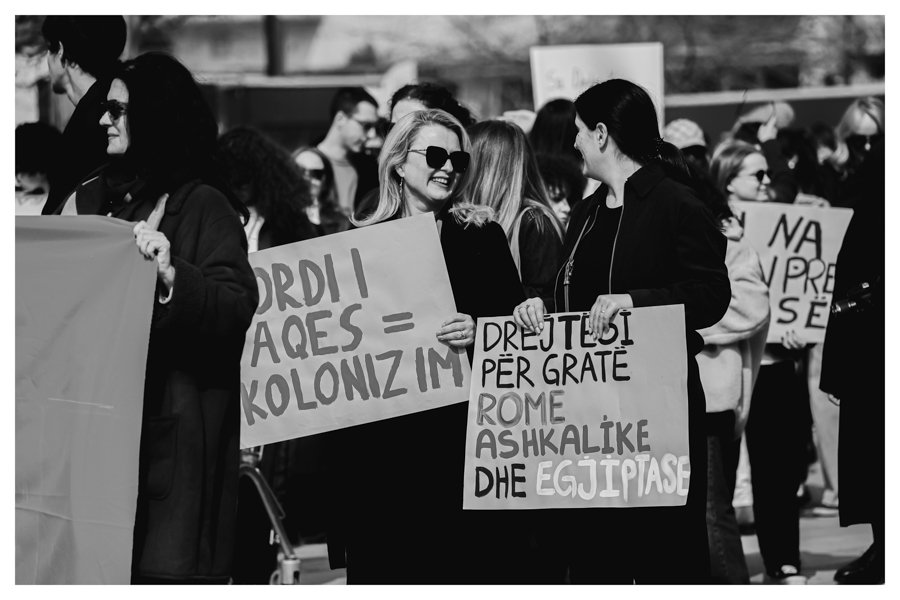
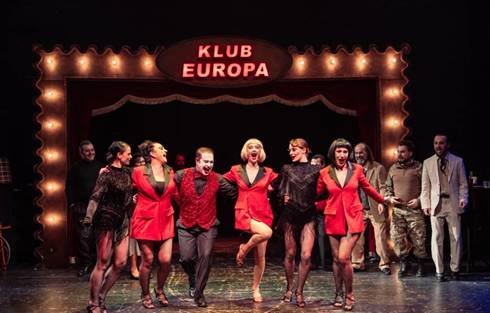
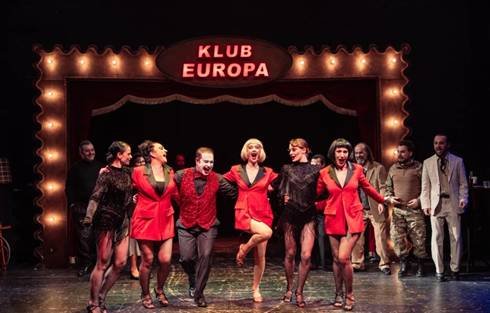
Scene from the play “Cabaret 1999,” directed by Zana Hoxha, premiered at the Gjilan City Theater on February 5, 2026 (Photo: Rilind Beqa)
By: Berat Bajrami
Director Zana Hoxha, drawing on Cabaret by Joe Masteroff, relocates the story from 1930s Berlin to Prishtina in 1999—a city freshly emerging from war, charged with the adrenaline of newfound freedom, haunted by the lingering smell of burned homes, the absence of people, and the rise of a “survival of the strongest” economy. Cabaret 1999 becomes a portrait of post-war Kosovo realism still searching for how to learn to live.
“Willkommen, bienvenue, mirë se vini…” (“Welcome, bienvenue, welcome…”) is the call that opens the world of Cabaret 1999—a call that sounds like a promise of celebration, but as the performance unfolds, increasingly transforms into a bitter irony. On the evening of February 5, 2026, at the Gjilan City Theater, this cabaret appeared as a space divided between two worlds: between the desire to live and the trade of wounds; between newly gained freedom and the fear of a system that devours anyone who dares to live freely.
Director Zana Hoxha, based on Cabaret by Joe Masteroff, relocates the story from 1930s Berlin to Prishtina in 1999—a city newly emerging from war, filled with the adrenaline of newfound freedom, haunted by the lingering scent of burned homes, the absence of people, and the flourishing trade of the “strongest.”
“Klub Europa” is the bubble of “happiness” — a world of carefree living and “complete” freedom beneath dazzling lights and the magic of endless music. A place where life is pleasure and full of color.
Post-war life in search of learning how to live
Zana Hoxha’s directorial choices bring to life characters who may seem ordinary at first glance, yet each complements the other; each carries their own weight, story, struggle, and way of understanding life. Every character is simultaneously layered and complex. It is a realism of post-war Kosovo still searching for how to learn to live.
The characters suppress the bleakness of post-war daily life and survive through love, sex, and pleasure in a Prishtina that embraces the individuality of those who dare, despite being deeply scarred by the struggle for survival.
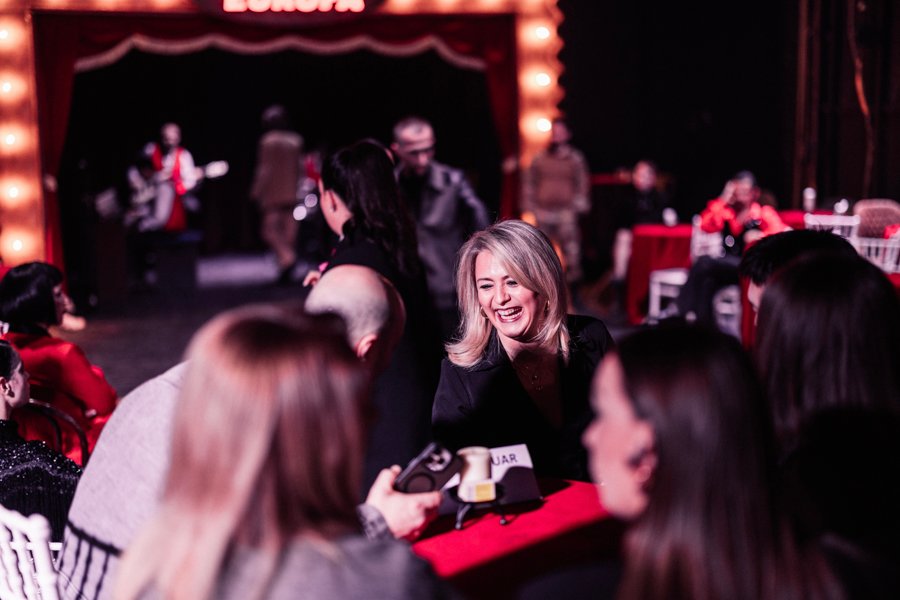
Cabaret 1999 breaks the fourth wall. The audience is not merely a witness to events—it becomes part of them through laughter and dancing. The characters blend into the audience, sitting among them and sharing moments together. These moments flow naturally, creating scenes that make you lose your sense of time. The performance unfolds organically and without force—from the actors, dancers, and musicians to the costumes and scenography.
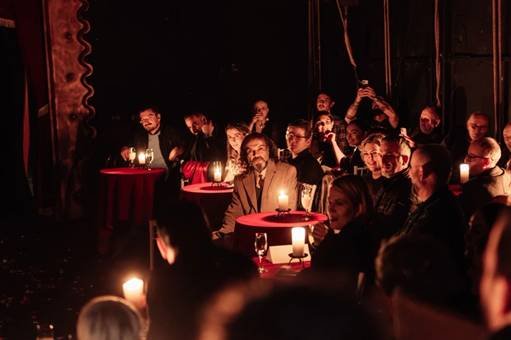
“Cabaret 1999” brings us post-war Kosovo not as frozen heroism, but as a living, chaotic reality that still refuses to surrender completely. (Photo: Rilind Beqa)
A moment that advances local theatre
University professor and director Fadil Hysaj says this is true theatre and that Cabaret 1999 elevates and advances Kosovar theatre.
“Great performances do not have a single moment; they flow scene by scene. You feel comfortable in a positive cultural sense, but at the same time you see that the actors, from the very beginning, remain entirely part of one concept—in this case, the one Zana had created—and every artist present there, from the dancers, the composer, to the actors, each one is free. There is a magical flow and there is space to express what one feels and to say it in the best possible way. The performance has breath. None of the actors want to say: ‘I will show what I can do.’ Instead, they perform within a concept. This is a moment that advances our theatre,” Hysaj said after the premiere of the performance. “This is true theatre when the chorus dances, the chorus sings, creates character, expresses thought, but at the same time all of it together becomes part of one concept, and that concept is absorbed by the audience, accepted emotionally by the end of the performance, and returned to the artists through applause, making them not forget such an event.”
“They forget the burned houses. The missing people…”
At the center of the performance is Aida, who sees the city through the eyes of someone who wants to believe, to live freedom, and to dream. She tries to maintain aesthetic distance, but that distance is broken by poverty, the need for work, her attraction to Soni, her confrontation with Claudio, the threat of the MC, and her cooperation with Ernest. She says: “I like this city. It is vulgar. It is chaotic. It is noisy. And everyone acts as if, with the arrival of freedom, all problems have disappeared.”
In this sentence there is both admiration and anxiety. Because immediately after comes memory: “But they forget. They forget the burned houses. The missing people. The destroyed families.”
This is the true drama of the performance. Not the war itself – but what happens after it. The moment when people want to live, to sing, to love, to earn money, to build a normal life, while part of them is still searching for the dead.
At the core of the play’s moral dimension stands Shyretja, the mother searching for her missing son, Fatbardh. She is not only a tragic figure; she is an ontological one. “When he disappeared, his name became irony: fate was no longer bright, but unclear, cut in half. Severed by war.”
However, Shyretja did not accept disappearance as an ending; she continued searching for information. And this story begins there: with her decision not to close the search—“because some stories exist to prove that the end has not yet been determined.”
Freedom is not forgetting
In this act of unending search, the performance finds one of its deepest meanings of freedom. Freedom is not only to live. Freedom is to remember. It is to refuse false closure.
But in contrast to this stands another world—the world of the cabaret, which is more than just a venue. It is a system. A rhythm. A way of forgetting. The MC defines this philosophy with brutality when he sings: “Money makes the world go round.” And suddenly, everything becomes a commodity—love, the body, dreams, hope. Russian, Japanese, French, American women are sold… and then Kosovar women, “young and untouched.”
“People have not only disappeared because of bullets. They have also disappeared through deals. […] Through information. Through false hope. Someone has traded in the fate of the missing. Silence.” These words by Soni, addressed to Ernest, are an open accusation. Ernest (and the MC) become the personification of primitive post-war capitalism—traders of pain who buy and sell silence, hope, and time.
In this world, freedom is no longer a given. It becomes something that must be negotiated every day. This is clearly shown in the confrontation between Aida and the MC, when he calmly says: “Here, you only have comfort when someone allows it.”
And then, like an unwritten law of the new reality: “A human being? Here, you only become one… when they allow it.”
This is precisely where the performance raises its questions: what value does freedom have if dignity depends on someone else’s permission? And what does it mean to remain human in a place where everything can be bought?
But Cabaret 1999 is not only chaos. Within it there is also a strong desire to live. It appears in small, unexpected, sometimes fragile ways, but with humor and full of love. In the late love between Afërdita and Agim, which seems almost naive, yet is a silent act of resistance against loneliness. In Dudije’s complicated relationship with foreign soldiers, where survival and gratitude merge into a morally ambiguous zone. In Aida herself, who continues to write even when she realizes that her story is no longer only about the missing, but also about those who benefit from their absence. These are not heroic stories. They are attempts to live. To love. Not to disappear.
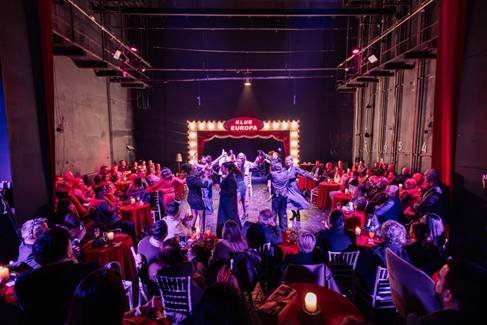
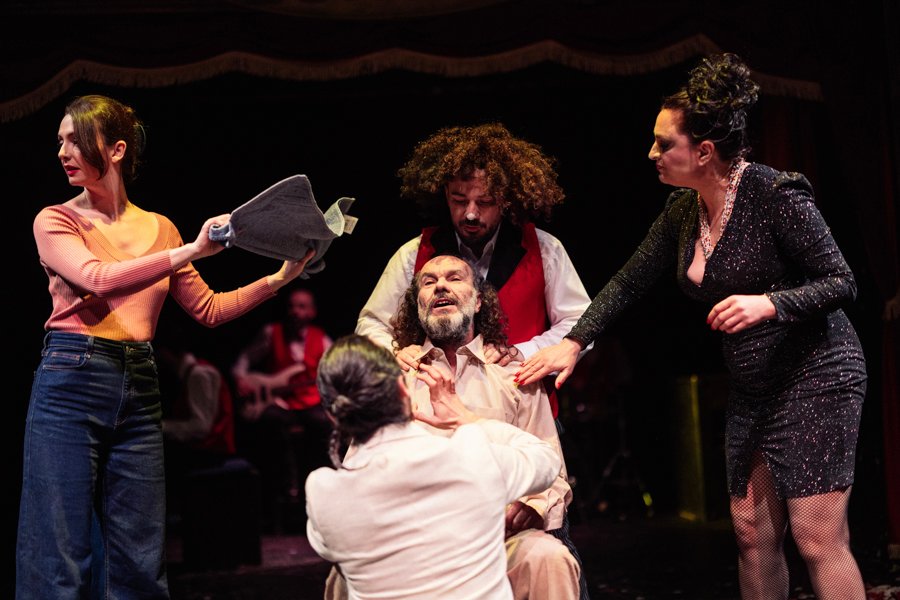
The characters suppress the gloom of post-war everyday life and live between love, sex, and pleasure in a Prishtina that embraces the individuality of those who dare, even though they are severely affected by the struggle for survival (Photo: Rilind Beqa).
A life that does not surrender completely
For actress Semira Latifi, who plays Aida, the cabaret format has made the process of building the character easier, and she believes the performance will have longevity.
“I can say that this (the cabaret format) has helped us a lot; it has made it much easier to build a character, and it has enriched the character a great deal, both my character and all the other characters who share scenes and stories together. It is a good form of acting where each actor can show their talent in the best possible way in front of the audience, and tonight the audience received it very well, the reactions were very positive, and I think it is a project that will have a long life and a very strong audience within itself,” she said.
A life that does not surrender completely
Actress Aurita Agushi has said that the adventure of this production has only just begun.
“I am extremely satisfied (with the audience’s reactions) because the actor on stage feels the energy of the audience. You can feel their breathing, you can feel their energy. I know that our adventure has only just begun and it will be very beautiful with everyone who comes to see this performance,” said Agushi, who plays the role of Mrs. Afërdita.
In the end, the performance offers no definitive answer. It does not close the wound. It does not save anyone completely. But it leaves us with a strong feeling: that life, even when chaotic and tainted, continues to seek happiness.
Cabaret 1999 presents post-war Kosovo not as frozen heroism, but as living, messy life that still refuses to surrender completely.
“Welcome to the cabaret. And don’t forget—the lights go out when we decide.”
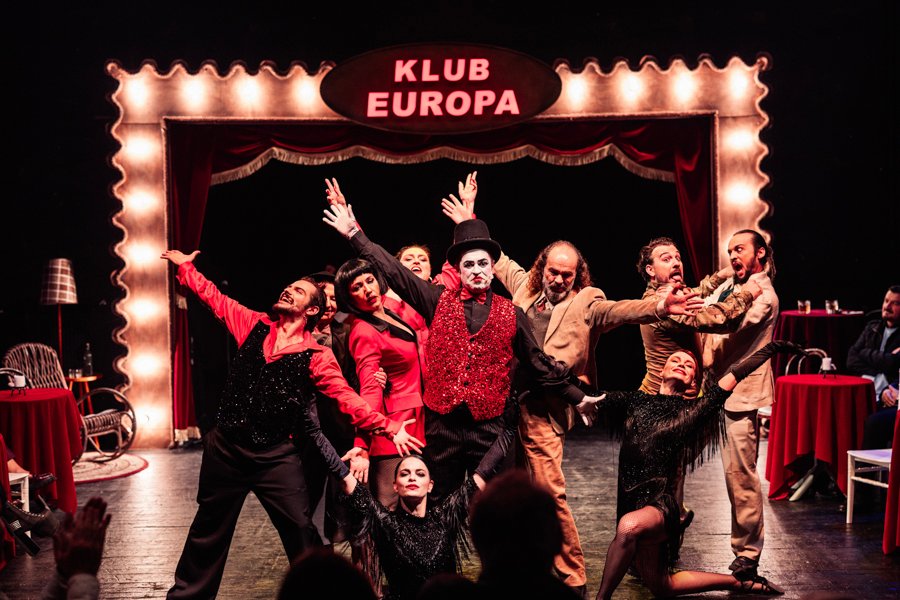
On February 5, the City Theater of Gjilan hosted the premiere of Kabare 1999, attended by around 100 audience members. This musical theater piece transports the story from 1930s Berlin to Prishtina in 1999 – a city emerging from war, learning to live again amid hope, exhaustion, and the desire for life.
Directed by Zana Hoxha, the play creates a space where reality and performance intertwine, where life is performed as spectacle while trauma and absence quietly linger beneath the lights and music. At its center is Aida (Semira Latifi), a writer who dreams of witnessing, understanding, and recording the stories of the missing, yet finds herself drawn into a world where everything is measured by a price.
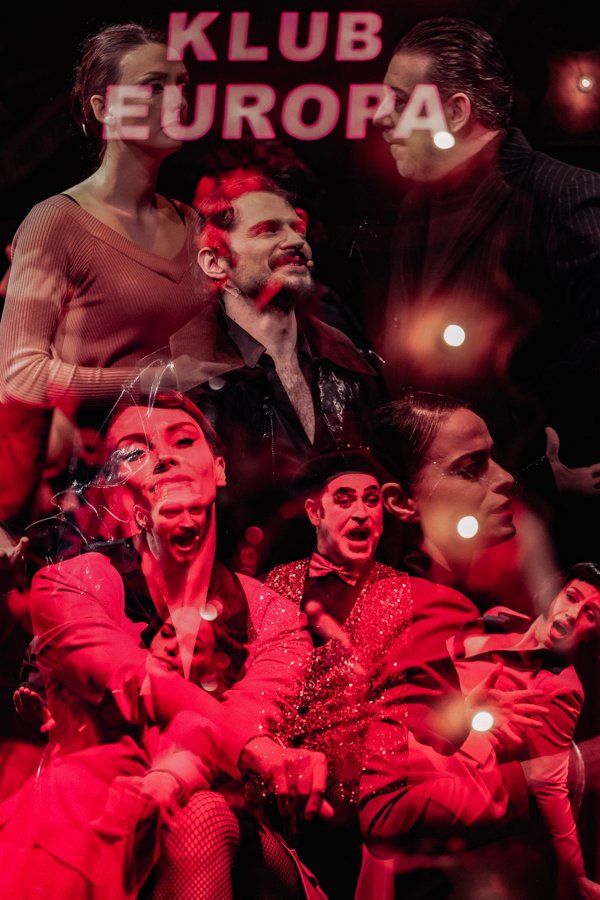
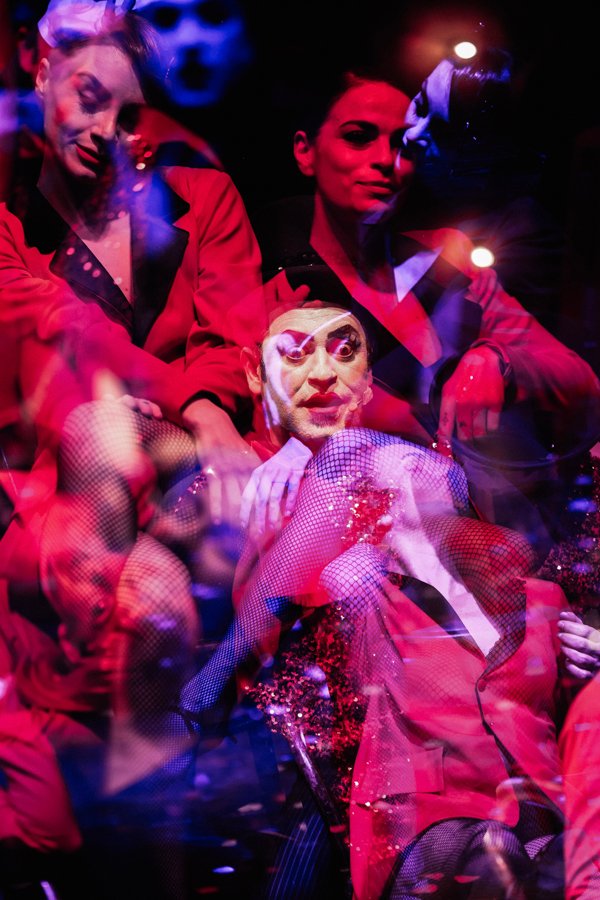

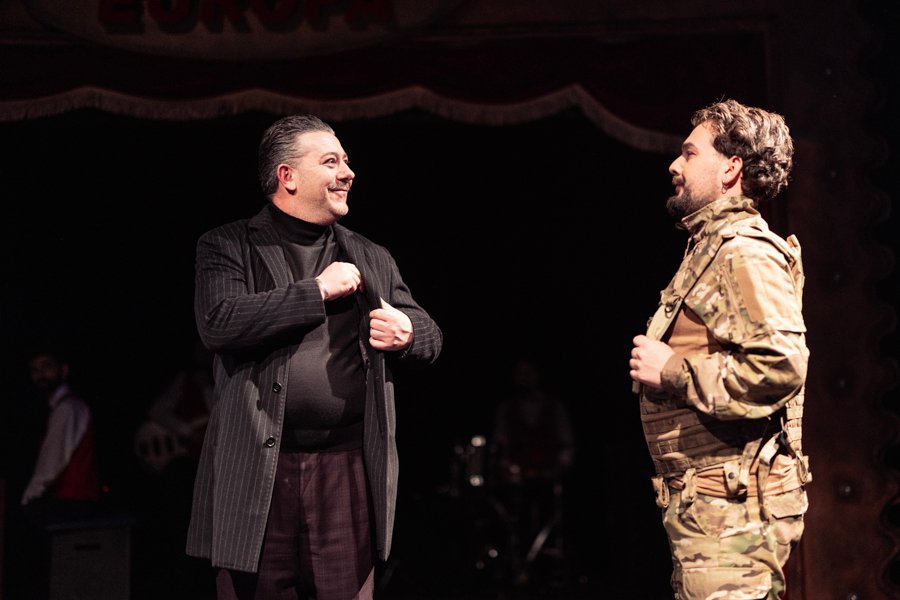
Through her and the other characters – MC (Kushtrim Qerimi), Soni (Edon Shileku), Ernesti (Gëzim Bucolli), Afërdita (Aurita Agushi), Dudija (Safete Mustafa Baftiu), Claudio (Gani Rrahmani), Agimi (Ali Demi), Gruaja (Mejreme Berisha), and the soldier (Blend Arifi) – the play reflects on freedom, subjectivity, and morality in a society just emerging from conflict.
Kabare 1999 examines how memory, hope, and the desire to live remain acts of resistance in a society striving to rebuild itself after trauma. A co-production of the City Theater of Gjilan and Artpolis, supported by the Ministry of Culture, Youth, and Sports and the Municipality of Gjilan, the play offers no easy answers but invites reflection on life, memory, and the space where freedom and tragedy coexist.


Recent Comments