

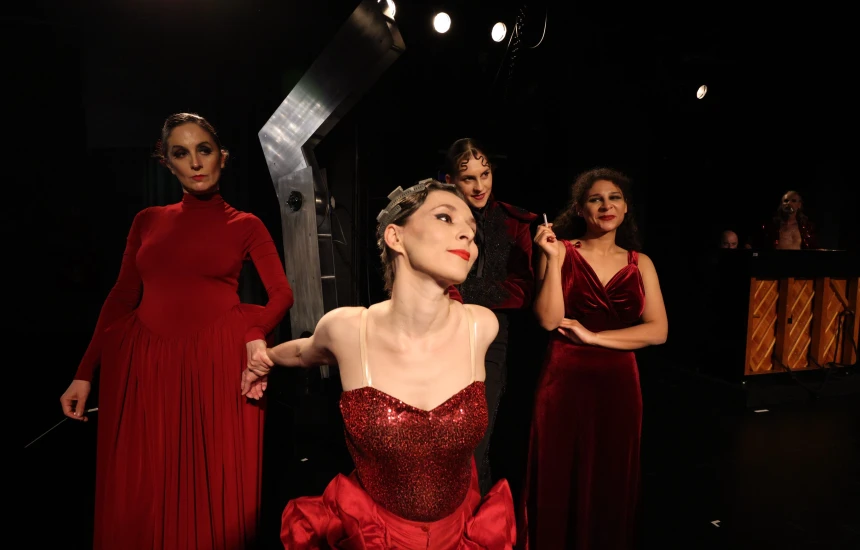
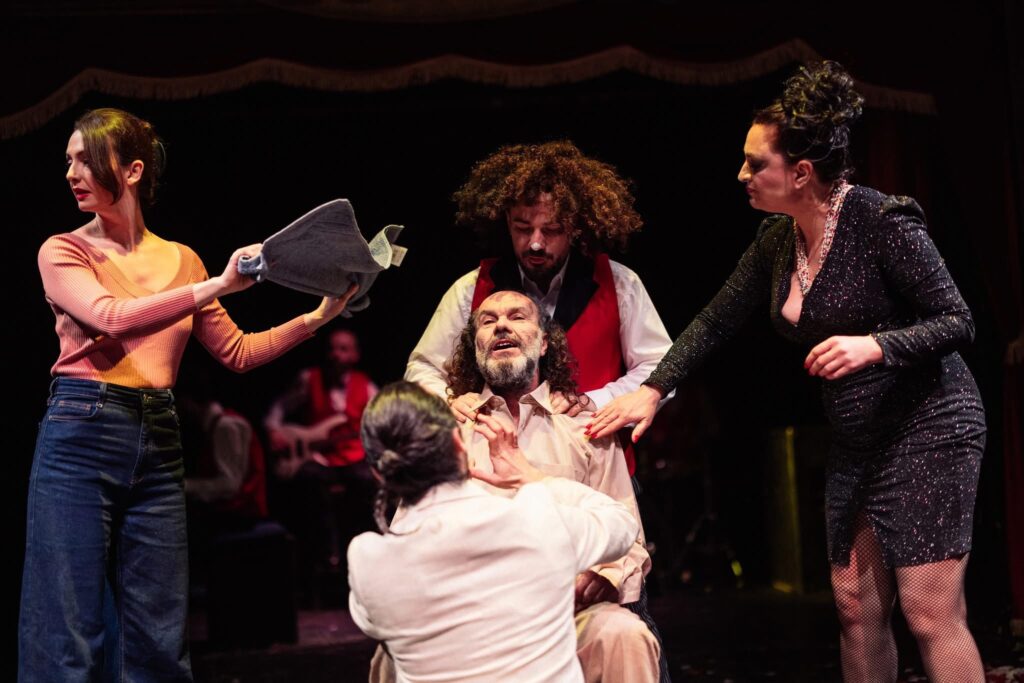
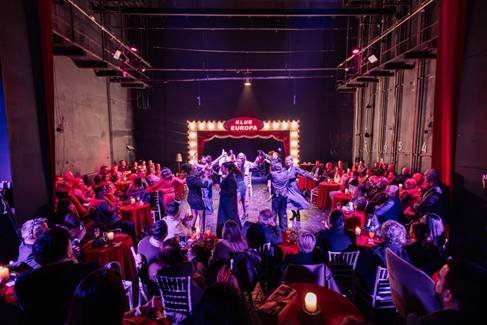
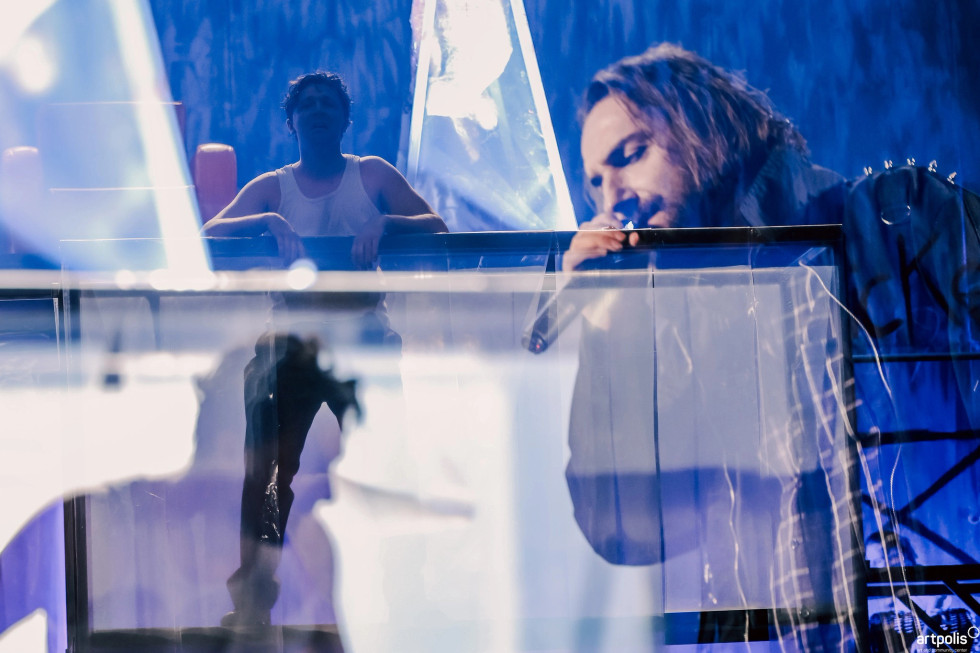
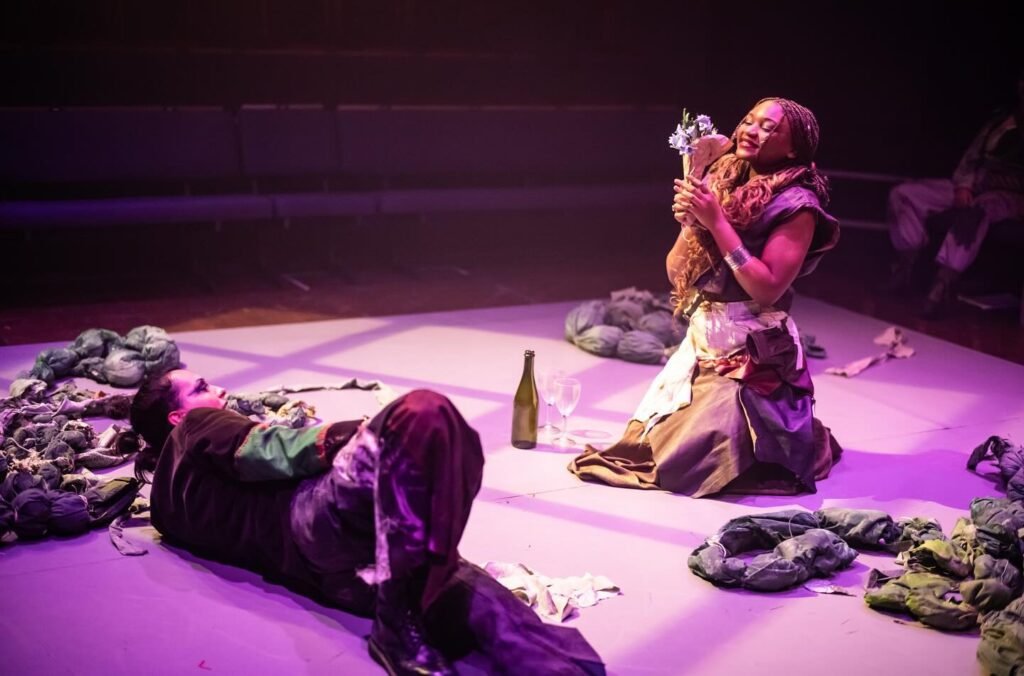
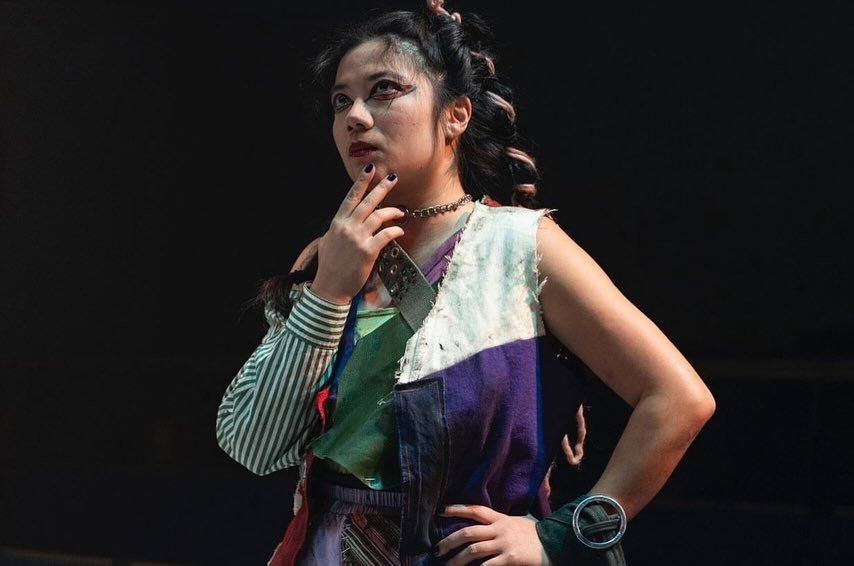
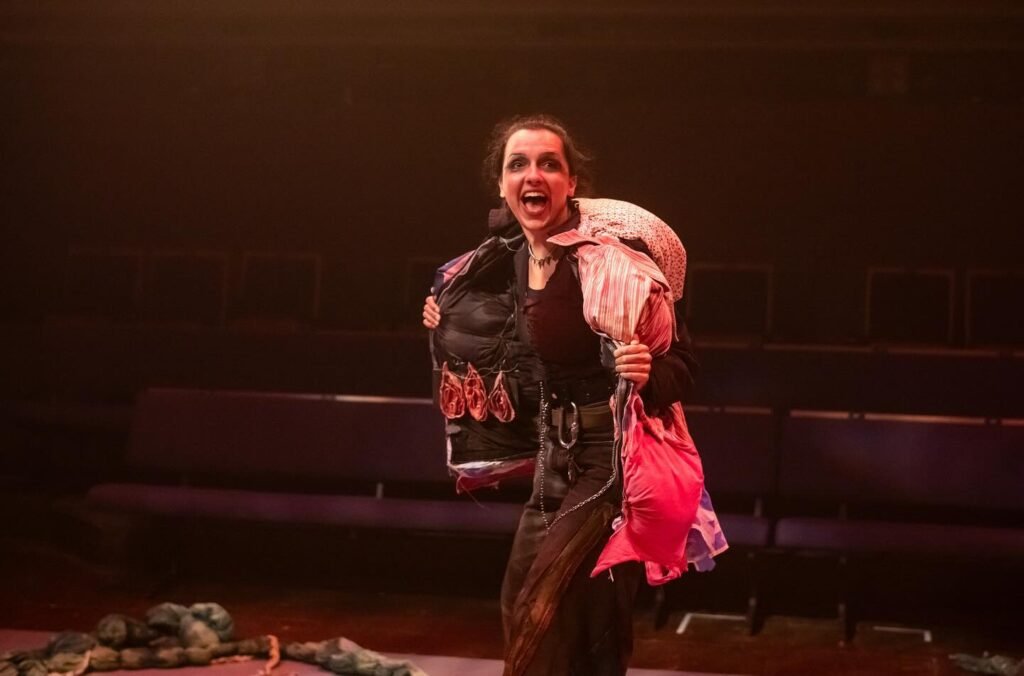
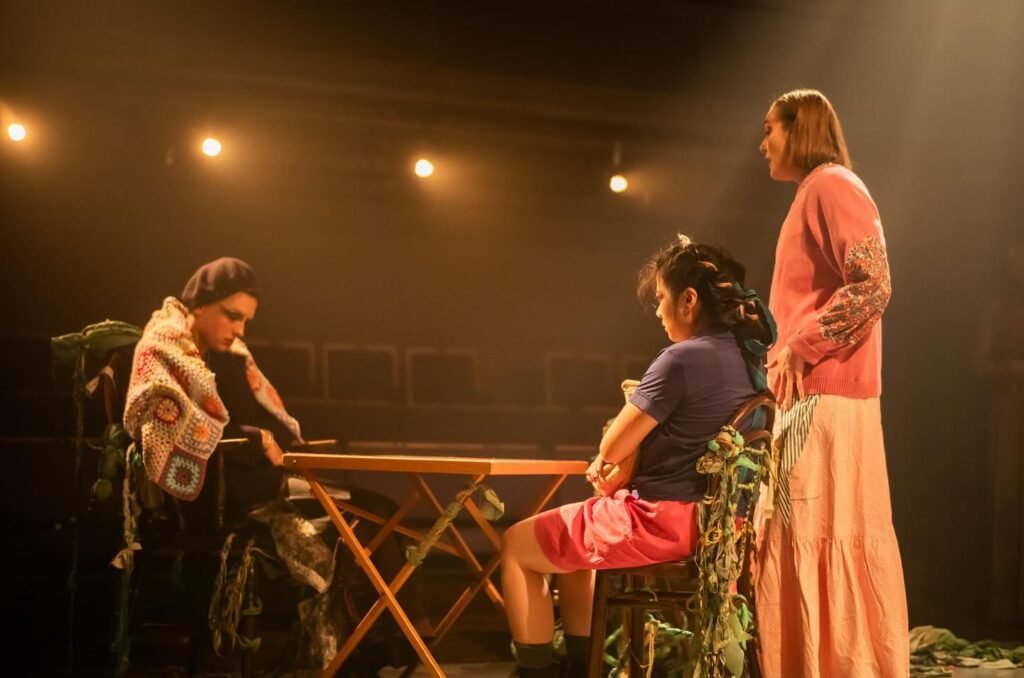
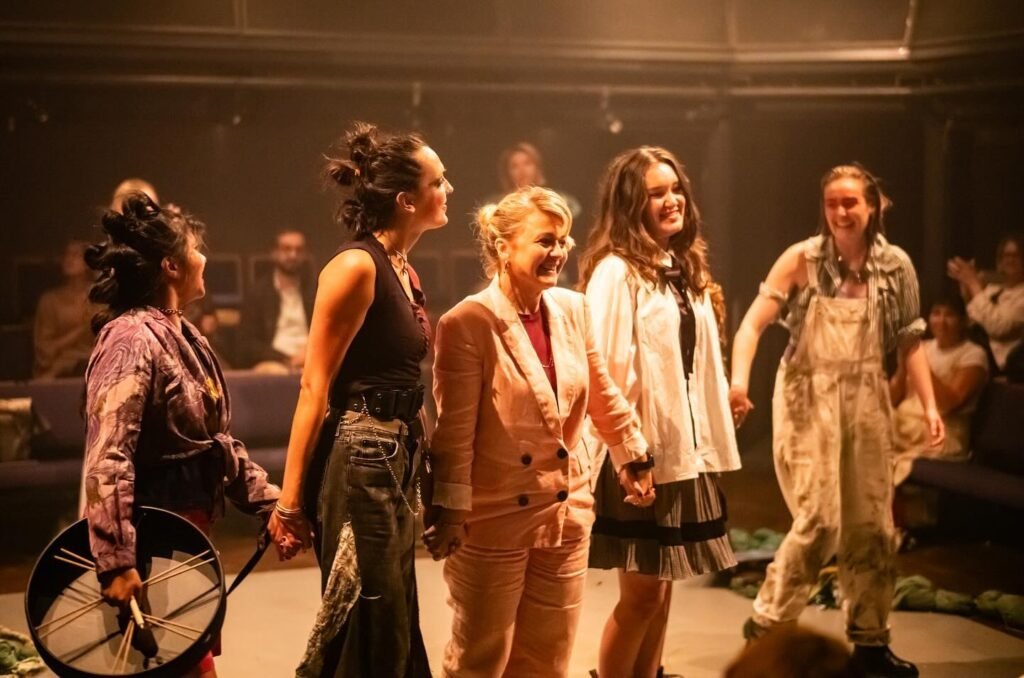
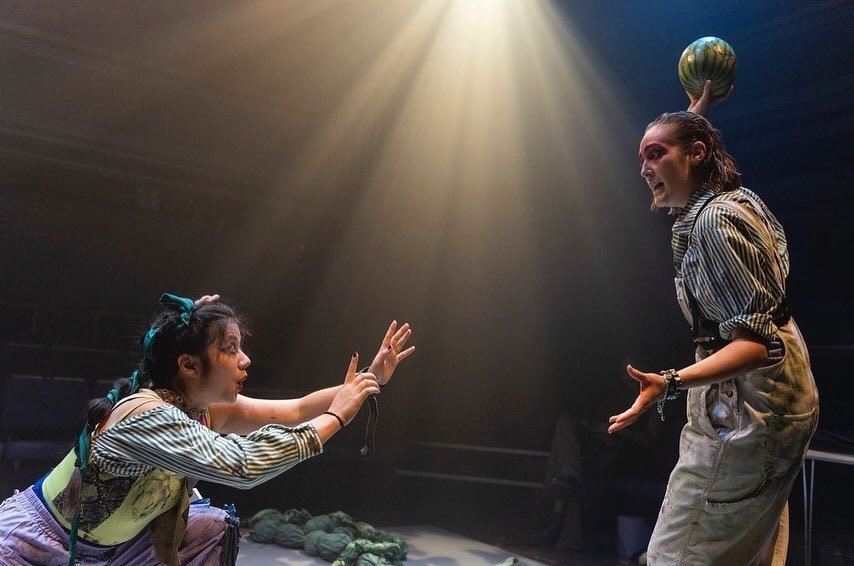
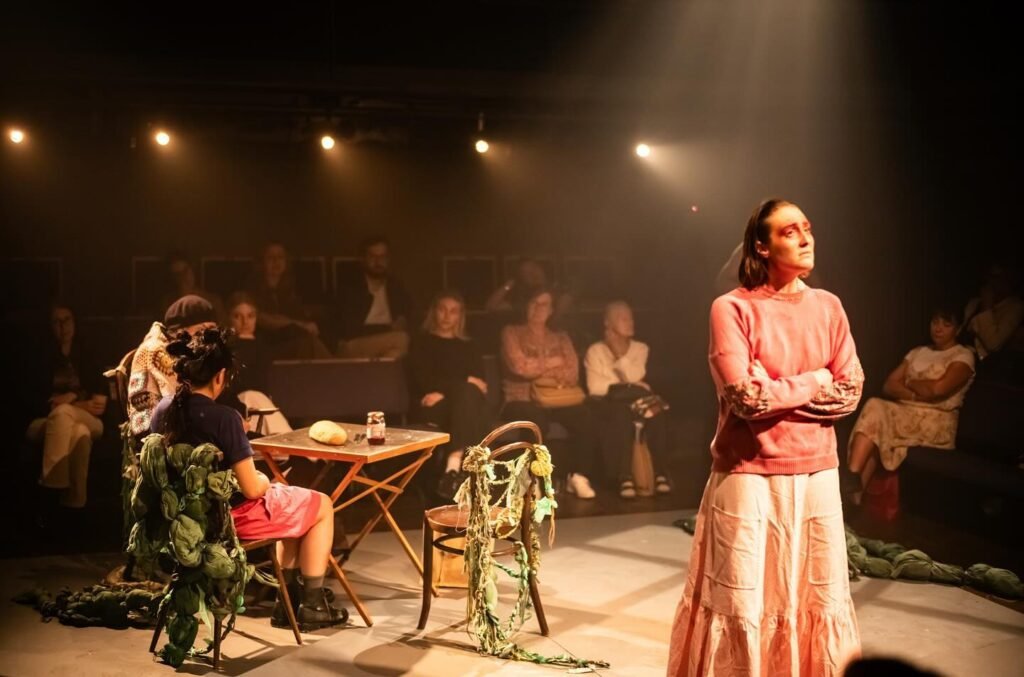
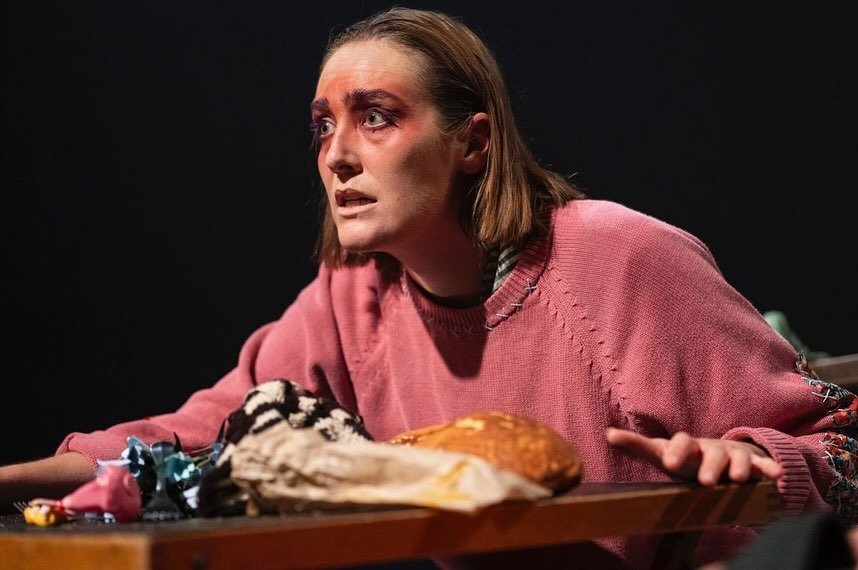
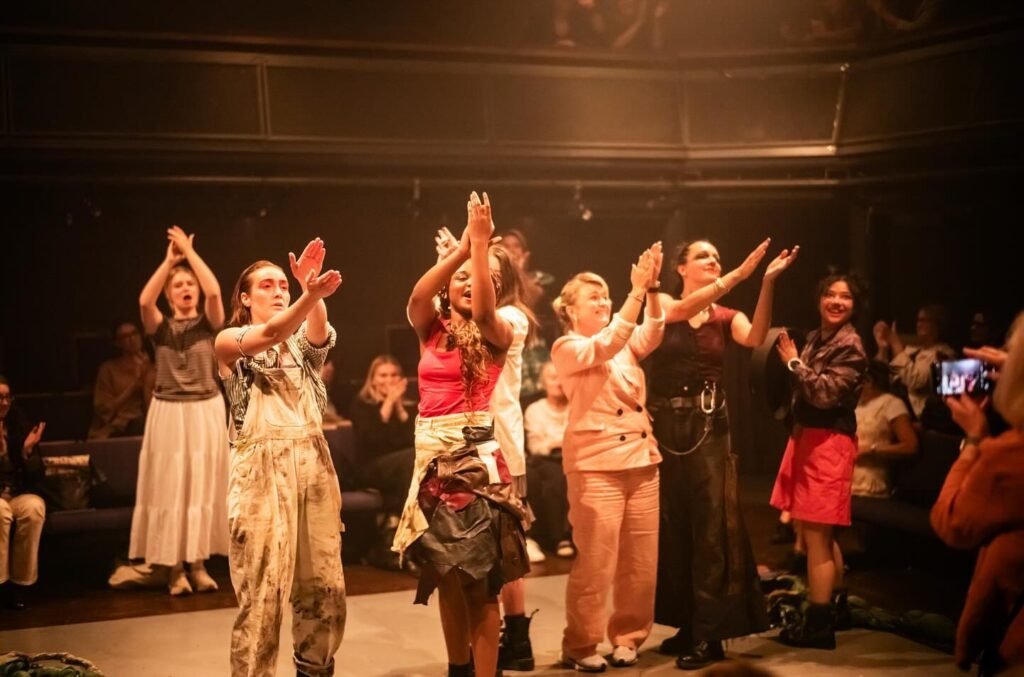
“No Carmen!” is a deconstruction of music and an exploration of what themes would occupy this Carmen and who Carmen would actually be. (Photo: Borut Bučinel)
By: Besartë Elshani
The Slovenian production, which reimagines the iconic figure of Carmen through a contemporary lens by shifting her from the traditional framework of opera into an experimental, physical, and political theatrical universe, has brought a unique approach to the Slovene Youth Theatre, with direction entrusted to Zana Hoxha. The music was composed by Liburn Jupolli.
“No Carmen!” appears as a unique theatrical version of Carmen, the famous opera by Georges Bizet. Written by Slovenian playwright Urška Brodar, the production takes an unconventional directorial approach in which scenes are illustrated primarily through the actors’ actions. It premiered on Thursday evening at the Slovene Youth Theatre.
The production addresses political and social themes through Carmen’s iconic character and is also intended to be staged in Prishtina, although circumstances have hindered this possibility.
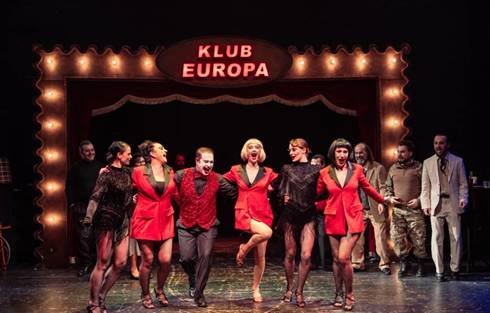
This Slovenian production serves as a contemporary reinterpretation of Carmen, moving her from opera’s traditional conventions into an experimental, physical, and political theatrical world. Music plays a central role. Alongside ten actors, pianist Jozhe Šalej is also part of the cast. The score was composed by Liburn Jupolli.
“This performance is a contemporary reinterpretation of the opera Carmen and of the novel by Prosper Mérimée. It is a deconstruction of music and an exploration of what themes would occupy this Carmen and who Carmen would be,” director Zana Hoxha said in an interview.
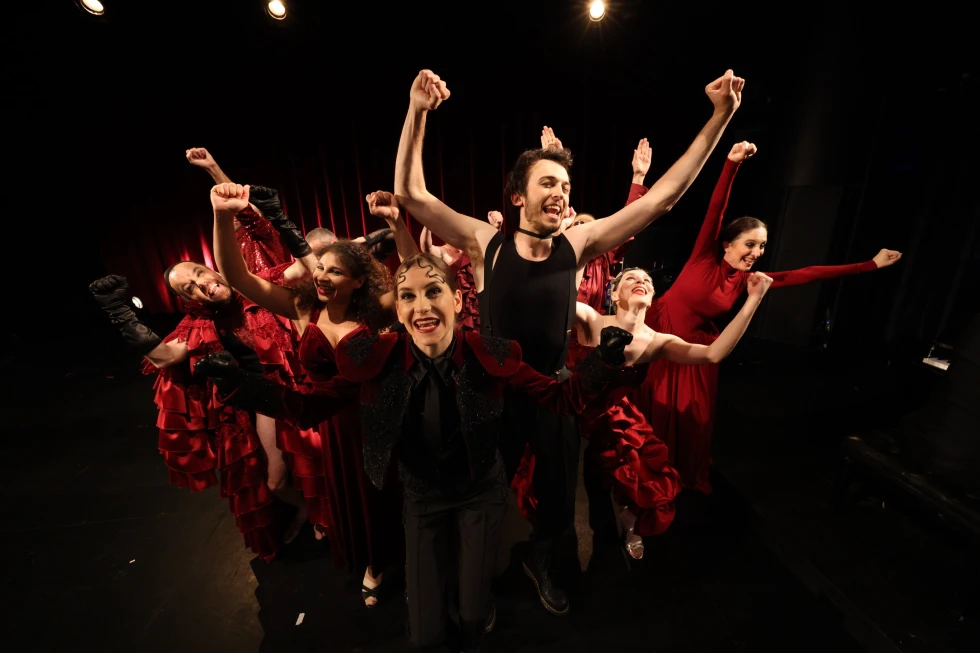
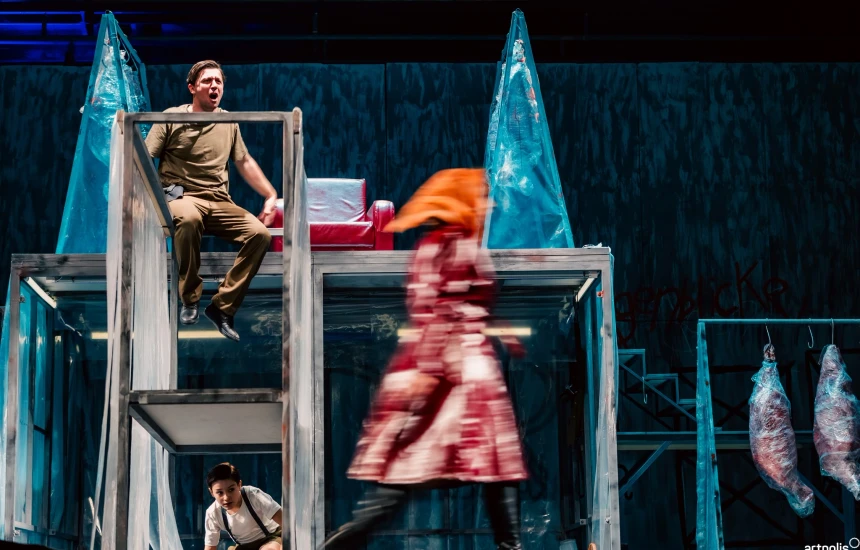
The cast includes actors Lina Akif, Dasha Doberšek, Natasha Keser, Boris Kos, Klemen Kovačič, Anja Novak, Maruša Oblak, Ivan Peternelj, Blaž Šef, and Stane Tomazin. Choreography was created by Lada Petrovski Ternovšek, while scenography was designed by Dunja Zupančič.
According to the director, the creative process strongly relied on co-creation with the theatre ensemble.
“For me, it was important to develop a collaborative process and create together with the entire artistic team. Considering my experience, knowledge, and skills, I witnessed extraordinary organization within the theatre. The way they supported this project—with every possible resource, through the actors’ abilities and the contributions of collaborators in music, choreography, and scenography—was remarkable. It was a major undertaking and a production in which a great deal was invested. I believe we achieved a successful premiere,” Hoxha said.
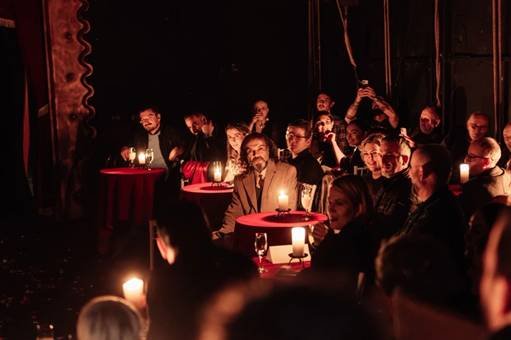
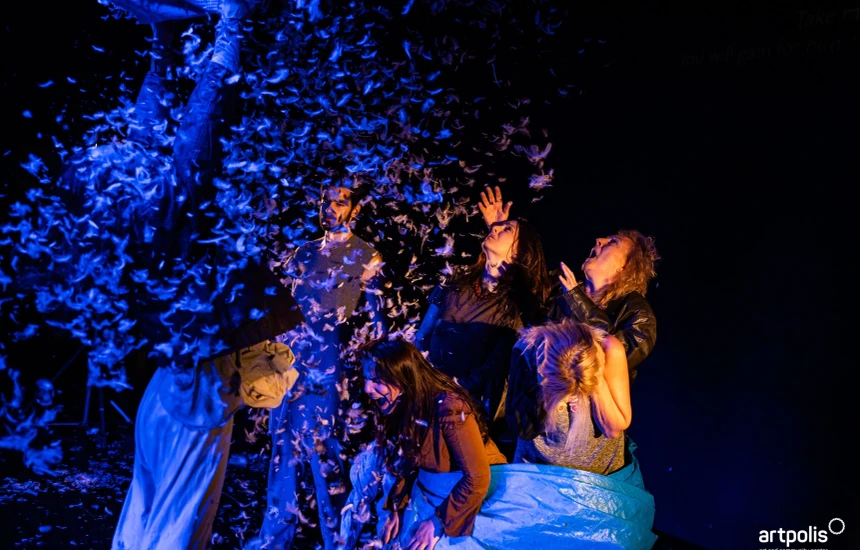
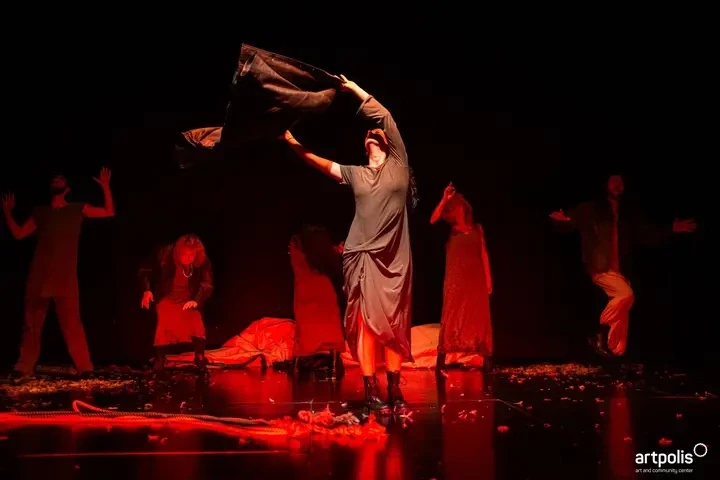
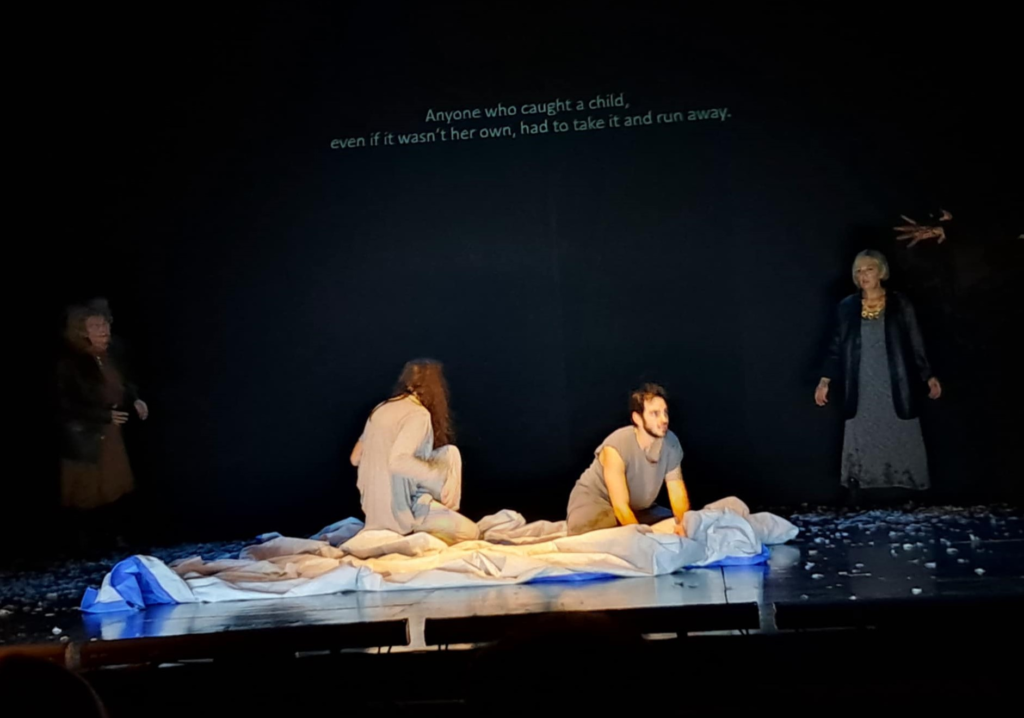
One of the production’s most distinctive features is its stage form, since most of the performance unfolds without dialogue.
“Only twenty percent includes text, meaning eighty percent of the performance is without text, which is something new. It is a wordless performance,” she explained.
Hoxha described it as one of the most challenging processes of her career, emphasizing the professionalism and dedication of the Slovenian ensemble.
“It was one of the most challenging processes because this ensemble is known as one of the most professional. They are also deeply engaged in addressing sensitive political themes—not only in Slovenia but also in the region and beyond. Working with ten actors and one pianist required stamina, dedication, and passion for the project. I’m happy they took something from my way of working, and I equally gained something from these artists,” she said.
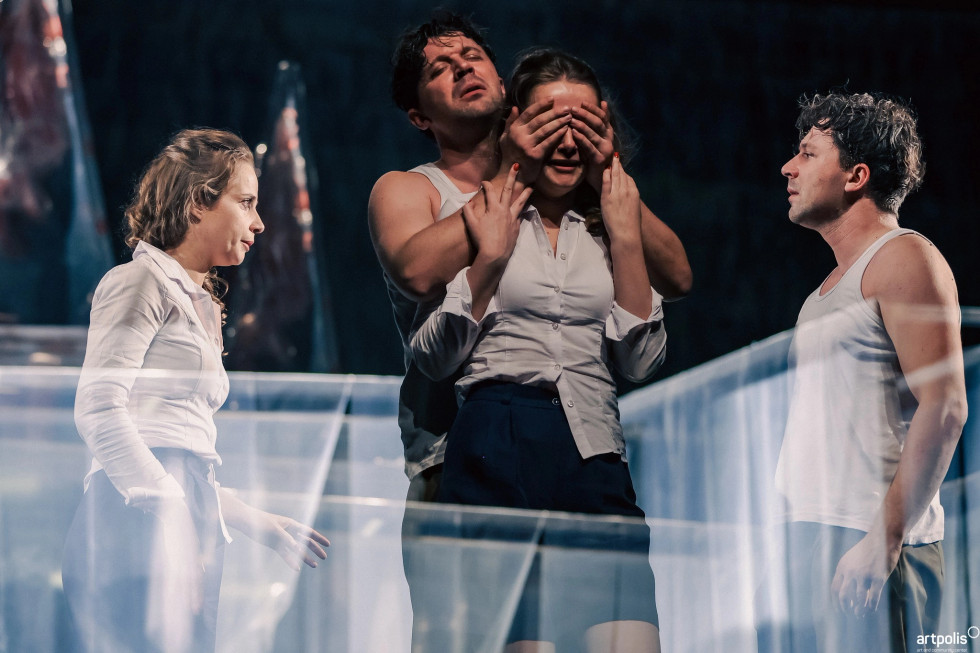
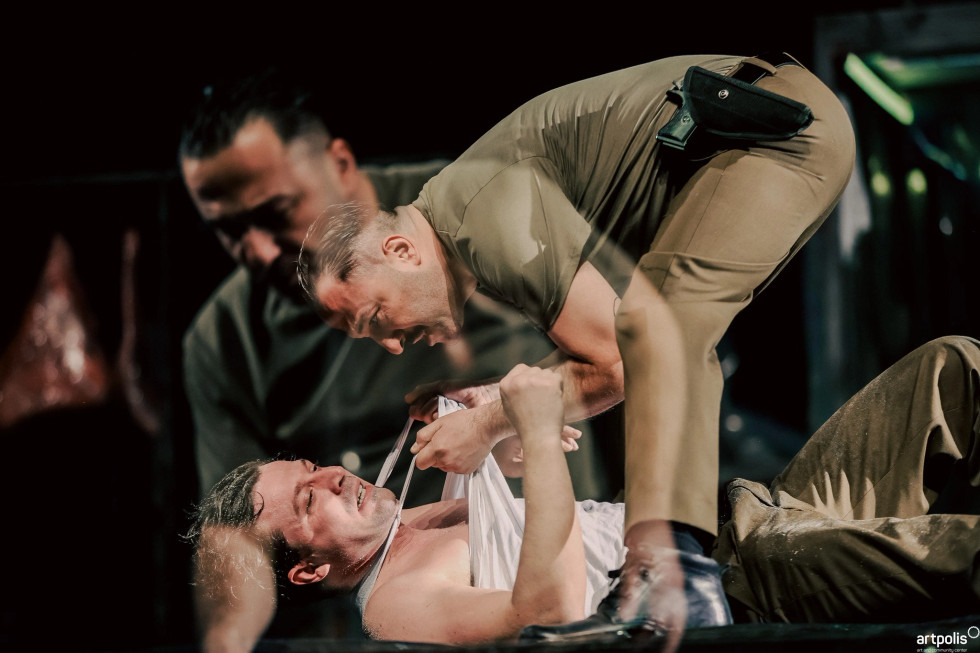
“No Carmen!” dismantles the familiar image of Carmen as a female archetype in opera. Trapped within one of Western culture’s most famous myths, Carmen in this performance tears herself away from the role written for her. Positioned between opera, performance, rehearsals, fantasy, violence, desire, and spectacle, the production challenges the way women continue to be reduced to myths, fantasies, or sacrifices.
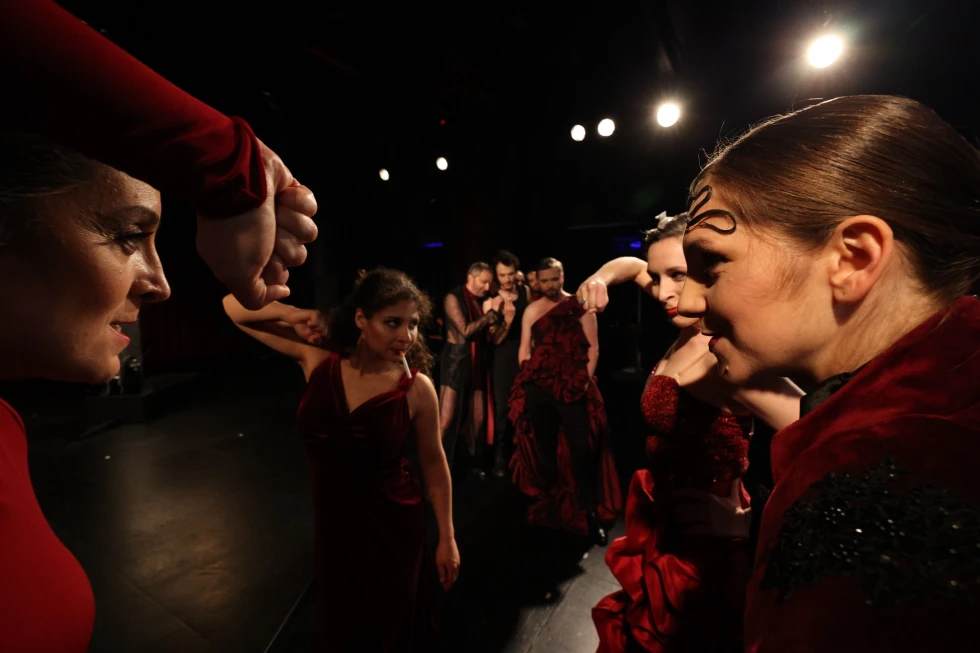
This project marks Hoxha’s first collaboration with the Slovene Youth Theatre, and she emphasized that she is the first Albanian director to work in a state theatre institution in Slovenia.
Hoxha explained that the production addresses powerful social and political issues:
“The reviews have generally been very positive because this is considered a very special and unprecedented performance in the form I brought it. Usually performances begin and develop in a way that allows you to understand the story, but throughout our entire performance we never truly understand who Carmen is or what Carmen is, because we search for her through different contexts and themes—misogyny, chauvinism, femicide, workplace discrimination, violence, and the manosphere,” she said.
The production demythologizes Carmen by dressing her in the realities of today.
“All these themes are interconnected, and at the end of the performance we revisit the opera and the novel’s entire storyline and make it clear that we have been deconstructing and recreating what a woman today would be like, who that person would be. Would they have a specific gender? A specific age? And how would they behave in today’s context?”
The director also revealed plans to bring “No Carmen!” to Kosovo. However, this depends on the technical conditions of the National Theatre of Kosovo, which since July 2022 has operated in temporary facilities following the closure of its original building for renovations.
“Considering the stage requirements and technical demands of the performance, it is impossible to present it on the current improvised stage. We discussed bringing it next year, hoping that plans for reopening the National Theatre building will be completed by the end of the year as announced by the Ministry of Culture. I hope we’ll be able to bring it next year,” Hoxha said.
The Slovene Youth Theatre was founded in Ljubljana in 1955 as Slovenia’s first professional theatre for children and young people. Throughout its history, it has collaborated with theatre reformers who shaped Slovenian theatre during the second half of the twentieth century.








Recent Comments